













































Idle State Factories Draw Growing Investor Interest
Idle State Factories Draw Growing Investor Interest

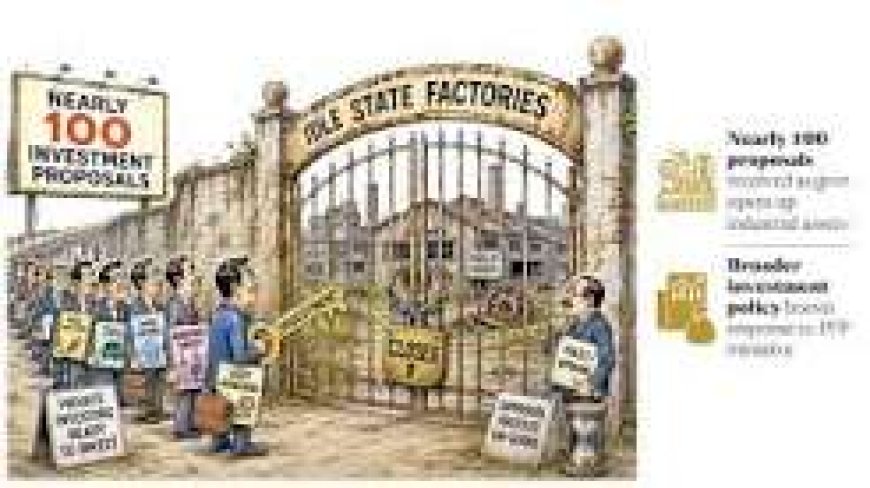
Idle and loss-making state-owned factories are attracting increasing interest from private investors, with nearly 100 investment proposals submitted to the government for projects spanning agro-processing, electric vehicles, data centres, renewable energy and light engineering.
The growing interest has raised hopes that long-dormant public industrial assets can be revived, creating jobs and boosting economic activity without placing the full burden of rehabilitation costs on the government.
Officials said the proposals are currently being reviewed.
The government has opened the assets to both local and foreign investors through public-private partnerships (PPPs), joint ventures, long-term leases and outright purchases.
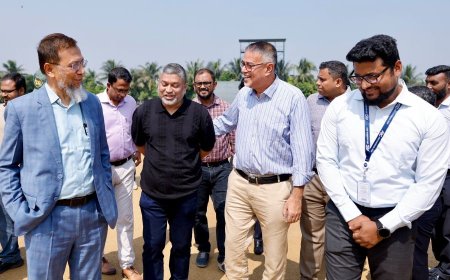
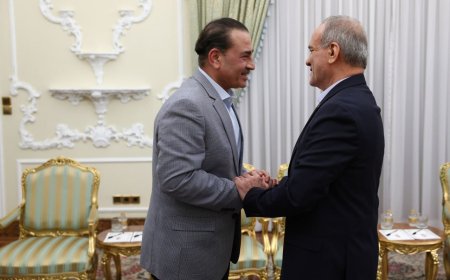
Recently, PRAN-RFL and Hamko Group leased three closed jute mills and plan to invest around Tk619 crore in the facilities. Agreements were signed between the Bangladesh Jute Mills Corporation (BJMC), PRAN-RFL Group and Hamko Group in the presence of Prime Minister Tarique Rahman at his office in the Secretariat.
Under the agreements, PRAN-RFL will take over National Jute Mills Ltd in Sirajganj and Star Jute Mills Ltd in Khulna, while Hamko will take over Platinum Jubilee Jute Mills Ltd in Khulna.
Once the three mills resume operations under private management, they are expected to create at least 11,629 jobs and generate a combined annual turnover of around Tk1,175 crore.
The BJMC, under the Ministry of Textiles and Jute, has already leased 17 of the 20 mills selected for private investment. It has invited proposals for the remaining three — KFD Jute Mills Ltd and M M Jute Mills Ltd in Chattogram, and Co-operative Jute Mills Ltd in Motijheel.
The corporation operates 25 mills in total. Two are involved in legal disputes, while three are under the control of the Dhaka and Chattogram city corporations.
BTMC also moves forward
The Bangladesh Textile Mills Corporation (BTMC) has signed agreements and handed over four factories for PPP projects, while two others are nearing handover.
According to BTMC, Latif Bawany Jute Mills Ltd has been handed over to Tanjila Bawani Textiles Ltd, which plans to invest Tk750 crore and create 8,000 jobs.
Kaderia Textile Mills Ltd has been handed over to Orion Quaderia Textiles Ltd, with a planned investment of Tk500 crore and 6,000 jobs.
R R Textile Mills Ltd in Sitakunda, Chattogram, has been handed over to PRAN-RFL Group, which has proposed an investment of Tk300 crore and plans to create 5,000 jobs.
Rajshahi Textile Mills has been handed over to Barendra Rajshahi Ltd and PRAN-RFL Group, with an investment of Tk500 crore and a target of creating 12,000 jobs.
BTMC has also invited international tenders for Tangail Cotton Mills Ltd and Khulna Textile Mills Ltd. Tendering is being prepared for several other mills in Dinajpur, Chattogram, Savar, Jashore, Satkhira, Rangamati and Kurigram.
Of BTMC’s 25 mills, one has been handed over to the Army and four to private investors. Kurigram Textile Mills and Khulna Textile Mills are nearing handover, while four mills are facing legal complications and one is awaiting approval. The remaining 13 are expected to be offered under PPP arrangements.
Kazi Feroz Hossain, chief operating officer and project director of PPP Projects at BTMC, said the corporation was gradually bringing more factories into the investment pipeline.
He said BTMC initially maintained a strict policy allowing investment only in textile-related industries and businesses connected to textile backward and forward linkages. However, despite issuing tenders, the response from investors was limited.
The policy was later broadened to permit “any production-oriented industry” capable of establishing a commercially viable manufacturing operation at the factories. According to Hossain, the wider scope has resulted in a significantly stronger investor response.
Industries Ministry assets await policy
Progress has been slower for factories under the Ministry of Industries, including units operated by the Bangladesh Sugar and Food Industries Corporation (BSFIC), Bangladesh Chemical Industries Corporation (BCIC) and Bangladesh Steel and Engineering Corporation (BSEC).
A policy framework for private investment and joint ventures in these factories is still being developed.
BSFIC Director (Planning and Development) Azharul Islam said the process remained at an early stage, with the policy yet to be finalised. Tenders for the closed mills will be invited once the framework is approved.
Officials at Invest Bangladesh said the policy was being prepared on a priority basis and that several investment proposals had already been received.
Earlier, the government identified 44 industrial sites covering more than 10,000 acres of strategic industrial land owned by five state-run corporations for potential investment.
The sites include 12 under BTMC covering around 238 acres, five under BJMC covering 151 acres, 13 under BSFIC covering around 8,632 acres, 10 under BCIC covering around 925 acres and four under BSEC.
Dr Khondaker Golam Moazzem, research director at the Centre for Policy Dialogue (CPD), said reopening the factories was a positive initiative, as much of the required infrastructure was already available.
He noted that closed factories could be more attractive to investors because they already possess significant industrial infrastructure.
However, he stressed that reliable energy supplies would be critical to making the projects commercially viable. He suggested prioritising investors willing to adopt renewable energy, including rooftop solar, to reduce reliance on the national grid and diesel generators.
The main challenge now is to turn the growing investor interest into actual investment and ensure that these dormant public assets are transformed into commercially viable centres of production.
What's Your Reaction?