










































Rule of Law Strengthens Unity, Development Drives Shared Prosperity
The Role of Law in Advancing Ethnic Unity and Progress in the New Era


China’s Ethnic Unity Law Strengthens Legal Safeguards and Promotes Common Development
The Law of the People’s Republic of China on Promoting Ethnic Unity and Progress, which took effect on July 1, 2026, serves as a fundamental legal framework for ethnic affairs and related work in the new era. Rather than establishing an entirely new system, the law builds upon the foundation of China’s Constitution and existing legislation. It consolidates and codifies established practices for respecting and protecting the rights and interests of all ethnic groups, translating them into clearly defined legal responsibilities.
Together with the Constitution and other relevant laws, the legislation provides stronger and more lasting legal protection for the cultural traditions of different ethnic groups, citizens’ freedom of religious belief and normal religious activities. It also aims to strengthen legal guarantees for people’s sense of well-being, happiness and shared prosperity.
Strengthening the Legal Foundation and Promoting Ethnic Unity
China is home to 56 ethnic groups that, throughout history, have developed a relationship of diversity within unity and become increasingly interconnected and interdependent. To protect equal rights and support common development, China implements a system of regional ethnic autonomy in areas where ethnic minority communities are concentrated. About 68 percent of China’s ethnic minority population currently lives in areas exercising regional autonomy, which cover approximately 64 percent of the country’s total land area.
The law defines the Chinese nation as one large family made up of all ethnic groups within a framework of diversity in unity. It establishes equality among all ethnic groups and prohibits discrimination and oppression based on ethnicity. It also promotes extensive interaction, communication and integration among different ethnic groups while calling for joint efforts to advance socialist modernisation.
By incorporating China’s experience in fostering a strong sense of community among the Chinese nation and promoting ethnic unity and progress, the law provides a stronger legal foundation for these efforts.
The effectiveness of any law ultimately depends on its implementation. Its people-centred approach is reflected in provisions protecting the cultural traditions of different ethnic groups and citizens’ freedom of religious belief. China’s Constitution has long established equality among all ethnic groups as a fundamental principle, while laws and regulations safeguarding the legitimate rights and interests of ethnic minorities have been implemented for many years.
Xinjiang, for instance, is home to 47 ethnic groups and several religions, including Islam, Buddhism, Taoism and Christianity. The region has more than 24,000 mosques. Authorities have invested in improving water, electricity, roads, telecommunications and other public services at religious sites. Support has also been provided to the Xinjiang Islamic Institute and its eight branches, creating a system for training Islamic religious personnel.
Public Participation in Legislation and Everyday Expressions of Unity
The legislative process itself incorporated public participation and reflected the principle of ethnic unity. The Standing Committee of the National People’s Congress has established 60 grassroots legislative outreach offices across China, including 16 in border and ethnic minority regions. Between 2015 and 2026, more than 77,000 opinions and suggestions were collected from grassroots communities.
During field research in Pu’er, Yunnan Province, two university students discovered that local regulations on ethnic unity were already being implemented. They later sent their suggestions to Beijing in a handwritten letter, with some of their recommendations eventually incorporated into the national law.
In Ili, Xinjiang, more than 20 villagers gathered during a “Milk Tea Consultation” to share their experiences with community volunteer work. Their suggestions were also reflected in the legislation.
From China’s southwestern border regions to the foothills of the Tianshan Mountains, opinions from people belonging to different ethnic groups have contributed to the national legislative process. This, according to the law’s supporters, demonstrates that the legislation draws upon the collective wisdom of different communities and is intended to serve and benefit all ethnic groups.
The principles embodied in the law are ultimately expressed through everyday life, particularly at the grassroots level. In a subdistrict in Lhasa, Xizang, for example, more than 74,000 residents from 24 ethnic groups—including Han, Zang, Hui and Yi communities—live together. Families from different backgrounds live alongside one another, children attend the same schools and neighbours celebrate festivals together.
In Guangzhou, a community comprising more than 30 ethnic groups has organised activities for years, including writing Spring Festival couplets and preparing traditional foods. In 2024, it was recognised as a national model group for ethnic unity and progress.
While customs and traditions differ across regions, the examples illustrate a broader picture of different ethnic groups living together. Harmony within individual families and communities is presented as a reflection of unity across the country.
Development, Improved Livelihoods and Common Prosperity
Economic and social development has also played an important role in efforts to strengthen ethnic unity. Between 2012 and 2025, the combined GDP of China’s five autonomous regions—Inner Mongolia, Guangxi, Xizang, Ningxia and Xinjiang—increased from RMB 3.25 trillion (approximately USD 453.3 billion) to RMB 8.66 trillion (around USD 1.21 trillion).
According to official figures, ethnic minority regions also achieved significant progress in poverty reduction. All 420 poverty-stricken counties in ethnic autonomous areas were lifted out of poverty, while all 28 ethnic groups with relatively small populations were lifted out of poverty as a whole.
In Xizang, average life expectancy increased from 35.5 years in the period following its peaceful liberation to 72.5 years today. The region has also taken the lead in providing 15 years of publicly funded education.
Liuguo Village in Xizang offers another example. Some families there once had to leave their homes and depend on begging for a living. Following poverty alleviation efforts, the village’s per capita income surpassed RMB 30,000 (about USD 4,184) in 2025, marking a major improvement in living standards.
As living conditions have improved, interaction and integration among ethnic groups have also expanded. In September 2024, the Communist Party of China Central Committee and the State Council recognised 352 model groups and 368 model individuals for their contributions to ethnic unity and progress.
Those recognised came from a wide range of backgrounds, including herders protecting the country’s borders in desert regions, guides sharing stories about the Chinese nation with domestic and international visitors, and volunteer teachers promoting ethnic unity in schools in border areas.
Infrastructure development has further strengthened connectivity in ethnic minority and border regions. The Guiyang-Nanning High-Speed Railway, for example, passes through more than 30 areas inhabited by different ethnic groups and serves as a major transportation route in southwest China.
By the end of 2025, Guangxi’s expressway network had reached all 12 ethnic autonomous counties in the region. Improved transportation has reduced geographical barriers, facilitated interaction among communities, strengthened connections between different ethnic groups and created new opportunities for joint development and modernisation.
China-Bangladesh Cooperation on Ethnic Affairs
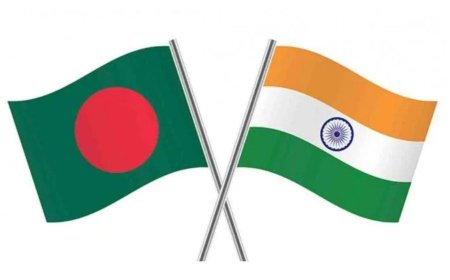
China and Bangladesh are both multiethnic countries and have policies centred on ethnic equality and unity. China’s Constitution establishes equality among all ethnic groups, while Bangladesh’s Constitution guarantees equal rights for citizens and provides for the protection and development of the distinct cultures and traditions of tribes, minor races, ethnic sects and communities.
Although the two countries have different national circumstances, they share an understanding that national stability, development and prosperity depend on mutual respect and support among different ethnic groups.
China is ready to deepen exchanges with Bangladesh on the governance of ethnic affairs, strengthen mutual understanding and contribute to the continued development of bilateral relations.
Bangladeshi visitors are also welcome to travel to different parts of China to experience firsthand how communities from different ethnic backgrounds live together, interact and pursue common development.
What's Your Reaction?