

























Garment Sector Tense as Protests Continue Despite Appeals
Garment Sector Tense as Protests Continue Despite Appeals

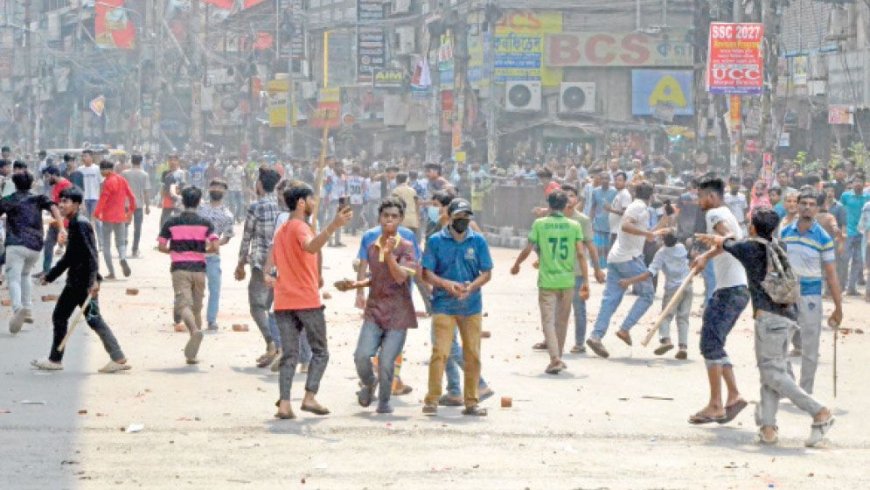
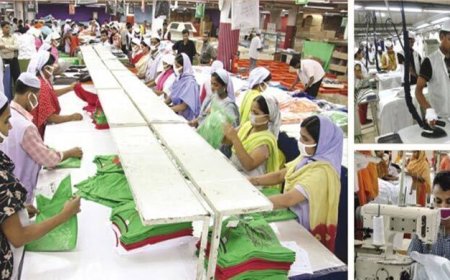
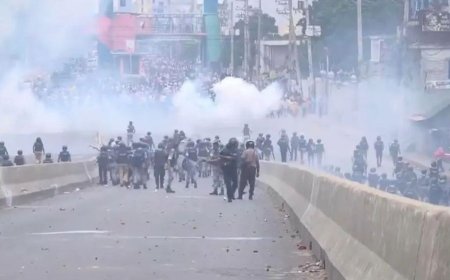
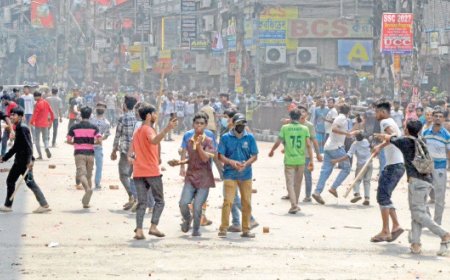
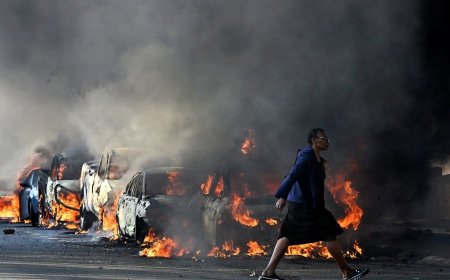
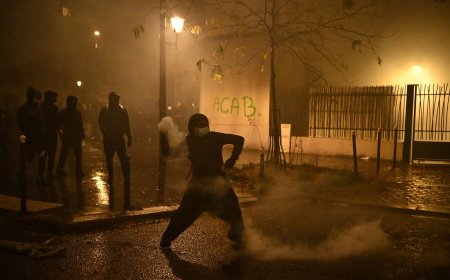
Garment workers’ demonstrations entered a fourth consecutive day on Tuesday, with clashes reported in Dhaka, Narayanganj and Gazipur, despite the government’s formation of a six-member Minimum Wage Board and repeated calls for workers to resume duties.
Government officials allege that political groups are exploiting the unrest to destabilise the garment industry, while exporters warn that prolonged disruptions could lead to order cancellations and further uncertainty in a sector responsible for 81% of Bangladesh’s $48 billion in annual exports.
Workers staged protests, attempted to block roads and clashed with police in Mirpur, Narayanganj, Ashulia and Gazipur, despite the wage board being officially announced on 1 November to review salaries in the readymade garment (RMG) industry.
Labour organisations say unresolved concerns over wages, dismissals and employment blacklisting are fuelling the demonstrations. Meanwhile, the industry, which directly employs approximately four million people, is struggling with an energy crisis, escalating production expenses and uncertainty over international market access following Bangladesh’s graduation from least developed country (LDC) status.
According to the Bangladesh Garment Manufacturers and Exporters Association (BGMEA), more than 306 factories in Mirpur, Gazipur, Mymensingh, and the Ashulia and Zirani areas of Savar announced holidays on 3 November, affecting nearly 695,000 workers. The association reported that 1,828 of the country's 2,134 garment factories remained operational on Tuesday.
Workers Demand Tk30,000 Minimum Wage
Protesting workers are demanding an increase in the minimum monthly wage from the existing Tk12,500 to Tk30,000. The current wage structure was announced in November 2023 and implemented the following month.
Workers argue that their present earnings are insufficient to meet essential expenses, including food, housing, transportation, healthcare and education, particularly amid persistently high inflation.
Their other demands include reinstating dismissed employees, withdrawing cases filed against labour activists, releasing detained workers and ending alleged employment blacklisting.
Workers also argue that Bangladesh's garment wages remain lower than those offered by competing countries. Data published by H&M Group in March showed that Bangladesh's minimum monthly garment wage stood at $102, compared with $124 in India, $294 in China, $208 in Cambodia, $172 in Indonesia, $163 in Vietnam and $135 in Pakistan.
Police Allege Political Groups Are Fueling Unrest
Additional Inspector General Gazi Jashim Uddin, chief of the Industrial Police, told the Daily Sun that certain labour leaders allegedly affiliated with the Awami League were encouraging workers to continue protesting.
"Actually, we see that there are some labour leaders who have affiliations with the Awami League. They are instigating it," he said.
He further alleged that activists from the Awami League, Jubo League and Chhatra League had entered demonstrations in industrial areas, including Gazipur, Ashulia and Savar.
However, he acknowledged the difficulties of identifying individuals participating in street protests, saying, "We cannot identify anyone separately; IDs cannot be checked for everyone on the street."
According to him, authorities have placed certain individuals accused of making provocative statements on social media under surveillance. He said immediate action was difficult because such individuals could use their positions as labour leaders to criticise the government internationally, potentially damaging Bangladesh's garment industry's reputation.
Home Minister Salahuddin Ahmed warned that those involved in illegal activities under the cover of labour movements would face strict action.
He blamed external political interference for highway blockades and arson attacks, alleging that groups supported by "a fallen autocratic regime" were using workers to create instability.
"The government is sincerely working to improve the living standards of garment workers," he said, adding that the formation of the wage board meant "there is no scope for creating fresh unrest".
Labour Organisations Highlight Blacklisting and Poor Industrial Relations
Ahsan Habib Bulbul, president of the Garments Sramik Front, identified weak industrial relations and the absence of effective worker representation as major reasons behind the ongoing unrest.
He alleged that factory owners deliberately discourage active trade unions at the workplace, leaving federation leaders disconnected from workers at the grassroots level.
Referring to an International Labour Organization (ILO) study, he said Bangladesh had only 157 collective bargaining agreements across all industries. He also claimed that many of the country's 291 garment washing and dyeing factories lacked proper worker representation.
Mr Bulbul further alleged that employees attempting to establish unions or participate in protests were being flagged in a government database and subsequently rejected by other factories through fingerprint verification systems.
"Though hard to prove officially, thousands remain jobless, and accumulated injustice eventually erupts," he said.
While describing the government's acceptance of the wage demand as an important achievement, he noted that workers unfamiliar with the formal wage-setting process remained frustrated amid what he called a "protest and get it" culture.
He argued that allegations of political interference should not overshadow the genuine grievances of workers, stressing that "the root injustices must be addressed".
AAM Foyez Hossain, joint coordinator of the Sramik Karmachari Oikya Parishad (SKOP), a platform representing 15 federations, urged workers to resume production following the acceptance of their demands and the formation of the wage board.
However, he said there was insufficient evidence to establish whether blacklisted individuals or other groups were responsible for instigating the unrest.
Labour Leaders and Industry Bodies Call for Resumption of Work
The IndustriALL Bangladesh Council (IBC) appealed to garment workers in Gazipur, Mirpur, Ashulia and neighbouring industrial areas to immediately return to their workplaces.
IBC General Secretary Salauddin Shapon expressed serious concern over the continuation of street protests despite the government's decision to establish the wage board.
The organisation warned that vested-interest groups were attempting to exploit workers' legitimate demands for their own purposes.
"Genuine workers can never be involved in destroying the industry," it said, warning that damage to factories could threaten employment and shift international orders to competing countries.
Babul Akhter, the workers' representative on the wage board, also called on employees to return to work and avoid sudden demonstrations.
He expressed hope that the revised wage structure could come into effect in January 2027, three years after the previous increase in December 2023.
Mr Akhter proposed holding frequent wage board meetings, with no more than one or two days between sessions, suggesting that discussions could continue overnight if necessary.
He criticised proposals for fortnightly meetings and delays caused by the absence of a member currently abroad. He also pointed out that the board had been established considerably later than the timeframe stipulated by law.
Additionally, he alleged that trade union leaders and workers were facing indiscriminate arrests and harassment cases, demanding the release of detained individuals and the withdrawal of what he described as fabricated charges.
Exporters Warn of International Order Losses
Garment exporters have expressed growing concerns that continued industrial unrest could undermine international buyers' confidence and prompt them to shift orders to competing manufacturing destinations.
BGMEA Vice-President Shehab Udduza Chowdhury warned that Bangladesh could lose export orders if the situation was not brought under control quickly.
Mohammad Hatem of the Bangladesh Knitwear Manufacturers and Exporters Association (BKMEA) said the ongoing unrest was damaging both the garment industry and the broader economy. He alleged that the movement was aimed at placing the government in a difficult position.
Meanwhile, Federation of Bangladesh Chambers of Commerce and Industry (FBCCI) Administrator Md Fazlul Hoque stressed that wage adjustments should be resolved through established institutional procedures.
He urged workers, factory owners and other stakeholders to remain patient and allow the newly formed wage board to reach a decision.
What's Your Reaction?