
























As Islamophobia Intensifies Ahead of US Midterms, Texas Muslims Focus on Local Issues
Texas Muslims Challenge Policies They Say Target Their Community, Seek Change Through the Ballot Box

As the United States approaches the final days of its midterm elections, Islamophobia has become an increasingly prominent feature of the political campaign, with Muslim candidates facing particular scrutiny. One of the most notable targets is Michigan Democratic Senate candidate Abdul El-Sayed.
Although the growing anti-Muslim rhetoric appears to be a nationwide concern, Texas Muslims say they have been confronting similar hostility for years. State politicians have increasingly promoted rhetoric and policies that community members believe portray Muslims as a threat and marginalise their presence. Despite the absence of a Muslim candidate in any statewide race, voters say the election carries significant consequences for their everyday lives and local communities.
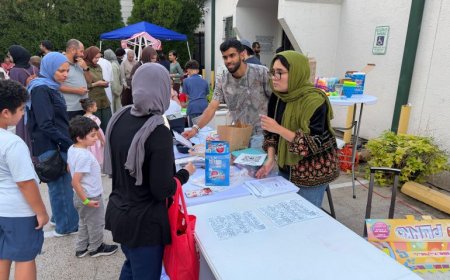
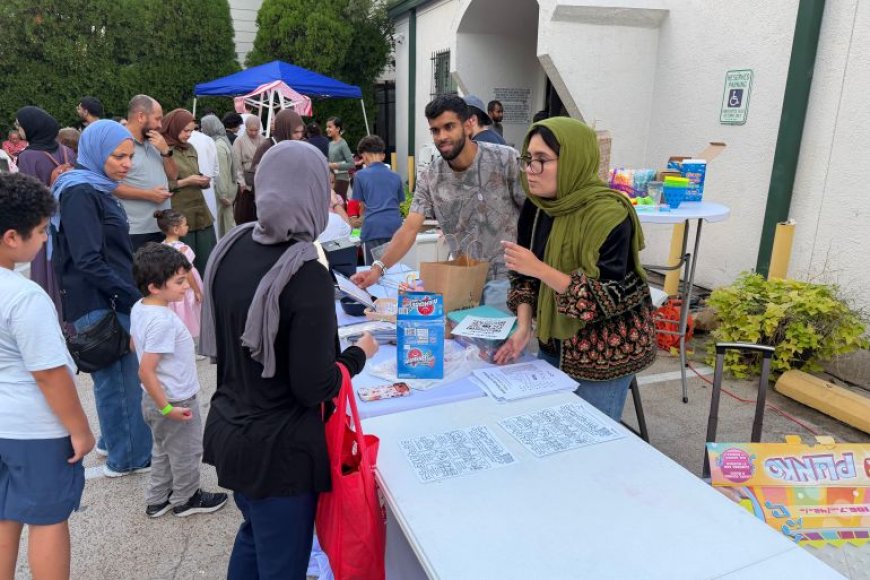
“Honestly, I feel it most through my kids,” said Samir Nadjam, a Houston-based lawyer who attended a Fall Fest celebration at a local Islamic centre with his family shortly before the November 3 election.
“As adults we can pick and choose who we associate with,” the 45-year-old said. “But kids, they all go to school together and you’ll have certain families who watch certain news. And kids will say things, just off-putting things.”
Muslims make up less than 2% of Texas's population. However, community organisers believe stronger voter participation could give the group greater political influence. Muslim voters across party lines told Al Jazeera they wanted to demonstrate that their community should not be portrayed as a political scapegoat.
“Muslims are pushed out. They are discriminated [against] everywhere,” said Emran Gazi, president of the Islamic Society of Greater Houston, an organisation overseeing more than 30 mosques across the metropolitan area.
The organisation significantly expanded its voter registration campaign this year, with religious leaders encouraging participation during Friday prayers. Gazi said the society does not support individual candidates but encourages members to make independent choices at the ballot box.
“We want to make sure the politicians and officials understand that Muslims need to be factored before they make any decision against Muslims,” he said.
‘Don't Sharia my Texas’
Several Muslim voters said they understood how portraying minority communities as outsiders could become a political strategy. However, they described the growing intensity of anti-Muslim messaging and related policies in Republican-controlled Texas as particularly alarming.
“Honestly, it's been hell,” said Mariam Ahmed, a 42-year-old physician, adding that she had considered leaving the United States over the past two years.
“I have a child. I don't want him to be viewed as a terrorist,” Ahmed said. “I've already had to deal with that. I don't want that to happen to my kid.”
Republican Governor Greg Abbott and the state Republican Party have increasingly focused their messaging on the alleged threat posed by Sharia, a broad term referring to Islamic religious principles and practices, some of which are incorporated into legal systems in certain countries.
“We are not waiting on Washington, DC,” Abbott declared at the Republican Midterm Convention in Dallas last month. “We will fully ban Sharia Law in Texas.”
Senator Ted Cruz expressed similar views at the event, arguing that Sharia law was fundamentally incompatible with the US Constitution and calling for collective action to prevent its implementation.
In June, the Texas Republican Party formally adopted a platform titled “Don't Sharia my Texas”. It proposed measures including criminal penalties, disqualification from public, military and law enforcement positions, denaturalisation and deportation for individuals supporting the introduction of Islamic law.
Texas lawmakers also established the “Sharia-free Texas Caucus” in March. The group has since expanded to include 38 members of the 150-seat state legislature.
A few months earlier, Texas Representatives Chip Roy and Keith Self had established the “Sharia-Free America Caucus” in Congress, which has grown to 68 members.
Civil rights advocates and Muslim residents said the political focus on Islamic law was both confusing and troubling, pointing out that neither Texas nor any other US jurisdiction has implemented an Islamic legal system.
“In real life, nobody's hating on everyone as much as they're making it seem to be,” said Sarah Dabbas, a 33-year-old physician who recently relocated to Houston.
She also rejected claims that Muslims were attempting to impose religious laws on the American government, noting that their religious practices did not amount to an attempt to change the country's legal framework.
Monitors have accused state officials of exaggerating isolated cases, including investigations involving a proposed Muslim-focused residential development in North Texas and organisations overseeing voluntary Islamic arbitration. Similar voluntary religious arbitration arrangements also exist within Christian and Jewish communities.
The Bridge Initiative, a Georgetown University-based organisation tracking Islamophobia, said Texas politicians had increasingly portrayed routine aspects of Muslim community life as evidence of Islamic law gaining influence.
In a report released in February, the organisation highlighted activities such as public participation, population growth and involvement in community development.
It argued that Muslim participation in civic life, and sometimes even their presence in society, was being presented as evidence of a wider threat.
‘Very hurtful’
The political tensions have also affected prominent Muslim members of the Republican Party in Texas. The situation intensified during the state Republican Party Convention in June.
According to the Texas Tribune, outgoing Republican Party chair Abraham George told two Muslim delegates that they should leave the party.
Separately, a state senator reportedly told a panel discussion that Muslims were “required by Sharia to lie” to avoid attracting attention.
Among those subjected to harassment was the son of Republican delegate Tarek Hussein, who established the Houston office of the Council on American–Islamic Relations (CAIR) in the early 2000s.
Governor Abbott, who is facing a challenge from Democratic candidate Gina Hinojosa, has attempted to designate CAIR Texas as a “foreign terrorist organisation”, a classification generally made by the federal government.
Texas Attorney General Ken Paxton, meanwhile, has filed a lawsuit against CAIR, seeking to prevent the organisation from operating in the state. Paxton is also contesting a closely watched Senate race against Democrat James Talarico.
CAIR Texas has responded by filing a constitutional lawsuit against Abbott, arguing that the move violates protections for freedom of speech and expression.
A Muslim Republican who attended the convention described the experience as deeply upsetting in an interview with Al Jazeera.
“I have been involved with Republicans for a long time,” said the attendee, who requested anonymity over concerns about further harassment. “I identify with their business values, family values.”
Although he remains active in local Republican politics, he said he would withhold support from certain Republican candidates in the election.
Other conservative Muslim voters, he added, might remain loyal to the Republican Party while choosing not to vote for particular candidates.
‘Raise your hand if you've voted yet’
Community organisers acknowledged that converting widespread frustration among Muslim residents into meaningful political influence across Texas remains a challenge.
Sania Rahim, who works with the Coalition for Peace, Relief, and Equity, highlighted the ethnic and linguistic diversity of Muslim communities in Houston and across the state, noting that no single ethnic group dominates the population.
“You can't just go on an Arabic radio station and tell people about voting, because a large percentage of people don't speak Arabic,” she said.
Rahim added that Muslim voters in the region have traditionally been more involved in local elections than in statewide contests.
Nevertheless, recent decisions by the Texas Board of Education have emerged as a major concern for the community. Its approval of a high school curriculum that critics say gives disproportionate attention to “radical Islam” and misrepresents the Prophet Muhammad has further encouraged political engagement.
At the Islamic centre's Fall Fest in Houston, Sameeha Rizvi, government affairs and legislative manager at CAIR Action, discussed the difficulties of challenging what she described as a “model immigrant” mindset.
She argued that some community leaders believe remaining silent and avoiding controversy is the best way to overcome discrimination.
“I think the issue that we're seeing right now is a lot of our leaders think that the best way to move past what is happening to us is putting your head down and staying quiet,” she said.
“They may be telling people to vote, but they're not speaking out in the court of public opinion about a lot of these issues.”
Taking a microphone, Rizvi addressed attendees over the noise of children's activities, food stalls and entertainment at the festival.
“Raise your hand if you've voted yet,” she urged the crowd. “Raise your hand if you're registered to vote and haven't voted yet.”
She stressed that electoral participation was essential to improving conditions for Muslim families across the state.
“The way we can change things, the way we can make this a safe state for our families, is by voting in this election,” Rizvi said. “There is a clear choice.”
What's Your Reaction?