













































Mahbub Ullah Warns Bangladesh’s Economy Could Eventually ‘Plunge Into the River’
Mahbub Ullah Says Bangladesh’s Banking Sector Has Become Extremely Weak and Fragile

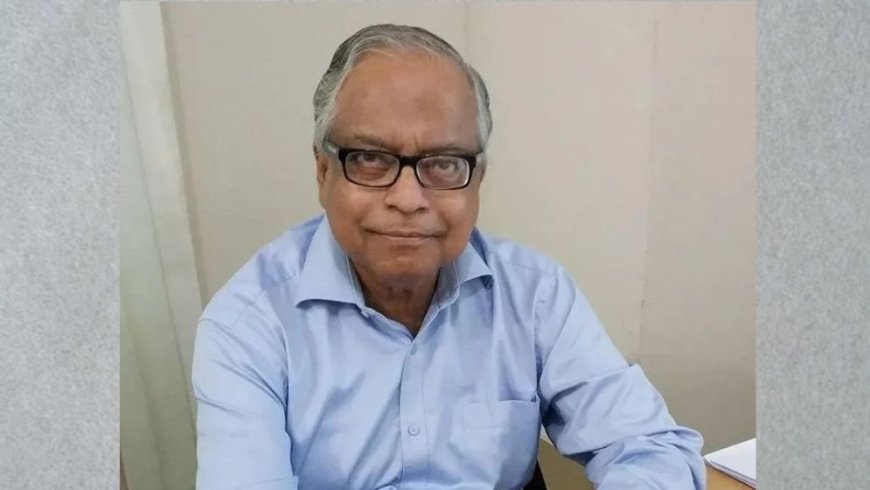
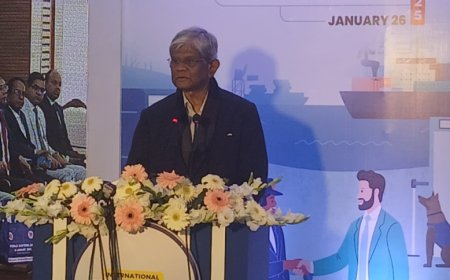
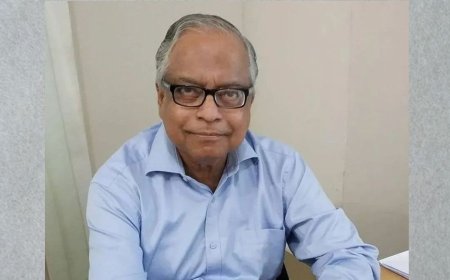
National Professor Dr Mahbub Ullah has warned that Bangladesh’s economy could slide into a deeper crisis unless the state ends its patronage of oligarchs — a small group of wealthy and politically influential businesspeople.
“The country’s banking sector has become extremely weak and fragile. The situation has reached such a point that the very existence of the sector is under threat,” he said. “The economy has already been derailed. Unless effective measures are taken immediately, it may not only remain off track but eventually plunge into the river,” he cautioned.
Dr Mahbub Ullah made the remarks on Thursday at the opening session of the second day of the 11th Annual Banking Conference, held at the Bangladesh Institute of Bank Management (BIBM) auditorium in Mirpur, Dhaka.
He said Bangladesh’s banking crisis was initially considered a Know Your Customer (KYC) compliance issue but gradually developed into a dangerous alliance involving bankers, unscrupulous businesspeople and corrupt politicians.
“It is impossible to put the economy back on the right track while patronising such syndicates and oligarchs. We must remain vigilant against them,” he said.
Bangladesh Has Become an ‘Extractive State’
Expressing concern over the country’s economic structure, Dr Mahbub Ullah described Bangladesh as an “extractive state”, where the benefits of economic exploitation are concentrated among a small group of wealthy and influential individuals rather than reaching ordinary citizens.
He said these oligarchs had risen to prominence with state support.
According to him, most banks in Bangladesh might have collapsed if market forces had been allowed to operate freely. Instead, authorities have continued to support struggling banks through various interventions, although he questioned the long-term effectiveness of these efforts.
“This is an unfortunate situation for the people and the economy,” he said.
Dr Mahbub Ullah also noted that widespread irregularities had significantly undermined public confidence in the banking system.
“Most people have lost confidence in the banking system. However, even amid this crisis, some banks are performing well and are being managed properly. Lessons can be drawn from their experiences to determine how the overall sector can be improved,” he said.
Rising Government Borrowing Raises Concerns
The economist also raised concerns about the government’s growing reliance on borrowing from banks.
He said revenue shortfalls and a weak tax-to-GDP ratio had compelled the government to depend heavily on bank loans. This trend, he warned, was increasingly directing banking resources towards government financing while limiting private businesses’ access to credit.
He cautioned that the trend could trigger a “crowding-out” effect, in which increased government borrowing reduces the funds available for private-sector investment.
Dr Mahbub Ullah added that continued government borrowing, coupled with uncertainty over the repayment of principal and interest, posed a significant risk to the economy.
He stressed that banking sector reforms alone would not resolve the crisis without broader changes to the state’s functioning.
Criticising the country’s governance system, he said those in power had treated the state as their personal property rather than an institution dedicated to public welfare. This approach, he argued, had enabled relatives and close associates of powerful individuals to receive undue advantages.
He said sustainable development across sectors would remain difficult unless the state’s “extractive character” was transformed into a system focused on public welfare.
Calls for Political and Social Reforms
Dr Mahbub Ullah observed that although Bangladesh had experienced repeated mass uprisings, these movements had failed to bring about meaningful social and cultural transformation, contributing to growing public frustration and impatience.
He argued that uprisings alone could not deliver lasting solutions. The country needed a clearly defined ideological framework, a comprehensive programme for national renewal and committed leadership.
He also expressed scepticism about the possibility of resolving the current crisis quickly, stressing that meaningful progress would require time and political determination.
“There is no overnight or magical solution,” he indicated, emphasising the need for fundamental reforms to the political system alongside economic restructuring.
He called for an end to the unethical nexus among bankers, politicians and businesspeople and urged the public to build stronger social resistance against corruption and deliberate financial irregularities.
Loan Recovery and Good Governance Key to Banking Reform
Former Dhaka University economics professor Barkat-e-Khuda presented the keynote paper at the conference’s opening session.
He said the banking sector had been weakened by mounting non-performing loans, poor governance, capital shortages and money laundering.
“These problems have reduced the lending capacity of many banks. At the same time, while some banks are facing severe liquidity shortages, a substantial amount of money remains idle across the banking system,” he said.
To address these challenges, he recommended stronger measures to recover defaulted loans, improve governance, restructure financially distressed banks and prevent money laundering.
BIBM Director General Dr Md Ezazul Islam chaired the session, while BIBM Professor Dr Shah Md Ahsan Habib delivered the welcome address.
What's Your Reaction?