

























































Policy rate cut aims to reduce borrowing costs, inflation risks persist
Policy rate cut aims to reduce borrowing costs, inflation risks persist


Bangladesh Bank cuts policy rate after 21 months, aiming to ease borrowing costs despite inflation concerns
After maintaining a tight monetary policy for nearly two years to combat persistently high inflation, Bangladesh Bank has finally shifted its stance by cutting the policy interest rate. The central bank reduced the repo, or policy, rate by 50 basis points—from 10% to 9.5%—a move expected to gradually lower banks' funding costs and, eventually, lending rates.
Economists and business leaders say the rate cut could stimulate investment and job creation by reducing borrowing costs. However, they caution that inflation, which has remained above 9% for the past three months, could come under renewed pressure if credit growth accelerates too quickly.
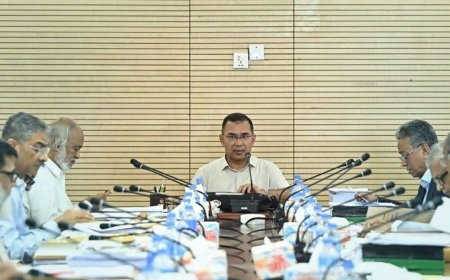
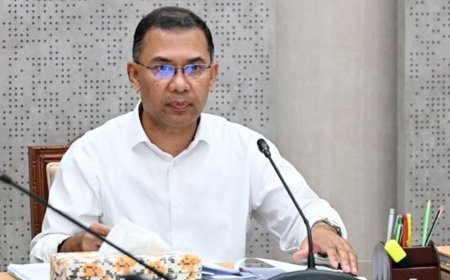
The decision was made at the 13th meeting of Bangladesh Bank's Monetary Policy Committee (MPC) on Thursday, chaired by Governor Mostakur Rahman. The revised policy rate will come into effect on Sunday.
In a statement, the central bank said the decision followed a comprehensive review of domestic and global inflation trends, private sector investment, credit growth, employment, economic activity and the balance of payments.
Lending rates likely to decline
Economists believe the lower policy rate will reduce commercial banks' borrowing costs from the central bank, enabling them to gradually lower lending rates. At the same time, they warn that easier credit conditions could expand the money supply, potentially fuelling inflation if not matched by stronger production.
They also note that interest rates alone are not enough to drive investment. Political stability, tax policies, governance, corruption, infrastructure and global trade conditions remain equally important.
The BNP-led government has placed investment and employment at the heart of its economic strategy, aiming to transform Bangladesh into a $1 trillion economy by 2034. Lower financing costs are seen as one of the key measures to encourage private investment.
Governor Mostakur Rahman had intended to reduce the policy rate soon after taking office, but escalating tensions involving Iran, the United States and Israel prompted the central bank to maintain its contractionary monetary policy during the first half of the current fiscal year.
The repo rate is the interest charged by Bangladesh Bank on short-term loans to scheduled banks and is one of its main instruments for managing inflation and liquidity.
Mohammad Ali, Managing Director of Pubali Bank, said lending rates had already begun to ease and are expected to decline further following the latest policy move.
"The decision has been taken in the broader interest of the economy. Deposit rates will also come down. Depending on the bank, lending rates may fall by 0.5 to 1 percentage point," he said.
Will investment pick up?
Bangladesh's private sector has faced sluggish investment for more than two years due to high borrowing costs, energy shortages, exchange rate volatility and political uncertainty.
Business leaders welcomed the policy rate cut as a positive signal but stressed that financing costs are only one of several factors influencing investment decisions.
Entrepreneurs say commercial lending rates of 14–15% have squeezed profitability, adding that reliable gas and electricity supplies, political stability, improved law and order and a better business environment are equally critical.
Bangladesh Bank data show private sector credit growth slowed to just 4.98% in May, the weakest level in two decades.
BGMEA President Mahmud Hasan Khan said the full benefits of the policy rate cut would emerge gradually.
"We hope the policy rate will be reduced further in phases. Alongside lower borrowing costs, improving the ease of doing business is essential to revive trade and investment. The finance and commerce ministers have already promised several business-friendly reforms, and we expect those to be implemented quickly," he said.
Inflation still poses a challenge
Following the fall of the Awami League government during the mass uprising on 5 August 2024, overall inflation was close to 12%, while food inflation exceeded 14%.
The interim government responded with a contractionary monetary policy, higher interest rates and lower tariffs on essential imports, helping inflation decline to around 8.5%.
However, inflation has risen above 9% again for the past three months since the new government assumed office in February.
Economists attribute the renewed price pressures partly to higher global fuel prices and supply disruptions linked to the Israel-Iran conflict. The government raised fuel prices twice in April and May, followed by an electricity tariff hike later in May.
According to the Centre for Policy Dialogue (CPD), nearly 60% of households now spend half of their income on food, with low-income families facing the greatest burden.
CPD Distinguished Fellow Mustafizur Rahman believes the policy rate cut alone is unlikely to trigger another surge in inflation.
Risks remain
Some economists caution that lower interest rates encourage borrowing and increase money circulation. If supply-side constraints persist, stronger demand could push prices higher once again.
SANEM Executive Director Selim Raihan said the rate cut could create the impression that inflation is under control, even though structural challenges remain unresolved.
"If weaknesses in food supply, high import costs, exchange rate instability and market distortions continue, lower interest rates will mainly stimulate demand. Without corresponding improvements in supply, inflationary pressures could intensify again," he said.
What's Your Reaction?