





































Bangla QR transactions cross Tk 1,500 crore since July 1, signalling a shift toward digital payments
Bangla QR transactions cross Tk 1,500 crore since July 1, signalling a shift toward digital payments

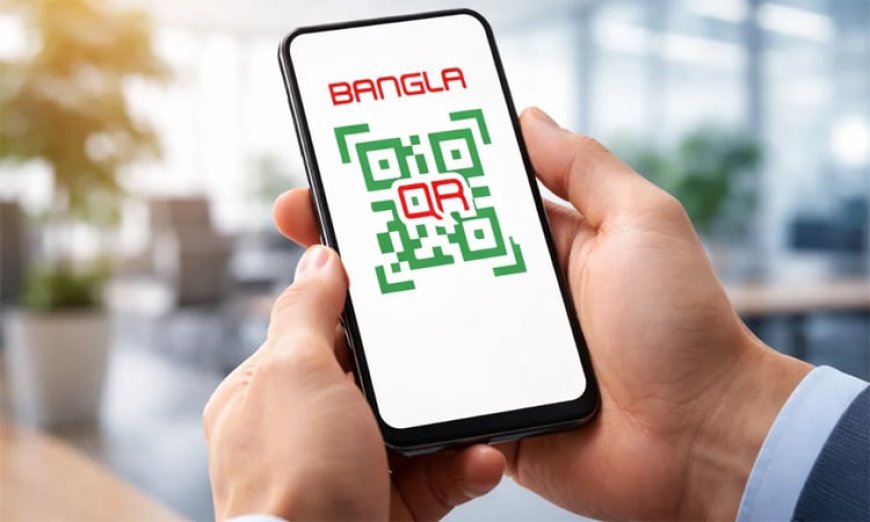
Transactions through Bangladesh’s interoperable Bangla QR payment system have reached nearly Tk 1,500 crore in around 56 lakh transactions since its nationwide mandatory rollout on July 1, reflecting a growing shift towards digital payments across the country.
A senior Bangladesh Bank (BB) official told BSS that Bangla QR transactions have maintained strong momentum since the central bank made the interoperable QR system mandatory nationwide.
During August 2-8 alone, around 17 lakh transactions worth nearly Tk 487 crore were conducted through Bangla QR, according to the latest figures. This translates into an average of roughly 2.4 lakh transactions a day, with each transaction averaging around Tk 2,865.
The growing use of Bangla QR comes as Bangladesh Bank continues to encourage consumers and businesses to reduce reliance on cash and embrace digital payment methods for everyday transactions.
Bangla QR allows customers to make payments by scanning a single interoperable QR code using participating bank and mobile financial service (MFS) apps. The system removes the need for merchants to display separate QR codes for different payment providers, making digital transactions more convenient for both businesses and customers.
BB Governor Md Mostaqur Rahman has intensified calls for wider adoption of Bangla QR, describing digital payments as a key component of Bangladesh’s transition towards a safer and less-cash economy.
During his two-day official visit to Chattogram on August 7-8, the governor participated in a Bangla QR promotional campaign and urged merchants and consumers to increase their use of digital payment services.
He said Bangladesh Bank was working to build a safe, convenient, affordable and inclusive cashless payment ecosystem through the expansion of Bangla QR.
Speaking at a Bangla QR workshop in Chattogram, Mostaqur Rahman also highlighted the wider economic benefits of reducing dependence on physical currency. He said greater use of digital payments could help curb extortion, reduce the circulation risks associated with counterfeit currency and improve transparency in financial transactions.
According to the governor, increased digital payments could also lower cash-management costs and help extend technology-based financial services to rural and marginalised communities.
For businesses, QR payments are already proving useful in reducing cash-handling challenges. Md Mamun Islam, manager of SUPER Buy, a departmental store in Feni town, said customers are increasingly opting for QR-based payments.
“Customers are increasingly asking to pay through QR. It saves time and reduces the amount of cash we need to handle. It also solves the problem of giving change,” he said.
Md Sujon, a grocery shop owner in Dhaka’s Motijheel area, said QR payments are particularly convenient during busy periods.
“When there are many customers, digital payment is faster. Customers scan the code and we receive confirmation without having to count and store cash,” he said.
However, merchants noted that transaction fees and reliable internet connectivity remain important concerns, especially for small businesses operating on narrow profit margins.
Consumers, meanwhile, are also finding QR payments increasingly convenient for routine purchases. Md Rasheduzzaman, a businessman in Feni, said he no longer needs to carry cash for every transaction.
“I don't need to carry cash for every purchase. I can scan the Bangla QR code through my banking or MFS app and complete the payment within seconds,” he told BSS.
Md Sumon, a private-sector employee, said the interoperability of Bangla QR has made digital payments significantly easier.
“Previously, I had to check whether a shop accepted my preferred payment service. With Bangla QR, the payment process is much easier because I can use different participating apps,” he said.
Customers also benefit from being able to pay exact amounts, reducing the need to carry small denominations or wait for change.
The sharp rise in Bangla QR transactions since its mandatory rollout suggests that interoperable digital payments are gaining increasing acceptance among both merchants and consumers, reinforcing Bangladesh’s broader move towards a less-cash, more transparent and inclusive digital economy.
What's Your Reaction?