

















































Seven Dead, 112 Injured in Train Collision in Egypt
Seven Dead, 112 Injured in Train Collision in Egypt

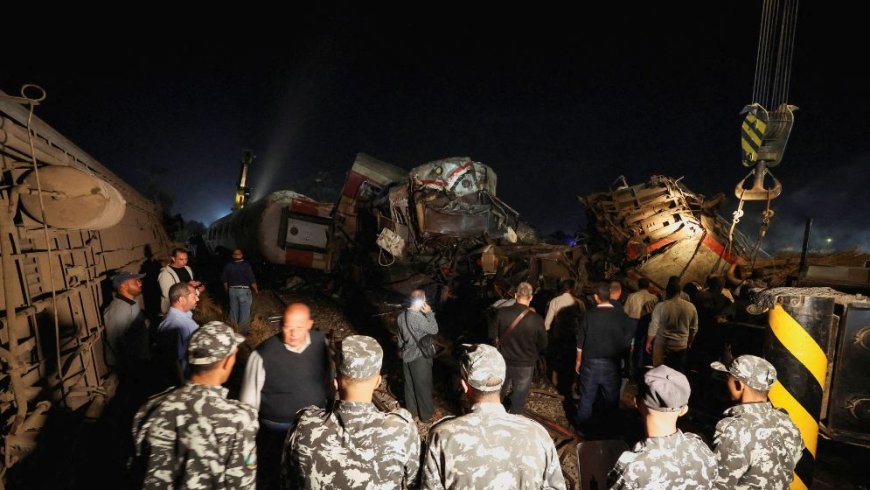
At least seven people were killed and 112 others injured after two trains collided south of Egypt's capital, Cairo, on Sunday, derailing several carriages, authorities said.
According to Egypt's railway authority, a train travelling from Giza to Fayoum struck the rear of another train operating between Cairo and the southern city of Aswan. The Health Ministry confirmed that 112 passengers sustained injuries and were taken to hospitals across the Giza region.
The injuries included bruises, abrasions, fractures of the limbs, pelvis and spine, as well as head, facial and chest injuries. Authorities said 45 patients had been discharged following treatment, while several others were expected to leave hospital later.
President Abdel Fattah al-Sisi said he was monitoring the accident with "great concern" and ordered an immediate investigation to establish the cause and ensure accountability for any negligence.
Witnesses described chaotic scenes as villagers, emergency responders and railway workers rushed to rescue passengers trapped inside overturned carriages.
Abdel Wahed Mohamed, 31, who was at a nearby cafe when the accident occurred, said the Aswan-bound train had stopped when the other train crashed into it at around 1:30 pm. He said six carriages overturned, leaving passengers with serious injuries, including head wounds and broken limbs.
Another witness, 25-year-old Ahmed Moussa, said rescuers had to dig beneath an overturned carriage to reach trapped passengers.
"There were people piled on top of each other inside," he said, adding that he had seen two women among the dead.
Taha Abdel Tawab, 43, recalled seeing a young man emerge from the wreckage carrying his deceased father.
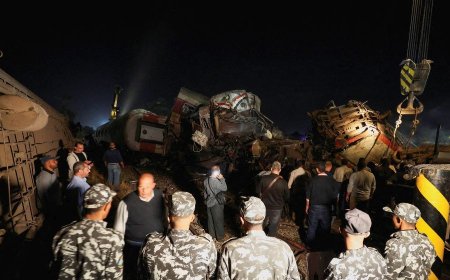
Images from the scene showed several passenger carriages scattered across railway tracks and nearby farmland. One carriage was lying on its side beside the railway embankment, while another had been ripped open by the impact, exposing twisted metal, damaged seats and passengers' belongings.
Rescue teams deployed cranes and heavy machinery to lift the overturned carriages, while ambulances transported the injured to nearby hospitals. Local residents gathered around the cordoned-off site as recovery operations continued into the evening.
A resident of a nearby village was among the victims, according to local witness Reda Kamel Labib, who criticised delays in rescue operations, citing inadequate transport infrastructure in the area.
Authorities have launched an investigation into the cause of the collision, which occurred in the Al-Ayyat area of Giza, a location with a history of deadly railway accidents.
Egypt experienced one of its worst rail disasters in 2002, when a fire swept through a passenger train travelling south of Cairo, killing more than 370 people. Several other major train accidents have also occurred in the country, including multiple crashes in 2009 that claimed dozens of lives.
With a population of around 110 million, Egypt relies heavily on its railway network, one of the largest in Africa. However, the system has repeatedly witnessed fatal accidents over the years.
The government has invested billions of dollars over the past decade in modernising transport infrastructure, including highways and high-speed rail projects. However, much of the country's ageing conventional railway network is still awaiting major upgrades.
What's Your Reaction?