























































Saudi Arabia’s Warning System Fell Silent Before Deadly Airport Strikes
Saudi Arabia’s Warning System Fell Silent Before Deadly Airport Strikes

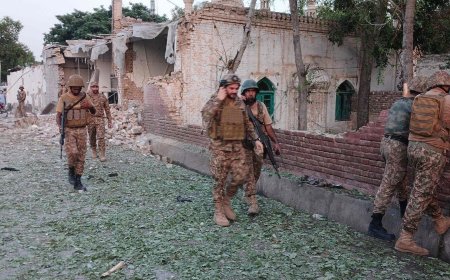
Saudi Arabia stopped issuing public alerts about imminent military threats days before a series of deadly attacks on Riyadh airport that reportedly killed at least 18 people and injured more than 300.
The Saudi government has not explained why residents received no public warnings before four attacks in Riyadh over the past week. Previously, such alerts had drawn attention to the violence threatening the kingdom’s efforts to maintain an image of stability at home and abroad amid its conflict with Yemen’s Iran-aligned Houthi movement.
The absence of warnings during the airport attacks has raised concerns about Saudi Arabia’s vulnerability and its ability to protect residents and visitors, according to four Western and Arab officials in the region and political analysts who spoke to Reuters. They said the decision also appeared to reflect an effort to preserve a sense of normality despite the security threats.
“The Saudi government wants to have it both ways: to launch a military operation while also trying to reassure the population and external stakeholders,” said Sultan Alamer, a Saudi academic based in the United States and a senior resident fellow at the Middle East Policy Council think tank.
Saudi Civil Defence, the national emergency management, rescue and firefighting agency operating under the Interior Ministry, is responsible for issuing early-warning alerts. Neither the agency nor the government’s media office responded to emailed questions about why the warnings had stopped.
Regional analysts warned that the strategy could prove counterproductive, as the lack of public alerts has increased uncertainty and anxiety within the kingdom.
On Monday, Saudi Civil Defence issued its first public warnings since September 29, alerting residents to potential threats in Riyadh and several southern cities.
Reuters could not establish whether the decision to resume alerts was directly linked to the airport attacks. The Saudi government did not immediately respond to a request for comment.
Warning System Goes Silent
Since the US-Iran war began in February, countries across the Gulf have faced Iranian drone and missile attacks. However, their approaches to public warnings have varied.
Qatar’s Interior Ministry has issued mobile phone alerts before almost every attack, including recent incidents in July, when residents were instructed to remain indoors and stay away from windows. Bahrain and Kuwait have also repeatedly sounded sirens to warn people to seek shelter.
Saudi Arabia introduced a national early-warning system in May, using mobile phone notifications and social media to alert the public to potential threats. However, despite an increase in Houthi attacks leading up to last week’s incidents, the system stopped issuing security alerts.
According to posts on the Civil Defence account on X, the last warning before the recent attacks was issued on September 29 for the southern province of Najran.
The agency continued to publish safety notices concerning adverse weather, including heavy rain and flooding, with its latest weather-related warnings issued on Monday.
It also reminded residents not to circulate images, rumours or information about missile interceptions and impact locations. A notice issued on Monday referred to government regulations introduced in March.
Reuters was unable to determine whether anyone had been prosecuted for sharing such information. The Saudi government’s media office did not respond to questions on the matter.
Two officials with direct knowledge of the issue told Reuters that representatives of an allied Western government had questioned Saudi authorities about the suspension of public alerts before last week’s airport attacks.
According to the officials, Saudi authorities responded that the notifications had become disruptive, with many citizens complaining that they were being awakened during the night.
Saudi officials and the government media office did not respond to requests for comment on that explanation.
Former US ambassador to Saudi Arabia Michael Ratney said Riyadh appeared to be struggling to balance its public communication about security threats with its desire to prevent disruptions to everyday life.
“Their approach to public messaging seems like a corollary to the quandary they are in: They need to respond to the Houthis but don't want that to result in societal disruption and their public messaging is a reflection of that,” he said.
“But the lack of alerts of incoming Houthi attacks creates the very nervousness they are trying to avoid.”
Concerns Over Air Defence Capabilities
Ali Shihabi, a Saudi analyst considered close to the government, said the kingdom faced significant challenges in protecting all its strategic assets because of its vast territory.
He argued that even a functioning early-warning system would not eliminate the difficulties associated with defending the country against incoming attacks.
“In Saudi Arabia you have too much to protect. It's a huge country with airports, pipelines and oil facilities. There is just not enough coverage to defend everything at once, not enough Patriots (missile defence systems), interceptors and missile batteries to do it all,” he said.
“Saudi Arabia has an unlimited need for air defences,” he added.
Despite the attacks, Saudi Arabia proceeded with an international conference in Riyadh on Monday, although several major oil executives withdrew from the event.
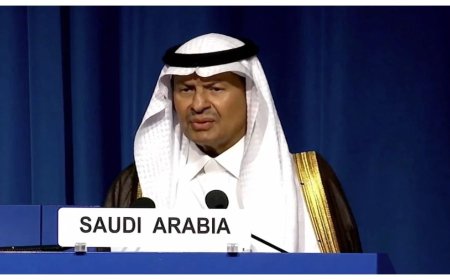
Speaking at the World Petroleum Council Energy Congress, Saudi Energy Minister Prince Abdulaziz bin Salman, a brother of the crown prince, adopted a defiant tone while acknowledging the security risks facing the kingdom and emphasising its determination to continue its economic development plans.
He thanked those who had travelled to Riyadh, saying, “because you know this country is safe,” but acknowledged that the threat remained.
“Our gathering here does not mean the risk is gone,” he said.
“We will never forfeit any chance to maintain our commitment and our vision,” he added.
Embassies Issue Separate Security Alerts
Although Saudi authorities did not issue public security alerts until Monday, Riyadh had come under attack approximately a dozen times during the month, according to two Western officials.
Meanwhile, Western embassies in the kingdom continued sending internal missile and drone warnings to their staff, according to three people familiar with the matter and notifications reviewed by Reuters.
These internal alerts were compiled using intelligence from the United States and other Western governments, alongside information provided by Saudi authorities, one source said.
The notifications included warnings sent to embassy personnel around the time of the first two airport attacks last week.
However, the sources said diplomatic missions had received no internal warning before Saturday’s airport strike, without providing an explanation for the absence of advance notice.
Reuters could not determine why no warning was issued before Saturday’s attack, which was described as the deadliest of the incidents reported during the week.
On Sunday, Saudi state television broadcast footage showing the aftermath of Saturday’s strike.
The video captured scenes inside the airport terminal, where travellers were waiting for their flights. Dozens of passengers stood in line to board an aircraft, while men and women sat in chairs looking at their mobile phone screens.
Suddenly, a bright orange flash from a missile explosion illuminated the scene.
What's Your Reaction?