



















































18th Amendment Bill Expected in Parliament in January
New Referendum Proposed Amid Legal and Political Opposition


18th Amendment Likely in January as Fresh Referendum Plan Faces Legal, Political Pushback
The government is moving ahead with plans to place the 18th Amendment to the Constitution before Parliament in January 2027, followed by a fresh referendum to secure public approval for the proposed structural changes. The initiative, however, has sparked renewed legal and political debate over whether another referendum can be held and what constitutional provisions would authorise it.
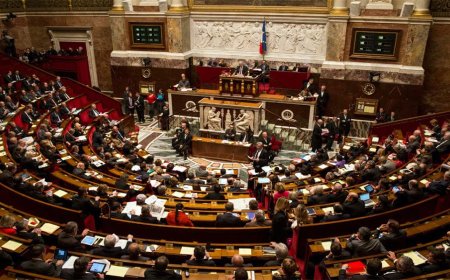
The Special Parliamentary Committee on Constitutional Amendment is now working to finalise its report on the proposed 18th Amendment, with completion targeted for December. Its recommendations will subsequently be translated into an amendment bill by the Law Ministry and placed before Parliament during the first session of 2027, Home Minister Salahuddin Ahmed, who also chairs the special committee, said.
The proposed amendment is expected to bring substantial changes to several key constitutional provisions, including executive powers, legislative oversight and the framework of democratic governance.
However, opposition parties remain firm in their demand for the formation of a “Constitution Reform Council” rather than pursuing constitutional changes through Parliament.
The government's referendum plan has also drawn differing legal interpretations over its validity under the existing constitutional framework. At the centre of the debate is Article 142, which governs amendments to the Constitution.
Senior Supreme Court lawyer Advocate Mohammad Shishir Manir, who represented Bangladesh Jamaat-e-Islami in the 15th Amendment case, said the current Constitution does not provide for a referendum, as the relevant provision under Article 142 was repealed through the 15th Amendment.
In contrast, Attorney General Barrister Md Ruhul Qudus Kazal said referendums are recognised worldwide as a constitutional mechanism for endorsing major structural changes. He said Parliament could proceed in light of the Supreme Court's judgment, adding that the restoration of the referendum provision and other constitutional matters could now be addressed through Parliament following the verdict.
Both Kazal and Advocate Shishir Manir, however, agreed that restoring Article 142 would remove the legal obstacle to holding a referendum.
Article 142 previously contained explicit provisions for putting constitutional amendments to a public vote before being altered through earlier constitutional revisions. Constitutional experts say Parliament would first need to restore the relevant constitutional mechanism before submitting the substantive proposals of the 18th Amendment to a national referendum.
Salahuddin said the committee is examining how the restored mechanism would function within the proposed amendment process.
According to him, if the amendment concerns fundamental provisions, including the Preamble and Article 142, a referendum would be held after parliamentary approval but before presidential assent. The President would then give assent to the bill if voters approve the proposed changes.
Dispute exposes wider divide over constitutional reform
The controversy has highlighted a broader disagreement over the process of constitutional reform. While the government is pursuing amendments through the parliamentary special committee, opposition parties are demanding a Constitutional Reform Council and the implementation of the July National Charter 2025.
Against this backdrop, political analysts have stressed the importance of reaching a broader consensus between the government and opposition.
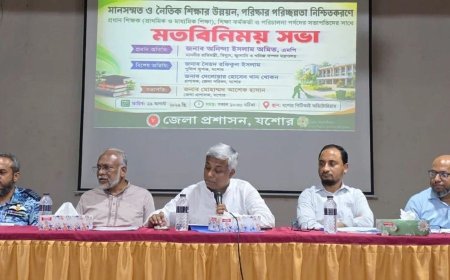
At a meeting with the parliamentary special committee on 29 September, newspaper editors also emphasised the need to ensure opposition participation in the constitutional amendment process.
Speaking to the Daily Sun, Dr Md Shahabul Haque, a professor in the Department of Political Studies at Shahjalal University of Science and Technology (SUST) in Sylhet, said constitutional amendments concern the fundamental structure of the state. He noted that wider political participation and consensus would strengthen the public acceptability of such initiatives.
The 12-member special parliamentary committee was formed on 13 July. The original proposal envisaged a 17-member body, including five opposition representatives.
The committee held its first meeting on 4 August before beginning consultations with various stakeholders. It subsequently met political parties and held discussions with journalists and representatives of media organisations.
Its second meeting, held on 27 September, brought together signatories of the July Charter. However, Bangladesh Jamaat-e-Islami, the National Citizen Party (NCP) and several other parties did not attend, maintaining their demand for implementation of the July Charter.
The government has repeatedly maintained that the July Charter will remain the principal foundation for the proposed constitutional changes.
Proposed changes to key constitutional provisions
The proposed amendment package may cover the Preamble, several key articles and the restoration of a referendum provision. The non-party caretaker government system is also among the most politically significant issues under consideration.
The parliamentary committee plans to recommend restoring the phrase “Absolute Trust and Faith in Almighty Allah” to the Preamble and Article 8, replacing the existing state policy of secularism.
Possible amendments may also involve Article 48, concerning the President's role; Article 56, relating to the Prime Minister and Cabinet; and Article 142, which outlines the procedure for constitutional amendments.
Changes may also be proposed to Article 4A, which provides for the display of portraits of Father of the Nation Bangabandhu Sheikh Mujibur Rahman at the offices of the President, Prime Minister, Speaker and Chief Justice, along with other specified locations.
Meanwhile, Article 7B protects the Preamble, all provisions of Part I and Part II, most provisions of Part III, and provisions concerning the Constitution's basic structure, including Article 150, from amendment through insertion, modification, substitution, repeal or any other means.
What's Your Reaction?