








































BCB Moves to Discover Untapped Cricket Talent in Hill Regions
BCB Moves to Discover Untapped Cricket Talent in Hill Regions

The Bangladesh Cricket Board (BCB) has decided to explore untapped cricket talent in the three southeastern hill districts, where rugged terrain and limited infrastructure have kept the sport beyond the reach of many young people, officials said.
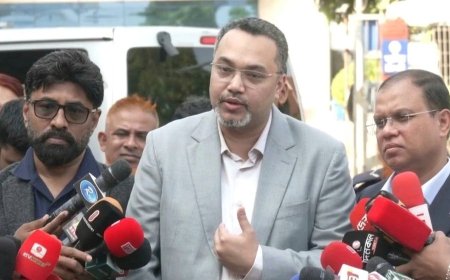
“The board is considering ways to bring more players from ethnic minority communities into the mainstream cricket system,” BCB director Sirajuddin Mohammad Alamgir said.
A strong advocate of the initiative, Alamgir said the biggest barrier was not a lack of athletic ability but limited opportunity. He said Bangladesh’s cricket structure needed to move beyond waiting for talented players from the hills to find their way to established cricket centres.
“Instead, the system needs to take the game to them, as it is not possible for them to overcome all the hurdles to come to the city and play cricket,” he said.
BCB officials said proposed measures include establishing residential facilities in Chattogram, expanding training opportunities and providing financial assistance to promising players from remote areas of the Chattogram Hill Tracts (CHT), allowing them to develop their skills in a professional environment.
Cricket experts said children in Rangamati, Bandarban and Khagrachhari often grow up amid rugged terrain and geographic isolation, with limited access to sports facilities. Reaching a cricket ground itself can be a major challenge.
Former BCB coach in Rangamati Mohitosh Dewan, who is himself from an ethnic minority community in the hills, knows the difficulties firsthand.
“It’s extremely tough to manage playing cricket in the hill tracts. When life is undeniably tough, cricket is a luxury there,” Dewan said.
He said young players often have to overcome significant logistical difficulties simply to reach a field, with many needing to cross hills and waterlogged areas before they can access a cricket ground.
Dewan said the geography of the CHT makes cricket fundamentally different from some other sports that have gained popularity among ethnic communities.
“The physical endurance developed by life in the hills has helped produce successful athletes in football, hockey and other disciplines, but cricket requires regular access to pitches, equipment, coaching and organised competition,” he said.
Ethnic athletes have made their mark in several sports. Footballers such as Rituparna Chakma and Monika Chakma have played important roles in Bangladesh women’s football, while cricket has so far produced only a handful of ethnic players in the country’s organised system.
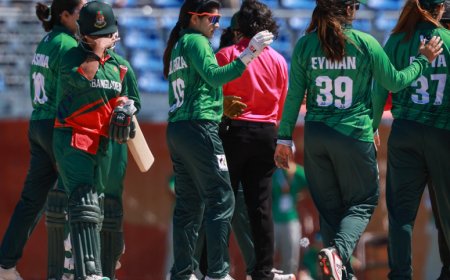
Champa Chakma became the first ethnic cricketer to represent Bangladesh women’s cricket and later pursued a career as an umpire. Mohitosh Dewan played in the Dhaka Premier League in the 1990s before moving into coaching.
More recently, Anik Deb Barman and Leky Chakma have emerged through the BCB’s age-group structure.
Their progress has provided the BCB with something that had been missing for decades: visible examples that players from ethnic communities can enter the national cricket pathway when given the opportunity.
Anik, a 6-foot-3-inch Tripura fast bowler from Habiganj, has already reached Bangladesh’s Under-19 preliminary setup. His journey highlights the importance of access.
“We have 40 families in our community in the village. No one played cricket there and hardly anyone had an interest in the sport,” Anik said.
He received a serious opportunity only after moving to Habiganj town, where a coach spotted him playing at school and helped develop his pace and skills.
Leky’s journey was even more difficult, as she had to overcome family resistance to her ambitions and travel several kilometres to attend training sessions.
Her breakthrough came through a district-level camp in Rangamati organised with support from the local cricket association.
Champa, who was involved in the camp, immediately recognised her potential.
“There were 40 players in the camp. Leky showed her potential to be the next cricketer from the hill tracts. So I picked her and informed the management about her ability,” Champa said.
Leky subsequently underwent rigorous training to make herself available for the Under-19 level.
Her progress is significant not only for her own career but also because the BCB sees the potential for a chain reaction, with one successful player inspiring many others to consider cricket.
Alamgir believes the absence of such a figure has been one of the reasons cricket has struggled to develop in the hills.
“You need a hero in our locality to embrace cricket. For hill tracts people, there is no hero,” he said.
He said a successful national-level player from an ethnic community could become a powerful source of inspiration for children who currently see little connection between their communities and elite cricket.
However, he said creating such a role model would require more than identifying talented youngsters. The BCB must also address the economic realities facing many children, who naturally gravitate towards sports requiring less financial investment.
“They are interested in less-costly games since they live under the poverty line. Daily realities of life in the hill tracts are very different from those in urban areas,” Alamgir said, adding that the BCB now wanted to combine training with practical support for the region.
Alamgir proposed using existing facilities in Chattogram to establish a dormitory where promising young cricketers from remote communities could stay and train. He also wants the board to explore financial assistance.
“We can even give some a salary so that they can be motivated to play cricket. If we can prepare cricketers in this way from the hill tracts, there will be a revolution there,” he said.
The concept is not entirely new. During his time at the Bangladesh Olympic Association, Alamgir proposed establishing a sports centre of excellence in the hill tracts, but the project never materialised.
The BCB is now considering a more targeted approach for cricket.
The board also recognises that physical strength alone cannot take a player to the top, as cricket demands technical ability, tactical understanding and sustained coaching.
“T20 cricket is all about power” is a common perception, but power alone is insufficient without the necessary skills. Intensive training is essential, Alamgir said.
That makes the development of ethnic cricket a long-term project rather than a short-term talent hunt.
The BCB’s challenge is to create a system through which children in remote communities can be identified early, given access to coaching and equipment, and connected to the established age-group structure.
The emergence of Champa, Anik and Leky has demonstrated that such a pathway is possible. The next step is to make it less dependent on individual circumstances and more accessible to an entire generation.
The hills have already produced athletes capable of competing at the highest levels in other sports. The BCB now wants to build a similar pathway for cricket.
For the board, the objective is clear: identify the talent, remove the barriers and provide ethnic communities with a genuine route into mainstream cricket.
What's Your Reaction?