


























































State Minister Faridul Urges Climate-Vulnerable Nations to Unite for Collective Action
State Minister Faridul Urges Climate-Vulnerable Nations to Unite for Collective Action

State Minister Urges Climate-Vulnerable Nations to Unite for Stronger Climate Action
State Minister for Environment, Forest and Climate Change Shaikh Faridul Islam has called for stronger collective action and international cooperation among climate-vulnerable nations to tackle the escalating impacts of climate change.
He warned that rising sea levels pose significant threats to Bangladesh's safe drinking water, food security, housing and infrastructure, underscoring the need for coordinated efforts among countries of the Global South.
“Climate-vulnerable countries must collectively raise their demands and priorities at international forums to safeguard the rights and livelihoods of affected communities,” he said, according to a ministry press release.
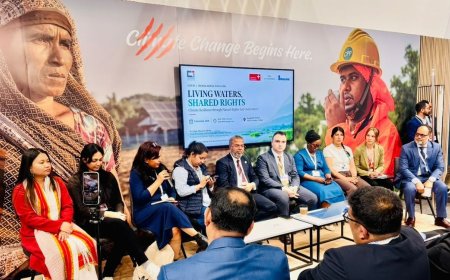
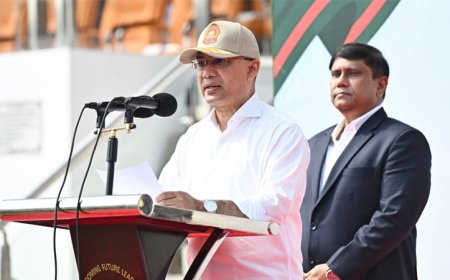
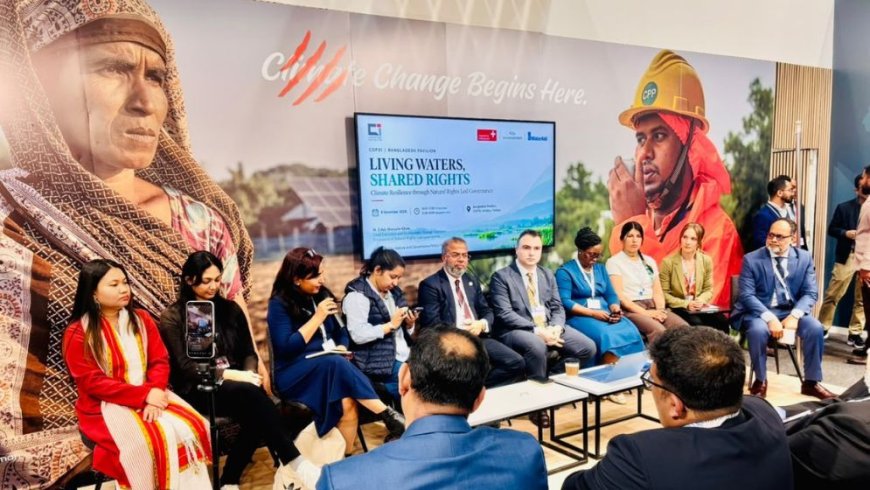
The State Minister made the remarks while delivering the opening address at a high-level policy dialogue titled “Living Waters, Shared Rights: Climate Resilience through Natural Rights-Led Governance” at the Bangladesh Pavilion on Monday, the opening day of the UN Climate Change Conference (COP31) in Antalya, Türkiye.
The event was organised by Change Initiative in partnership with the Embassy of Switzerland and WaterAid Bangladesh. Discussions centred on rights-based water governance, the protection of transboundary rivers, climate resilience and ensuring equitable access to water for local communities.
Shaikh Faridul Islam, who also convenes the Nature and Governance Policy Platform (NGPP), said climate change was increasingly endangering the lives and livelihoods of people across developing and climate-vulnerable countries. He emphasised that access to safe drinking water and food security must receive greater priority in international climate negotiations.
Participants highlighted that rivers transcend political boundaries, stressing the importance of transboundary water management policies that respect natural river flows, preserve ecosystems and protect communities dependent on shared water resources.
In his keynote presentation, M Zakir Hossain Khan, co-founder and chief executive of Change Initiative, drew attention to the global water crisis, disruptions to natural river systems and disparities in climate financing.
He noted that Bangladesh shares 54 transboundary rivers with India, while the 1996 Ganges Water Sharing Treaty is scheduled to expire on December 12, 2026. He called for stronger cooperation and coordinated policy initiatives to ensure the sustainable management of shared rivers.
Research presented by Change Initiative revealed that Bangladesh received $7.78 in loans for every $1 in grants allocated to the water supply sector through climate financing between 2002 and 2023.
The findings highlighted the urgent need to prioritise grant-based climate financing over loans to support vulnerable countries and affected communities.
Mansura Akter, a member of parliament and core member of NGPP, said ordinary people experienced the consequences of climate change through shortages of safe drinking water, inadequate supplies for agricultural activities and flood-related destruction.
She called for sustainable, long-term policy interventions to protect people's right to water.
Dr Mustafa Berk Duygu, head of the Drinking Water Department at the General Directorate of Water Management under Türkiye's Ministry of Agriculture and Forestry, emphasised the importance of international cooperation and technical knowledge-sharing among countries sharing river basins.
Chitembo Kawimbe Chunga, head of Adaptation and Resilience at the Climate Investment Funds, highlighted the need for locally driven climate adaptation programmes and more effective climate financing.
Dr Manohara Khadka, Nepal country representative of the International Water Management Institute, advocated climate finance justice and greater integration of scientific research into policymaking and investment strategies.
Sejal Patel, senior researcher at the International Institute for Environment and Development, stressed the importance of sustained investment in protecting rivers, wetlands and groundwater resources, alongside increased grant-based funding for local communities.
Shirin Sultana Lira, senior programme manager at the Embassy of Switzerland in Bangladesh, shared insights into sustainable water management initiatives based on active participation by local governments and communities.
The dialogue was attended by international specialists in climate finance and water governance, development partners and representatives of Indigenous communities from Bangladesh and Chile.
What's Your Reaction?