































How Israel’s New Parliament Could Complicate Netanyahu’s Political Future
How Israel’s New Parliament Could Complicate Netanyahu’s Political Future
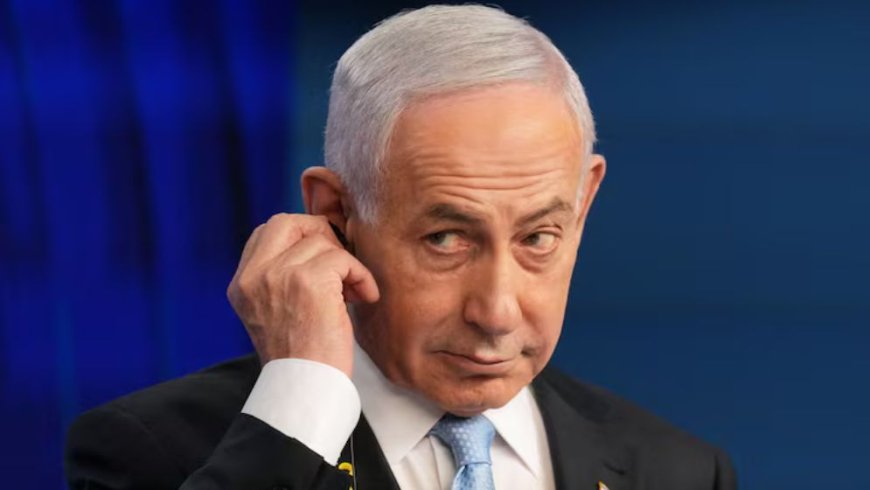
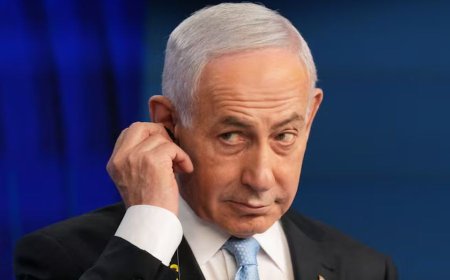
Benjamin Netanyahu will remain Israel’s prime minister when the newly elected parliament convenes on Tuesday, but its less favourable political composition could pose significant challenges to his leadership.
Gadi Eisenkot, a former military chief seeking to shift Israeli politics towards the centre, was tasked by President Isaac Herzog on Sunday with forming a new government. However, the process is expected to be complicated, as neither Eisenkot nor Netanyahu currently commands a parliamentary majority. Until a new government is formed, Netanyahu, Israel’s longest-serving prime minister, will continue as caretaker premier. Nevertheless, the incoming 120-member Knesset could still take several steps to challenge his authority.
“The absence of a new government does not infringe upon the Knesset’s prerogatives,” said Assaf Shapira, a political expert at the Israel Democracy Institute.
Eisenkot has also warned military commanders that Netanyahu lacks a mandate to resume military operations against Iran. However, the statement was largely political rather than legal, as Netanyahu continues to oversee national security.
Netanyahu’s political bloc has fallen to 53 seats in the new parliament, compared with the commanding 68 seats it previously held. Eisenkot’s main opposition bloc controls 48 seats, while Arab-majority parties have secured a record 19 seats. These parties strongly oppose Netanyahu and his hard-right government, although it remains uncertain whether Eisenkot will pursue direct cooperation with Arab lawmakers.
Here are some ways the new parliament could challenge Netanyahu:
Commission to investigate the October 7 attacks
One of the opposition’s key election promises was to establish an independent commission of inquiry into the security and intelligence failures that enabled Hamas to launch its October 7, 2023, attack, the deadliest single day in Israel’s history.
Netanyahu has denied personal responsibility for the failures. His government has repeatedly resisted calls for a national independent inquiry with extensive investigative powers, instead favouring a review conducted by politically appointed officials.
According to Shapira, the incoming parliament could establish a special committee to investigate the attacks even before a new government is formed. Its findings could subsequently be handed over to an eventual national commission of inquiry.
Eisenkot announced after the election that establishing such a commission would be among his immediate priorities.
Repealing laws introduced under Netanyahu
The new parliament could also move to overturn some of the most controversial legislation introduced during Netanyahu’s previous tenure, particularly measures aimed at restructuring Israel’s judicial system.
Netanyahu has viewed the judiciary as an adversary, particularly after facing corruption charges. His proposed judicial overhaul triggered some of the largest protests in Israel’s history, with critics warning that the reforms threatened democratic institutions. However, the October 7 attacks and subsequent conflicts shifted public attention away from the issue.
The incoming lawmakers could seek to reverse legislation that curtailed the Supreme Court’s authority and made it easier to dismiss the attorney general.
They could also reconsider exemptions allowing ultra-Orthodox Jewish men to avoid compulsory military service. The exemptions have generated widespread resentment among Israelis, particularly as the military faces growing manpower shortages. However, ultra-Orthodox parties have also criticised the existing arrangements as insufficient and are reportedly being approached by at least one opposition figure.
Shapira said repealing legislation introduced under Netanyahu could be relatively straightforward, requiring parliamentary votes to restore previous policies. However, passing new legislation could take several weeks as opposition parties coordinate their priorities.
Electing a new parliamentary speaker
The first major political confrontation is expected to centre on the election of a new Knesset speaker. The current speaker, Amir Ohana, is a close Netanyahu ally and member of his Likud Party.
Under parliamentary rules, lawmakers can elect a speaker during the Knesset’s inaugural session, and the election must take place before a new government is sworn in.
An initial dispute emerged on Thursday when three parties belonging to Eisenkot’s bloc wrote to outgoing speaker Ohana, requesting that his successor be elected during the opening session. Shapira said this would be more consistent with established parliamentary practice.
Ohana, however, argued that the customary practice was to elect the speaker on the day a new government takes office.
Meanwhile, Naftali Bennett, another prominent opposition figure, pledged to move swiftly to implement the bloc’s priorities.
“We will take control of the Knesset as quickly as possible,” he said.
What's Your Reaction?