










































Bangladesh’s Geopolitical Gamble: Who Comes First?
Bangladesh’s Geopolitical Gamble: Who Comes First?


“Bangladesh First” defines the slogan of Bangladesh Nationalist Party government. The principle being Bangladesh’s national interest shall come before any foreign power. However, in the recent months, its felt that Dhaka’s increasing engagement and reliance on select few countries especially infrastructure cooperation with China, multiple cooperation with Pakistan and Saudi Arabia, deeper defence cooperation with Turkey, and expanding economic engagement with the United States may influence Bangladesh’s economy under great pressure and thus impinge on its national interest. Pertinently, Muqtedar Khan, an Internal relations scholar on Bangladesh has argued that Dhaka’s “most important priority must be the economy” and that political stabilization should be used to attract “larger, more diversified investment” in various critical sectors.
The pertinent question is therefore straightforward: Is Bangladesh’s growing external commitments strengthening the foundations of “Bangladesh First” or is it stretching them?
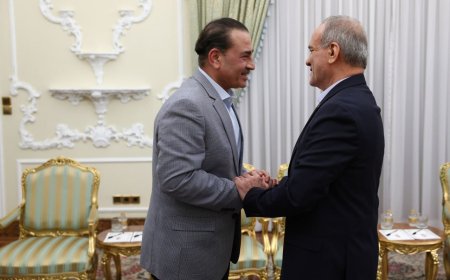
It has been observed that China is emerging as the most consequential pillar of Bangladesh’s new external economic strategy. During Prime Minister Tarique Rahman’s June (22-26) visit, he signed 13 Government MoUs with Beijing in every different strategically important area; with China even offering support for Teesta management and Bangladesh supporting “One China” policy. In this context, Md Mazhar Uddin Bhuiyan writes that “Bangladesh buys about four dollars’ worth of Chinese goods for every one dollar’s worth that it sells to China. This trade gap has grown by around 1,600 per cent over the past twenty years. The new government is also facing low foreign exchange reserves, weak investment, and slow growth, which the World Bank estimates at around 3.9 per cent. Thus, Chinese support appears useful, but greater dependence on China also comes with risks.”
This can be supported more with recent proposals. The China Economic and Industrial Zone in Chattogram’s Anwara will be developed on nearly 800 acres under a Bangladesh-China government-to-government initiative. Further, the China-backed Aminbazar waste-to-energy project would process 1,000 tonnes of waste daily while buying electricity at Tk25 per unit—127% above existing rates. “No government investment” masks the real cost: decades of guaranteed purchases could lock Bangladesh into an expensive, foreign-backed energy dependency. Also, the proposed Maheshkhali Floating Storage and Regasification Unit(FSRU) illustrates another source of socioeconomic risk. Under a G2G arrangement with China’s China National Energy Engineering & Construction Co., Ltd. (CNEE), Bangladesh faces a $342,000 daily charge—35–37% higher than existing FSRU rates. With the premium still unjustified by the negotiation committee and competitive bidding replaced by G2G, the deal could leave Bangladesh tied to costly, long-term dependence in a strategic energy sector. All these suggests how China is steadily pushing Bangladesh to an economically dependent country.
Pakistan’s expanding role, alongside Saudi Arabia and Turkey, risks pulling Bangladesh into a strategic bloc where it could pay the geopolitical and military costs of wars it did not choose. Saudi Arabia, Turkey and Pakistan have agreed to treat an attack on one as an attack on all. But their security priorities differ sharply from Bangladesh’s. Pakistan faces India, Afghanistan and Balochistan; Saudi Arabia faces Iran, the Houthis and Gulf instability; Turkey has major interests in Syria and the eastern Mediterranean. It is widely felt that, if one conflict escalates, what would Bangladesh be expected to provide troops, logistics, intelligence, weapons or money or all?
Further, the Houthis threat shows how Bangladesh can bear the costs of conflicts it does not fight: Red Sea attacks can raise freight, insurance, delivery and energy-import costs. An Iran confrontation could deepen that exposure, while collective defence may demand costly readiness, exercises and deployments. As Ali Riaz notes, the pact’s obligations remain unclear. Bangladesh can deepen ties with Turkey, Pakistan and Saudi Arabia, but “Bangladesh First” means refusing military commitments that make Dhaka pay for wars it did not choose.
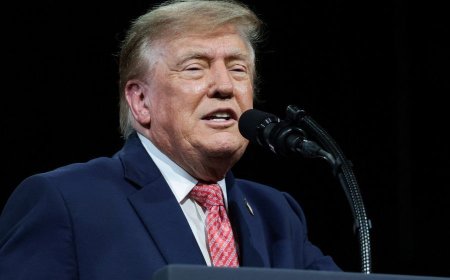
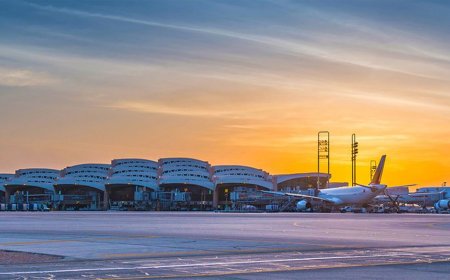
As far as United States is concerned, Biman Bangladesh Airlines has agreed to a $3.7 billion purchase of 14 Boeing aircraft, bringing its planned acquisitions to 25 planes with reported acquisition of 80-90 planes to develop into a regional aviation hub. Immediately after Sergio Gor’s visit to Bangladesh US President sent a reply letter for purchasing Boeing and even wish to meet him soon. The concern is whether Boeing purchases reflect genuine aviation needs or growing geopolitical accommodation, as aircraft deals increasingly intersect with US trade diplomacy and economic statecraft. Economist Anu Muhammad has questioned this direction, arguing that although the government promotes the slogan “Bangladesh First,” some of its decisions increasingly resemble an “America First” approach, pointing in particular to the Boeing procurement and the broader trade arrangement. The question, therefore, is not simply whether Bangladesh is buying aircraft. It is whether these investments are primarily building national capability or signaling a deeper strategic alignment with Washington.
The same contradiction appears in Bangladesh’s energy policy. Rooppur Nuclear Power plant has faced delays and substantial cost pressures. At Rampal, the proposed second 1,320 MW coal unit has been replaced by a 442 MW solar project. These developments point to a larger question about whether Bangladesh is choosing the most economical and sustainable path for its energy future.
A Geopolitical Gamble Ahead
The geo political experts on changing dynamics in Bangladesh feels that the current policy favours Bangladesh moving towards “Anyone First but India” approach, expanding partnerships with select nations while reducing reliance on its closest neighbour. However, they feel that this approach may impact Bangladesh to seek India’s support when the costs of these choices become difficult to manage, which remains a likely possibility in future. Some experts have raised concerns with regards to growing external financial and strategic dependencies with respect to Bangladesh’s economic resilience and policy autonomy. It is felt that by 2026, Dhaka was again seeking additional assistance, including a reported $2 billion emergency support request from the International Monetary Fund (IMF), reflecting the continuing pressure on the economy. It is pertinent to mention that Bangladesh’s dependence on external financing has also grown, with the World Bank approving $1.1 billion in emergency support for critical sectors.
For India, the issue is not Bangladesh’s engagement with other countries. The more practical concern is whether; after building extensive economic and strategic relationships elsewhere, Bangladesh may eventually turn to its immediate neighbour for economic support, connectivity and regional stability when those commitments come under pressure.
What's Your Reaction?