



































Nepal at the Centre: What the Foreign Minister’s Press Conference Revealed and What It Didn’t
Nepal at the Centre: What the Foreign Minister’s Press Conference Revealed and What It Didn’t

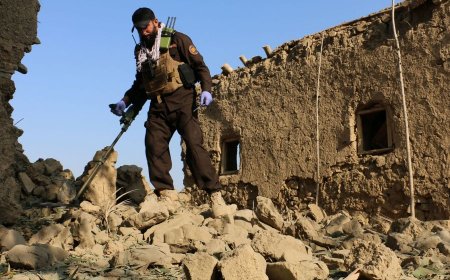
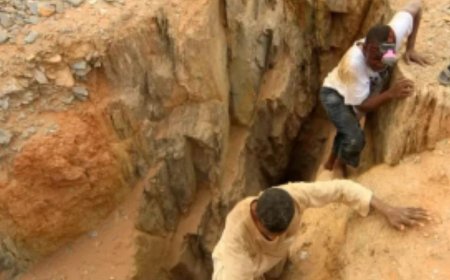
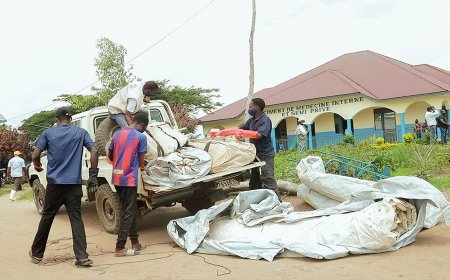
On Saturday, an 11-member Indian technical team flew from Kathmandu to Chilime and Langtang to conduct an on-site assessment of flooded hydropower tunnels alongside the Nepali Army and Armed Police Force. A six-member Chinese team arrived in the Trishuli area by Chinese helicopter and began operations with a Nepali Army unit at the Trishuli 3B tunnel. A South Korean team also travelled to the affected districts that day. At the same time, Nepal’s government rejected another Indian request to deploy a larger search-and-rescue contingent.
This is the framework Nepal has established. Kathmandu has welcomed foreign assistance, contrary to the simplified narrative that it shut the door on outside help. Nepal has allowed four countries—India, China, Australia and South Korea—to concentrate on three key areas: rescuing people trapped inside hydropower tunnels, conducting DNA analysis and carrying out forensic investigations. Other forms of assistance remain restricted, with access being expanded gradually as teams on the ground identify additional needs.
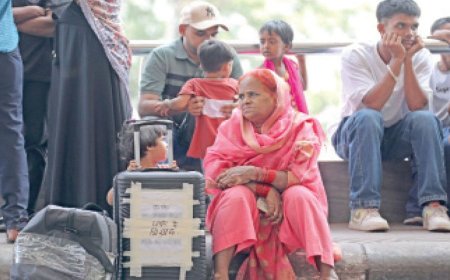
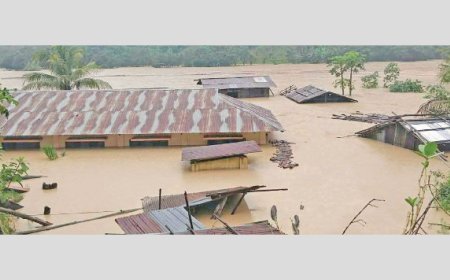
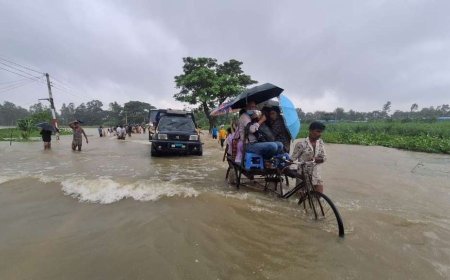
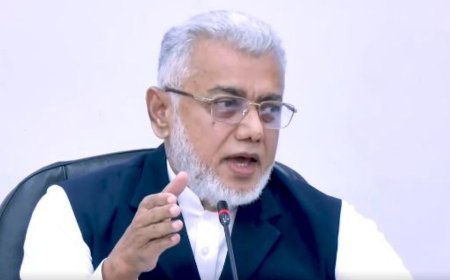
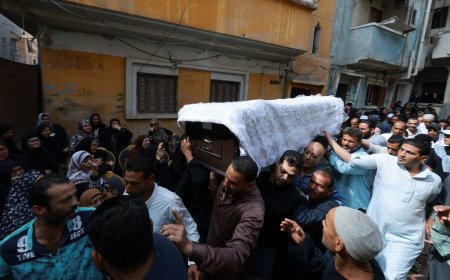
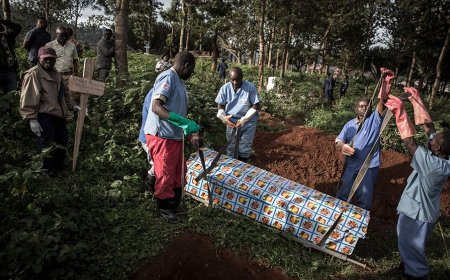
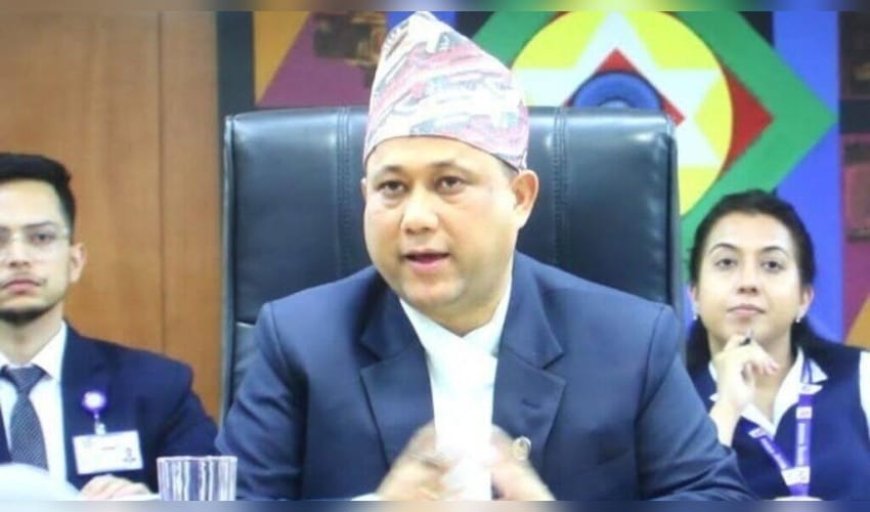
Foreign Minister Shishir Khanal explained the reasoning during his 29 August briefing, three days after a glacier collapsed at an altitude of about 5,200 metres. The mass plunged roughly 1,200 metres, picking up rocks and debris before crashing into the Lende River and causing the Trishuli River to rise by nine metres within 30 minutes. Khanal said 4,451 people, including 187 foreign nationals, had been rescued, while 626 bodies had been recovered and around 2,400 people remained unaccounted for. He stressed that the limited access for foreign teams was driven by geography rather than politics.
Rasuwa is inaccessible by road, while the worst-affected settlements can only be reached by helicopter through narrow gorges. Even Nepali pilots, Khanal noted, "have to stand on a queue just to get through." The riverbed has become swampy, making it difficult for heavy machinery—and in some areas even people on foot—to operate. The decision, he said, was based on recommendations from security officials. The experience of 2015 also looms large, when competing international relief teams created what one analyst described as the chaos of large groups "fanned out in different areas."
Instead, Nepal requested assistance that closely resembles a procurement list: equipment to open tunnels where workers may be trapped, technology capable of detecting survivors, rapid forensic and DNA capabilities, and mortuary facilities for storing recovered bodies. Khanal was candid about the limitations. "Our own healthcare capacity is very limited to put these bodies in a frozen state," he said, while acknowledging that Nepal also has "very limited forensic capability."
The Word That Was Never Mentioned
The briefing becomes particularly revealing when considering what was left unsaid. Despite discussing a flood originating upstream in Chinese territory and an area bordering the Tibet Autonomous Region, Khanal never once used the word "Tibet."
Instead, he referred to the "Nepal-China border area," "Chinese authority," "government of China," and "our northern neighbour to China." When describing where Chinese rescue teams were waiting to cross, he simply referred to "the northern side." The journalist who began the questioning did mention Tibet, noting that the affected area "is not only in Tibet but also in other parts of the country." Khanal's response avoided the term altogether, shifting instead to institutions, including a research partnership between the Chinese Academy of Sciences and Tribhuvan University, and calling for the Himalayan cryosphere to be treated as a global concern.
The omission appears deliberate rather than accidental. It reflects the careful language Nepal traditionally employs when discussing its sensitive northern frontier. International reports have routinely described the disaster as occurring along the "Nepal-Tibet border," while Beijing uses the term Xizang. Kathmandu uses neither formulation.
The reason is straightforward: explicitly referring to the upstream territory as Tibet could trigger questions involving sovereignty, refugees and China’s sensitivities—issues that a foreign minister overseeing a massive recovery operation has little interest in opening. Former Nepali ambassador to the UN in Geneva Dinesh Bhattarai has publicly suggested that Rasuwa's proximity to one of Beijing's most sensitive territorial issues could help explain Nepal's reluctance to allow larger foreign teams into the area. Nepali officials reject that interpretation. Whatever the actual motivation, the briefing demonstrates that the sensitivity is visible in the government's choice of words.
The Asymmetry Khanal Acknowledged
One of the most revealing exchanges came when Bloomberg journalist Dan Strunk asked whether Nepal was actually receiving information from China.
Khanal initially offered a strongly positive assessment, saying Beijing had been "very forthcoming with sharing information and data" and that coordination was "very, very close." He also said Chinese monitoring had identified the danger posed by a new barrier lake created after the collapse.
But his explanation highlighted a significant imbalance: China was able to provide such information because, in his words, "they have better technological access than we do in that particular region."
Nepal does not appear to object to Chinese assistance; rather, it is constrained by the circumstances that make such assistance necessary. Khanal effectively acknowledged that Nepal lacks the technological capacity to monitor the area adequately and that its awareness of emerging threats can depend on another country's willingness to share information. It was perhaps the most consequential admission of the briefing, delivered in notably diplomatic language.
Asked whether cooperation had existed before the disaster, Khanal went further, appearing to shield the upstream authorities. "It looks like that even the Chinese side was, probably did not have that full information," he said, suggesting that neither side had a complete picture of the developing situation.
On an early-warning system, he confirmed that Nepal and China had already agreed to establish a mechanism and were engaged in "active discussion" over its implementation. "But unfortunately this incident happened," he said.
That explanation warrants closer examination because Beijing has subsequently offered a somewhat different account. In a public notice issued Saturday, the Chinese Embassy in Kathmandu said a delegation from China's Ministry of Water Resources and the Xizang water resources department had visited Nepal in May and made "substantial progress" with Nepal's Ministry of Energy, Water Resources and Irrigation and the National Disaster Risk Reduction and Management Authority on creating a transboundary disaster information-sharing mechanism.
Yet three months later, the mechanism remained incomplete, while the Chinese warning about the barrier lake reached officials in Rasuwa on 28 August—two days after the flood rather than before it. Both governments are therefore describing the same unfinished arrangement in different terms: Nepal as an unfortunate delay and China as substantial progress. Neither has provided a firm completion date.
India: Welcomed, but With Limits
Khanal was notably warmer and more specific when discussing India's assistance. He said Nepal had already received more than 57 tonnes of relief materials from India, a figure that later rose above 68 tonnes following four Indian Air Force C-130 flights carrying tunnel-rescue personnel, forensic specialists for DNA analysis and relief supplies.
India also sent components for a 230-foot modular steel bridge, with 16 trucks already on the ground and seven Bailey bridges expected to follow. Khanal specifically mentioned the 11-member Indian specialised technical reconnaissance team deployed for tunnel rescue.
He also highlighted high-level diplomatic contacts, including his conversation with Indian Foreign Minister S. Jaishankar the previous day and Prime Minister Narendra Modi's call with Nepali Prime Minister Balendra Shah on the first day of the disaster.
New Delhi appears to have learned important lessons from the 2015 earthquake. Jaishankar has repeatedly emphasised that India's assistance would be based on Nepal's requirements, saying: "Whatever they feel is appropriate, they will pick up for their needs."
The experience of Operation Maitri and the political backlash it generated demonstrated that a highly visible Indian presence can itself become controversial in Nepal. This time, India is providing more material assistance while accepting a smaller operational footprint than it initially sought. Nepal rejected India's offer to deploy the National Disaster Response Force once, and then rejected a further request on Saturday.
There is also an understated geographical dimension to the deployments. The Indian team went to Chilime and Langtang, while the Chinese team was sent to Trishuli 3B. Nepal has effectively placed both of its major neighbours in the same disaster-response framework, assigning them similar categories of work but in different tunnels.
What Journalists Asked—and What They Received
The questions at the briefing also reveal how different audiences viewed the disaster.
Bloomberg focused on the extent of cooperation with China. Asahi Shimbun sought casualty figures and asked whether the prime minister would travel to Japan, China or India. A Japanese broadcaster asked about five missing Japanese nationals. Another journalist asked which foreign teams were being allowed into Nepal and which had been turned away.
International journalists therefore approached the disaster primarily through geopolitics, access, diplomacy and the status of foreign nationals.
The most immediate questions about the human consequences came from Nepali journalists.
Rabindra Bawa asked about refrigerated facilities for bodies, warning that decomposition would accelerate because of the prevailing humidity. The response was significant: no specific commitments had yet been made, although options such as freezer trucks were being considered.
Pushpa Acharya, from the government media, asked about workers still trapped inside the Trishuli tunnels and about operators being excluded from the unified helicopter command. Another Nepali journalist asked when the post-disaster needs assessment would be completed and whether Nepal would organise a donor conference similar to the one held after the 2015 earthquake.
This is not necessarily a reflection of a lack of concern among foreign correspondents. Rather, it demonstrates how the same disaster is viewed differently depending on geography. International observers see a catastrophe unfolding on the China border, with implications for infrastructure, diplomacy and regional competition. In Kathmandu, the central question is more immediate: whether families will recover their loved ones and whether workers trapped inside the tunnels are still alive.
Khanal addressed both concerns, but the second remained much harder to answer because Nepal has yet to provide definitive information about those workers.
Development After the Emergency
The most forward-looking portion of Khanal's briefing was also among the most commercially significant. He used the international media platform to stress that Nepal remains "mostly open," highlighting Kathmandu, Pokhara, Lumbini, Chitwan, Janakpur, and the Annapurna and Everest regions.
His argument was that one of the best ways to build a resilient economy is "not just a donation, but to support the core areas of economy."
With thousands still unaccounted for, Nepal's foreign minister was already defending the country's tourism sector. That may appear unusual during a disaster briefing, but the logic is understandable: prolonged damage to tourism could create a second economic crisis, particularly through its impact on foreign-exchange earnings and the balance of payments.
The same forward-looking approach shaped Khanal's discussion of climate and science. Responding to a question about geological risks, he broadened the issue into an international climate argument, pointing out that Nepal contributes only about 0.01 percent of global greenhouse-gas emissions while disproportionately suffering the consequences.
He called for the Himalayan ecosystem to be treated as a shared global responsibility. Nepal's strategy, therefore, appears to be built around using scientific partnerships, early-warning systems and climate finance not only as emergency tools but also as instruments of long-term development.
For now, however, the immediate priority remains the recovery operation. Reconstruction, tourism and hydropower will follow.
Khanal could not provide a timetable for completing the post-disaster needs assessment. He confirmed that the foreign and finance ministries were discussing a donor conference at the ministerial level and said the government wanted to move quickly.
He estimated that reconstruction could cost billions of dollars, including repairs to more than 40 bridges and assistance for roughly 15,000 damaged households. Both India and China are likely to seek roles in the reconstruction effort, while Nepal will have to carefully manage and allocate the available resources.
The larger lesson is that the transboundary information-sharing mechanism with China remains a document in progress rather than an operational early-warning system. China's embassy says meaningful progress was made in May, but the mechanism was still not functioning when the latest disaster struck—a particularly stark fact given that the same district experienced a fatal glacial outburst flood in July 2025.
Nepal has opened its doors to foreign assistance, but on its own terms. The pattern emerging from the disaster is therefore not one of isolation, but of carefully managed access—welcoming outside expertise where it is needed while retaining control over the political, security and operational dimensions of the response.
What's Your Reaction?