





































































Iran Labels Starlink a ‘Tool of War’, Signals Possible Further Internet Restrictions
An Iranian official warns that satellite internet could undermine the country's online controls amid its ongoing war with the US and Israel.


Iranian authorities have vowed to intensify their crackdown on Starlink satellite internet services and impose further restrictions on global internet access as the war with the United States and Israel continues.
Starlink, operated by Elon Musk’s company, provides internet access largely free from the extensive filtering and restrictions imposed by Tehran. The service is banned in Iran on national security grounds, with users facing fines and imprisonment for accessing satellite internet or distributing Starlink terminals.
The restrictions are among a series of measures introduced since the United States and Israel launched strikes against Iran on February 28, triggering a prolonged conflict that has placed significant pressure on the country's economy.
Iran's population of approximately 90 million has experienced two prolonged government-imposed internet shutdowns in 2026. The first lasted three weeks during nationwide protests in January, while the second continued for 88 days following the outbreak of the current war.
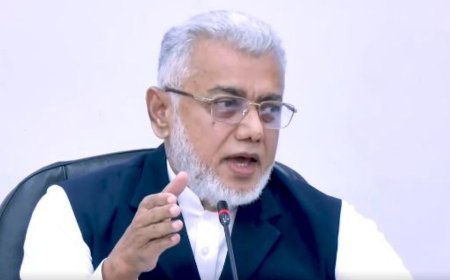
Mohammad Amin Aghamiri, secretary of Iran's Supreme National Cyberspace Council, has described Starlink as a “tool of war” used by the country's adversaries.
“It is a tool used for command and control by the enemy, for espionage and information gathering,” Aghamiri said, adding that authorities had several systems capable of cutting off Starlink satellite terminals.
He did not provide details about the technology being used to disrupt the service. However, a similar system was reportedly deployed during the January protests, and Iranian authorities had expressed readiness to share the technology with allied countries.
Iran is among several countries that have banned or restricted Starlink over national security concerns. Under Iranian law, using or possessing Starlink equipment can result in prison sentences ranging from six months to two years, while importing or distributing the devices can carry sentences of up to five years. Cases involving additional national security or espionage charges can potentially attract the death penalty.
Aghamiri has also urged Iranians to use domestic digital platforms supported by the government's National Information Network. He has backed a tiered internet access system that would allow selected groups, including traders, researchers and journalists, to access international services during periods of restrictions.
An internet and telecommunications expert based in Tehran, speaking anonymously, told Al Jazeera that Iranian authorities employ several methods to disrupt Starlink connections.
These reportedly include deploying multiple signal jammers, manipulating GPS signals to obstruct the activation of new devices and identifying Starlink-related internet protocols when they connect to domestic applications and services.
Authorities also conduct physical searches for satellite terminals through patrols and drones, alongside raids on businesses suspected of selling the equipment.
In June, former Israeli prime minister Naftali Bennett claimed that Israel had smuggled tens of thousands of Starlink devices into Iran during his 2021–2022 tenure to support anti-government protesters.
Since 2023, Tehran has also pursued the issue through the International Telecommunication Union's Radio Regulations Board, seeking to pressure the United States and Norway, which plays a role in the satellite network's regulatory filings, to halt unauthorised transmissions.
On October 4, Iran's Foreign Ministry summoned Norway's ambassador in Tehran to protest what it described as a failure to address unauthorised Starlink operations.
Concerns about the satellite service's potential impact on government control have also emerged within Iran's leadership. During a governance meeting in late September, Deputy Technology Minister Mohammad Hafez Hakami warned that widespread Starlink adoption could deliver the “last nail in the coffin” of Iran's cyberspace governance because the service operates independently of the country's domestic internet infrastructure.
Hakami cited previous efforts to restrict online platforms, including Telegram following the 2017–2018 cost-of-living protests and WhatsApp and Instagram after the 2022–2023 protests. He noted that authorities eventually resorted to a nationwide internet shutdown during the 2019 protests and imposed an almost complete blackout during the January 2026 demonstrations.
“If this trend continues, in the next crisis we will have to cut electricity, because Starlink, as a new tool of evading state governance, is fundamentally not even dependent on our network,” Hakami said.
Starlink has enabled Iranians to share videos of protests with the outside world despite government restrictions. Tens of thousands of terminals are believed to have entered the country through smuggling networks since 2022, although the exact number remains unknown.
However, the service remains inaccessible to most Iranians because of its cost, limited availability and the risk of government retaliation. Most people continue to rely on domestic internet services, which block thousands of websites and restrict access to many international platforms. US sanctions and banking restrictions further complicate access to global online services.
Many Iranians use virtual private networks (VPNs) and other tools to bypass restrictions. However, these services can be expensive, slow or insecure, potentially exposing users' personal information. They can also become increasingly difficult to access during government-imposed internet shutdowns.
Iranian officials have indicated that further restrictions could follow if the war intensifies, despite a relative decline in violence after a June memorandum of understanding between Tehran and Washington. The arrangement subsequently expired without a permanent ceasefire.
Government spokesperson Fatemeh Mohajerani said at a news conference on Tuesday that state agencies were deliberately disrupting internet services, arguing that the measures were necessary to protect citizens and national infrastructure from cyberattacks.
“Due to the importance of our databases and internet-based services, decision-making bodies are sometimes forced to bring down internet speeds,” she said, acknowledging the disruptions.
Authorities have also suggested that restrictions on certain digital platforms could eventually be eased, although no concrete steps have been announced.
State-linked media released a policy and governance framework document late Tuesday that Aghamiri said had been under consideration for nearly two years but kept confidential because of security concerns.
The document did not establish a timetable for restoring access to blocked platforms. Media reports indicated that implementation had been delayed by wars and protests.
Under the proposed framework, Google Play and WhatsApp could potentially be unblocked. YouTube and Telegram, however, would reportedly need to negotiate with Iranian authorities and accept conditions imposed by the government before access could be restored. Such agreements with the platforms appear highly unlikely.
What's Your Reaction?