










































Eight Digital Banks Near Final Approval After Three-Year Wait
Eight Digital Banks Near Final Approval After Three-Year Wait

Eight Digital Banks Near Final Approval After Three-Year Wait
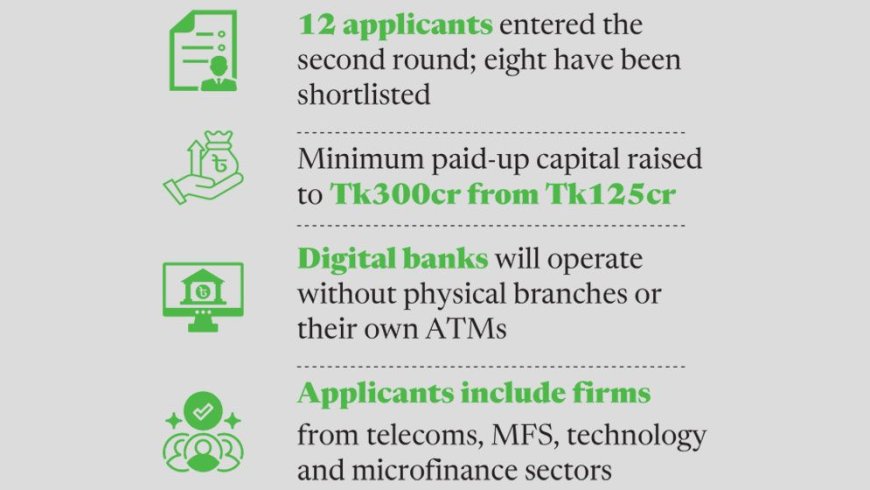
After a three-year wait, Bangladesh’s digital banking initiative is finally set to move forward, with Bangladesh Bank (BB) shortlisting eight of 12 applicants from the second round for final approval.
The proposals are likely to be placed before the central bank’s next board meeting, according to BB officials familiar with the process.
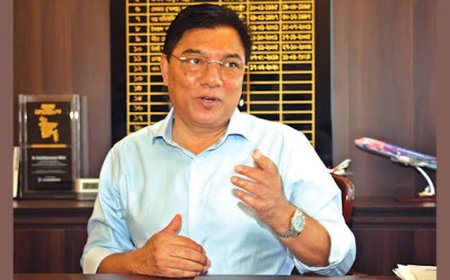
Bangladesh Bank Executive Director and spokesperson Arief Hossain Khan said the assessment of the eight applicants had entered its final stage.
“The matter will be placed before the next board meeting, where the final licences will be approved,” he said.
Unlike conventional banks, digital banks will operate without physical branches, sub-branches or dedicated ATM networks. Customers will be able to open accounts, deposit and transfer funds, make payments and apply for loans through mobile phones and other digital platforms.
The banks are also expected to introduce technology-driven services such as virtual cards and QR-code payments.
The initiative is intended to provide faster and more affordable banking services while bringing rural communities, young entrepreneurs, small businesses and financially underserved groups into the formal financial system.
Experienced banker and former Bank Asia president and managing director Md Arfan Ali said digital banks could create new opportunities for technology-driven banking services at lower operating costs.
“Digital banks can help bring the younger generation into the formal financial system and increase financial inclusion,” he told the Daily Sun.
He said the arrival of new digital banks would also intensify competition in the banking sector, encouraging conventional banks to adopt newer technologies and modernise their business models.
However, he warned that digital banks would face considerable challenges, particularly in securing adequate investment in technology and cybersecurity.
“Raising funds could also prove difficult initially because younger customers may not have large deposits. Data security, limited customer awareness and Bangladesh’s relatively underdeveloped digital infrastructure could also pose risks for the new banks,” he said.
Banglalink CEO Johan Buse said digital banking would play an important role in narrowing Bangladesh’s financial divide and expanding access to underserved communities.
“If we want to close Bangladesh’s financial divide, we must make everyday banking accessible to our unbanked communities,” he told the Daily Sun.
He cited Pakistan’s JazzCash, Kenya’s M-Pesa and India’s Unified Payments Interface as examples of digital financial services that have expanded access to affordable and inclusive financial services.
“Bangladesh can build on these successes by accelerating digital banking, microfinance and microinsurance, ensuring economic opportunities reach every part of the country and improving the lives of all,” Buse said.
Minimum capital requirement raised to Tk300 crore
Bangladesh Bank launched its digital banking initiative in 2023, issuing guidelines on June 14 and initially setting the minimum paid-up capital at Tk125 crore.
A total of 52 applications were submitted in the first round. Following scrutiny, nine proposals were presented to the BB board, with letters of intent issued to several applicants.
Nagad Digital Bank PLC became the first applicant to receive a final licence in June 2024. However, following the fall of the Awami League government, allegations of financial irregularities and money laundering involving Nagad surfaced. Its licence was later suspended, effectively bringing the first-round initiative to a halt.
Bangladesh Bank subsequently revised its digital bank policy on August 21, 2025, increasing the minimum paid-up capital requirement from Tk125 crore to Tk300 crore.
The central bank invited fresh applications on August 26, receiving 12 proposals in the second round.
The applicants were evaluated based on their capital strength, sponsors’ experience, technological capabilities, cybersecurity measures and compliance with regulatory requirements.
The second round also sparked controversy over a proposed digital bank licence for bKash. Allegations emerged that former BB governor Dr Ahsan H Mansur had sought an emergency board meeting to approve the licence shortly before the formation of the new cabinet following the election of the BNP-led government.
Leaders of the Bangladesh Bank Officers Welfare Council reportedly raised concerns over the transparency and impartiality of the process and called for the meeting to be postponed.
After assuming office, new BB Governor Md Mostaqur Rahman said the central bank would proceed with the digital banking initiative. The assessment of the second-round applications was subsequently expedited.
Who is seeking entry into digital banking?
The proposed sector has attracted companies and entrepreneurs from mobile financial services, telecommunications, microfinance and technology, alongside established business groups.
The 12 applicants are Robi Axiata’s Boost, Nova Digital Bank, a joint venture between Banglalink and Square; Munafa Islami Digital Bank, sponsored by Akij Resources; Maitree Digital Bank, sponsored by ASA; Amar Digital Bank-22; 36 Digital Bank; British-Bangla Digital Bank; Digital Banking of Bhutan, backed by Bhutan’s DK Bank; App Bank; Japan Bangla Digital Bank; Upokari Digital Bank; and bKash Digital Bank.
Officials have declined to reveal which eight applicants have been shortlisted.
The digital banking model is expected to lower operating costs and expand access to formal financial services, particularly for rural communities and people who remain outside the traditional banking system.
What's Your Reaction?