



























One lakh families to receive subsidised LPG from November
One lakh families to receive subsidised LPG from November.

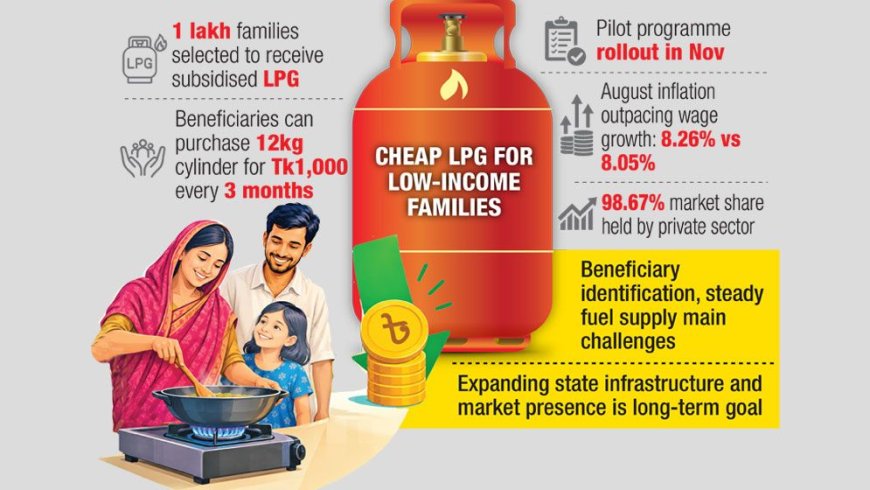
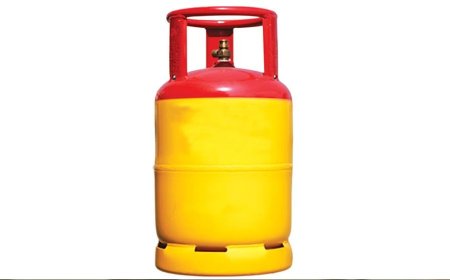
The government is preparing to launch a pilot programme in November to provide subsidised liquefied petroleum gas (LPG) to 100,000 low-income families through a dedicated LPG card scheme.
Under the proposed initiative, selected households will be able to buy one 12kg LPG cylinder every three months at a fixed price of Tk1,000, regardless of fluctuations in market prices.
Each family could receive up to four subsidised cylinders annually, with the programme aimed at easing the growing cost-of-living burden on poor rural households while encouraging a shift towards cleaner cooking fuels.
However, accurately identifying eligible beneficiaries and ensuring a reliable supply of state-imported LPG remain major challenges.
The Energy and Mineral Resources Division is working with relevant ministries to finalise beneficiary selection criteria, distribution mechanisms and supply arrangements. A formal project summary is also being prepared for submission to the Prime Minister’s Office.
Dr Mustafa K Mujeri, former chief economist of Bangladesh Bank, said the initiative could provide significant relief if the assistance reaches households that genuinely need it.
“If the support reaches households genuinely in distress, it will yield clear social benefits and ease immediate budget pressures,” Dr Mujeri told the Daily Sun.
He said that with employment opportunities declining and several businesses shutting down, helping low-income families meet essential fuel expenses was a timely measure.
However, he stressed that preventing leakages and ensuring the benefits reach only the intended recipients would be the programme’s biggest test.
Inflationary pressure
The proposed intervention comes as households continue to face persistent inflationary pressure.
According to official Bangladesh Bureau of Statistics (BBS) data, overall inflation stood at 8.26% in August. Food inflation was recorded at 7.02%, while non-food inflation rose to 9.32%.
With wage growth slightly lower at 8.05%, household purchasing power continues to come under severe pressure.
To minimise duplication and administrative complications, the government plans to select LPG card beneficiaries from existing lists prepared under the Social Welfare Ministry’s Family Card programme.
Field-level officials are already collecting data, while the Energy Division is drafting a policy and preparing a memorandum of understanding (MoU) with the Social Welfare Ministry.
Energy expert Prof Ijaz Hossain welcomed the initiative, saying rising LPG prices have made clean cooking fuel increasingly unaffordable for many households.
“High fuel costs swallow a disproportionate share of poor households’ disposable income,” Prof Ijaz said.
He noted that rural families often rely on traditional fuels such as firewood and cow dung, while urban slum residents have fewer alternatives, making affordable LPG particularly important for low-income city dwellers.
Prof Ijaz also stressed the need for Bangladesh to gradually move away from residential piped gas as domestic reserves decline.
“Residential users account for roughly 11% of national gas consumption, but nearly half is lost to systemic misuse. Transitioning households to subsidised LPG is both economically necessary and sustainable,” he said, pointing to India’s Aadhaar-linked LPG expansion as a successful example.
Supply and import challenges
Ensuring a steady government supply of LPG will remain a major challenge in a market dominated by private operators. Private companies currently account for 98.67% of distribution, while the government holds only a 1.33% share.
The government’s efforts to directly import LPG have already encountered difficulties. After an initial request for quotation failed to attract competitive bids, authorities moved towards direct procurement.
Speed Marketing Corporation (Speed Group) received a Notification of Award on 13 August but failed to submit the required performance guarantee, bringing the process to a halt.
Authorities are now considering a direct procurement proposal from Brother Liquefied Petroleum Gas Ltd and are seeking legal advice on whether an initial security deposit can be collected during negotiations.
To address immediate logistical constraints, Bangladesh Petroleum Corporation (BPC) signed a three-month agreement on 6 August to use a private operator’s 10,000-tonne storage facility for storing, bottling and distributing state-imported LPG.
In the longer term, the government plans to expand its presence in the LPG market by developing dedicated infrastructure, including a land-based LPG plant at South Kattali in Chattogram and storage and bottling facilities in Teknaf and Mongla.
Ultimately, the success of the LPG card scheme will depend on two key factors: ensuring that subsidies reach the right beneficiaries and maintaining an uninterrupted supply of LPG at the promised subsidised price.
What's Your Reaction?