





















































Govt launches three-month nationwide drive to prevent dengue
Govt launches three-month nationwide drive to prevent dengue

The government has stepped up efforts to contain the rising number of dengue cases, with health authorities warning that the outbreak could peak by late September or early October.
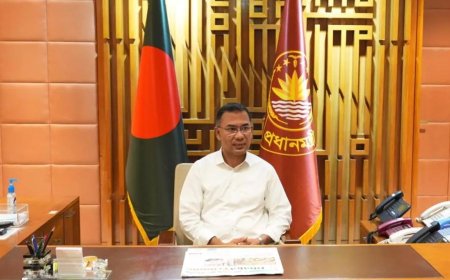
Prime Minister Tarique Rahman is scheduled to formally launch a three-month nationwide cleanliness and public awareness campaign on 12 September.
Dengue prevention efforts have been underway since March, with special cleanliness drives conducted every Saturday. Mobile courts are also inspecting homes and institutions to identify and eliminate Aedes mosquito breeding grounds.
Dengue corners have been established at upazila-level hospitals, while a field hospital has been kept ready on the grounds of Dhaka Medical College Hospital to handle a possible surge in patients.
Around 300 doctors nationwide have received specialised training in dengue treatment.
The government has instructed public hospitals to provide dengue tests free of charge. Private hospitals have been asked to reserve 10% of their beds for free dengue treatment, while diagnostic centres have been instructed to offer an 80% discount on dengue and related tests.
The dengue treatment guidelines have also been updated with support from the Bangladesh Society of Medicine.
The nationwide awareness campaign will involve volunteers from the Ministry of Disaster Management and Relief, Scouts, BNCC, Girl Guides, Bangladesh Red Crescent Society, as well as school and college students.
Hospitals instructed to remain prepared
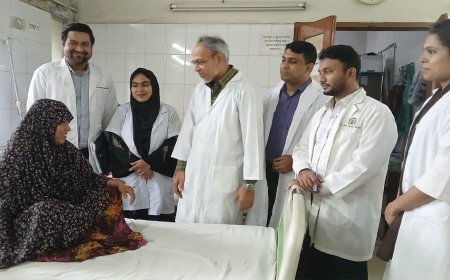
As dengue-related deaths and hospital admissions continue to rise, State Minister Dr M A Muhit held a virtual meeting with civil surgeons nationwide and directed them to strengthen hospital preparedness.
He urged people to keep their homes and workplaces clean, stressing the need for a coordinated nationwide effort to prevent the spread of dengue.
Hospitals have been instructed to prioritise dengue patients and increase the number of designated dengue beds wherever possible.
They have also been asked to provide mosquito nets for dengue patients and those in nearby wards to help prevent further transmission.
Hospitals have been authorised to purchase saline, medicines and dengue testing kits from their own funds if shortages arise.
DGHS Director General Professor Dr Pravath Chandra Biswas said hospitals currently have adequate supplies of dengue testing kits and saline.
“We have instructed hospitals to admit dengue patients on a priority basis and increase the number of designated beds wherever possible so that there is no shortage of beds,” he told BSS.
Dhaka Civil Surgeon Dr Md Zakaria Mahmud said hospitals had already received supplies of saline and dengue testing kits and that there was no shortage of essential items.
He said hospitals had been instructed to remain vigilant to prevent any crisis from developing.
Health authorities have also been asked to involve people from all sections of society in dengue awareness activities. Campaigns will be conducted through mosque imams and schools under the school health programme.
Task force formed to monitor dengue situation
A high-level task force was formed on 23 June under the Local Government Division to oversee dengue prevention efforts.
State Minister for Local Government, Rural Development and Cooperatives Mir Shahe Alam is serving as chairman of the task force.
The body will monitor the implementation of government decisions, coordinate activities among ministries and agencies, track progress and help resolve problems at the field level.
According to DGHS data, 45,475 people have contracted dengue and 130 have died between 1 January and 8 September this year.
A separate monitoring cell has also been established with officials from the CDC, IEDCR, MIS and the hospital branch to track the dengue situation and facilitate timely action.
What's Your Reaction?