
































































Revenue deficit reaches Tk60,000 crore in six months
Revenue shortfall emerges as major challenge for new government

The Bangladesh Nationalist Party (BNP) has assumed office after winning a majority in the recent National Parliament elections. Yet signs of economic weakness were already visible even before the new administration formally took charge. Trade and commerce have slowed, investment has declined, and instability persists in the banking sector. Persistently high interest rates have further aggravated the situation.
Investor confidence in the capital market remains fragile, while the law and order situation has yet to reach a satisfactory level. Employment has contracted, placing additional strain on the government’s finances.
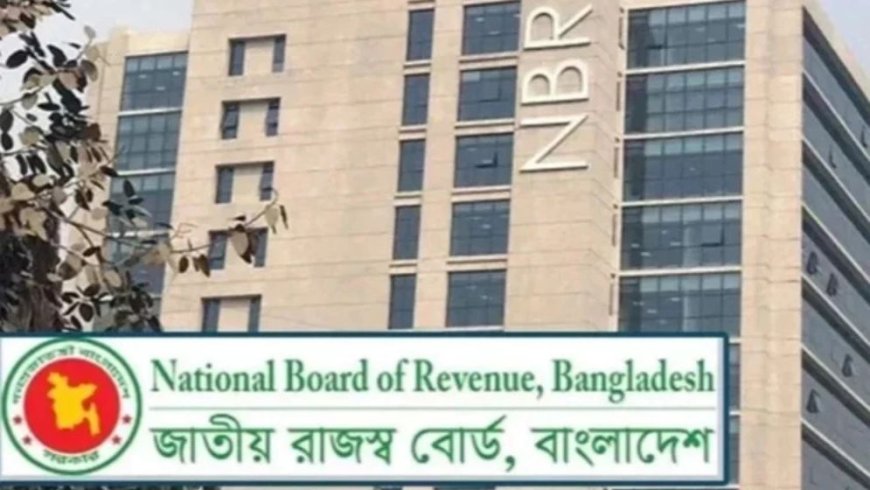
Sources at the National Board of Revenue (NBR) say the revenue shortfall in the first seven months (July–January) of fiscal year 2025–26 has exceeded Tk60,000 crore. NBR data show that the collection target for the period was Tk2,83,751 crore, but a deficit of Tk60,113 crore was recorded across the three major revenue heads, with income tax accounting for the largest gap.
The income tax shortfall stood at Tk28,925 crore. At the import stage, the deficit was Tk15,683 crore, while VAT collection fell short by Tk15,506 crore. Analysts caution that such a revenue scenario will present significant challenges for the newly elected government.
Against a target of Tk1,03,980 crore in income tax, only Tk75,055 crore was collected during the period. Corporate taxpayers contribute through advance income tax and withholding tax throughout the year, while individual taxpayers also pay their dues. However, shrinking income streams have led to a sharp drop in income tax receipts.
Business leaders remained cautious about expanding operations during the tenure of the interim government, and investment activity stayed muted. Many government projects were also largely stalled, resulting in a substantial decline in imports of industrial inputs and project-related raw materials. Consequently, import duty collection reached Tk62,814 crore against a target of Tk78,496 crore. VAT, which is levied at every stage—from import and production to marketing—totalled Tk85,769 crore, falling short of the Tk1,01,275 crore target. High inflation and declining household incomes have dampened consumption, negatively affecting VAT collection.
Mostafa Azad Chowdhury Babu, President of the Bangladesh Cold Storage Association, said revenue collection would improve only if business turnover increases. “Without higher incomes, how will tax revenue grow? Investment does not take place unless the law and order situation is normal. Future investment and business expansion will depend on the government’s decisions regarding tax policy, electricity and energy supply, and law and order. If conditions do not improve, why would entrepreneurs invest large sums?” he said.
Data suggest that incomes are not keeping pace with rising costs. Official figures show inflation stood at 8.58 per cent in January, after remaining elevated in November and December last year. Household spending on rent, education and healthcare has also increased. Meanwhile, the central bank’s policy of maintaining high interest rates to curb inflation has yet to deliver the desired outcome.
What's Your Reaction?