

















































Despite a booming Eid economy, the leather sector remains vulnerable
Despite a booming Eid economy, the leather sector remains vulnerable.


Eid-ul-Azha is approaching fast, ushering in a surge of festive economic activity across Bangladesh. Around the festival, transactions worth nearly Tk 100,000 crore are estimated to take place every year. Yet, despite strong business momentum in most sectors during Eid, the leather industry continues to remain fragile and vulnerable. While prices of leather goods have risen significantly over the years, raw hide prices have failed to increase accordingly. Despite its potential as a standalone export-oriented sector, the industry continues to face recurring crises annually.
As a result, although Eid generates massive economic activity nationwide, questions remain about whether the full economic benefits are being realized when a major sector like leather continues to lag behind. Insights from data analysis and discussions with experts highlight this imbalance.
Like previous years, Eid-ul-Azha has once again set in motion a vast seasonal economic cycle across the country. Livestock farming, cattle markets, transportation, animal feed, leather processing, online sales, mobile banking, spices, and cooking ingredients all contribute to transactions worth thousands of crores of taka during the festival season.
Economists estimate that Eid-related sacrificial activities generate economic activity worth nearly Tk 100,000 crore annually. Livestock farming, market management, transportation, animal feed, online transactions, mobile financial services (MFS), slaughtering services, cold storage, leather collection, and household consumption together have made Eid-ul-Azha one of Bangladesh’s largest seasonal economic drivers.
According to business leaders and researchers, more than 10 million livestock animals are sacrificed every year in Bangladesh, with most supplied by local farms. This creates a significant flow of cash into rural economies, especially benefiting small and medium-scale farmers who earn a substantial portion of their annual profits during this period.
Farmers say that while Indian cattle once dominated the sacrificial animal market, domestic production has now increased considerably. This has encouraged local farmers, while many young entrepreneurs are also joining commercial cattle and goat farming ventures. Business activities surrounding livestock markets begin weeks ahead of Eid, with market leasing, transportation, temporary shops, food stalls, labor, and security arrangements collectively driving large-scale economic activity. Stakeholders estimate that the government earns several hundred crore taka in revenue from cattle markets alone.
Festival economy expert Mamun Rashid said Eid-ul-Azha in Bangladesh has evolved beyond a religious observance into a major domestic economic cycle. According to estimates, nearly Tk 100,000 crore in economic activity is generated annually around the festival, spanning livestock farming, transportation, online commerce, mobile financial services, slaughtering services, leather collection, and household spending.
Untapped Potential in the Leather Industry
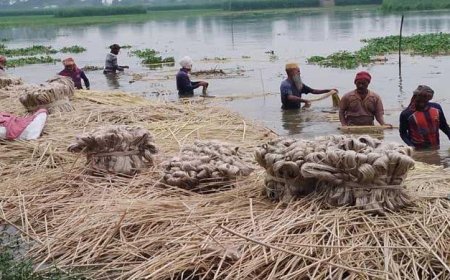
The leather industry remains one of the sectors most closely tied to Eid sacrifices, as a major share of the country’s annual raw hides is collected during Eid-ul-Azha. Experts believe the sector could earn substantially higher foreign exchange if managed properly. However, complaints regarding unfair pricing, inadequate storage, and the dominance of middlemen continue to surface every year.
Commerce Minister Khondaker Abdul Muqtadir recently described the leather industry as a potential billion-dollar export sector, saying Bangladesh could achieve $10–12 billion in leather exports.
Leaders of the Bangladesh Tanners Association (BTA) said between 10 and 12 million animals are sacrificed annually, with 50–60 percent of the country’s total raw hides collected during Eid-ul-Azha.
Former BTA General Secretary Shakhawat Ullah said that despite strong global demand for leather and leather goods, weaknesses in local collection, preservation, and supply systems prevent the sector from reaching its full potential.
He noted that although leather exports once exceeded $1 billion, earnings have now fallen to around $800–900 million due to poor storage systems, inefficient supply chains, and shortcomings in environmentally compliant tannery management.
According to him, addressing these problems could help Bangladesh strengthen its position in the global leather market.
Online Cattle Sales Gain Popularity
Digital platforms have witnessed notable growth in sacrificial animal sales in recent years, especially among urban consumers.
According to the Ministry of Fisheries and Livestock, around 85,626 sacrificial animals were sold online in 2025, generating transactions worth approximately Tk 5,987 crore. Online sales now account for nearly 0.94 percent of the total sacrificial animal market.
Many farmers and traders are now using platforms such as Bikroy.com to sell livestock online. One such example is Assurance Farms in Bhaluka, Mymensingh, which also supplies dairy products in Dhaka.
Senior Executive (Operations) Rakibul Islam said the company launched online livestock sales in 2024. This year, it stocked 250 cattle, of which more than 100 had already been sold.
He said many customers now prefer booking animals online rather than caring for them beforehand. The company raises the cattle until Eid and offers free delivery in Dhaka on or before Eid day. Demand has been particularly strong in Gulshan, Banani, and Baridhara.
Surge in Mobile Banking Transactions
Mobile financial services experience a sharp increase in transactions during Eid-ul-Azha. Platforms such as bKash, Nagad, and Rocket are widely used for purchasing sacrificial animals, advance bookings, transport payments, and labor wages.
According to Bangladesh Bank, monthly MFS transactions stood at around Tk 171,664 crore at the beginning of 2025, with several thousand crore taka added during Eid seasons.
Experts say digital payments have improved transparency and security while reducing the risks associated with carrying cash.
Transportation Costs Rise
Livestock transportation has become another major economic component during Eid. Trucks, pickups, trains, and waterways are all used to transport animals from farms to urban markets.
Farmers said transportation costs increased further in 2026 due to rising fuel prices and fares. Transporting a cow from district areas to Dhaka now costs between Tk 3,000 and Tk 15,000, depending on distance, truck size, and the number of animals.
Experts estimate that livestock transportation alone generates transactions worth several hundred crore taka while creating employment for drivers, helpers, loaders, and temporary workers.
Seasonal Jobs for Millions
Employment generation is another significant dimension of the Eid economy. Research and economic analyses suggest Eid-ul-Azha creates seasonal jobs for between 5 million and 10 million people, including transport workers, market managers, security personnel, slaughter service workers, hide collectors, and temporary shop employees.
Although many of these jobs are short-term, they provide important income opportunities for lower-income groups and boost cash flow in rural areas.
Labor rights expert and former chairman of the interim government’s Labor Reform Commission, Syed Sultan Uddin Ahmed, said Eid sacrifices create a massive seasonal labor market.
He said nearly 10 million cattle are sacrificed annually, and on average, three workers are involved in slaughtering, cleaning, and meat preservation for each animal. For a cow worth Tk 100,000, labor costs for slaughtering and cleaning can reach around Tk 15,000.
Based on this calculation, nearly 30 million labor-hours are generated during Eid, while sacrificial households spend an estimated Tk 1,500 crore on labor wages.
However, he added that many rural families perform these tasks themselves, meaning the actual figures may vary. He emphasized the need to improve workers’ health, safety, and skills, noting that this seasonal labor market remains a crucial component of Bangladesh’s economy.
What's Your Reaction?