












































Price Reductions Outpace Increases in Upcoming Budget
Price Reductions Outpace Increases in Upcoming Budget

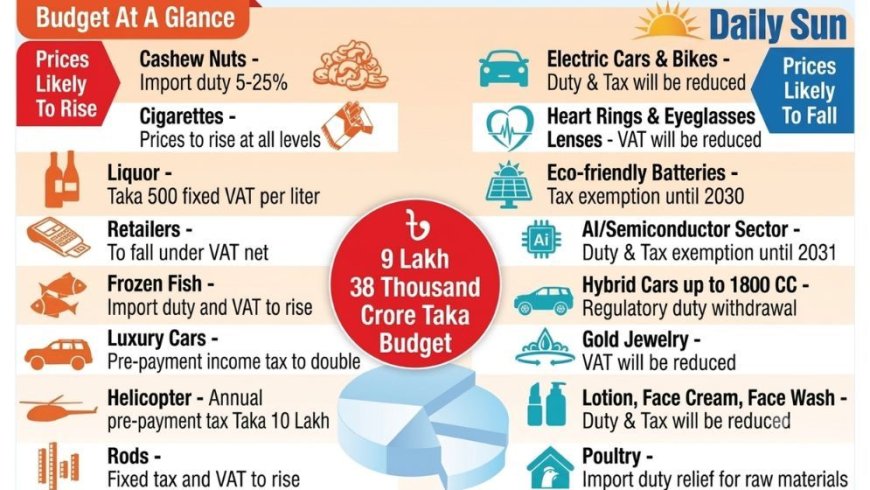
Price Relief Takes Centre Stage in FY27 Budget, but Revenue Ambitions Raise Questions
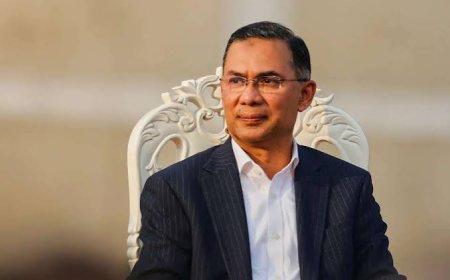
As Bangladesh grapples with a fragile economy, stubborn inflation, sluggish investment and limited employment opportunities, the BNP-led coalition government is set to unveil its first national budget under Prime Minister Tarique Rahman on Thursday.
With households continuing to struggle under the pressure of elevated living costs, the prime minister has emphasised the need to shield people from further price hikes and provide relief wherever possible. Reflecting that objective, the National Board of Revenue (NBR) has proposed a range of tax and duty measures that are expected to reduce the prices of numerous products and services.
Yet the government faces a difficult balancing act. Despite offering tax concessions across multiple sectors, the NBR has been assigned a revenue collection target of more than Tk6 trillion—around Tk600 billion higher than the current fiscal year's target. The apparent contradiction between lower duties and higher revenue expectations has prompted questions among economists and policy analysts.
Officials at the Finance Ministry acknowledged that the ambitious revenue target has been set without a clearly articulated roadmap, raising concerns about the feasibility of implementation.
Preliminary budget proposals indicate that the government has placed considerable emphasis on delivering election commitments and easing the financial burden on citizens. In a departure from the traditional perception of budgets as drivers of higher prices, this year's proposal contains an extensive list of measures aimed at lowering costs across a wide range of sectors.
Whether these benefits ultimately reach consumers remains uncertain. Nevertheless, analysts have broadly welcomed the effort to provide relief.
SM Nazrul Hossain, vice-president of the Consumers Association of Bangladesh (CAB), said budgets are often associated with public anxiety because they typically lead to higher prices.
“If we can move away from that culture, it will be a positive development,” he said. “However, the prices of harmful products such as cigarettes, nicotine products and alcohol should increase. If the prices of essential goods remain stable, people will feel relieved. The government also promised during the election campaign to keep market prices affordable. If it succeeds, it will strengthen public confidence and earn appreciation from citizens.”
Ambitious Revenue Collection Goal
According to Finance Ministry sources, the proposed budget size has been fixed at Tk9.38 trillion in line with the government's electoral commitments. Of this amount, the NBR has been tasked with collecting Tk6.04 trillion in revenue.
Many economists argue that achieving such a target will be extremely challenging given recent collection performance and prevailing economic conditions.
Dr Khandaker Golam Moazzem, research director at the Centre for Policy Dialogue (CPD), said the country's most pressing challenges remain employment generation and investment growth.
“Prolonged stagnation in investment has contributed to rising unemployment and poverty,” he said. “The government appears to be offering tax and duty incentives to encourage private-sector investment. However, tax incentives alone will not be enough. Interest rates, reliable energy supply, stable energy prices, and easier licensing and registration procedures are equally important.”
On revenue mobilisation, he noted that even without tax reductions, meeting the collection target would have been difficult.
“Bangladesh still has significant untapped revenue potential, but tax evasion, tax avoidance and the large number of people outside the tax net remain major challenges. The government's ability to address these issues will be crucial,” he added.
Tax Incentives for Priority Sectors
Finance Ministry officials said the budget is expected to contain extensive fiscal incentives aimed at supporting domestic industries. These include tax holidays, VAT exemptions and reductions in import duties, particularly for sectors such as electronics, renewable energy and healthcare. Some incentives may remain in place until 2031.
For consumers, however, the most immediate concern is which products are likely to become cheaper and which may become more expensive following the budget announcement.
Products Likely to Become Cheaper
Industrial Raw Materials:
The source tax on imported industrial raw materials may be reduced from 5% to 4%, while regulatory duty slabs could be streamlined from nine categories to six. The move is expected to lower production costs and ease prices of locally manufactured goods.
Essential Food Items:
To help contain inflation, the source tax on around 60 essential commodities and agricultural products—including rice, paddy, wheat, potatoes, onions and edible oil—may be cut to 0.50%. Regulatory duties on many of these items may also be withdrawn.
Edible Oil:
Manufacturers producing edible oil from locally cultivated oilseeds may receive a 10-year tax exemption, potentially reducing the cost of mustard oil and similar products.
Fuel Oil:
The source tax on fuel supplied to refineries may be lowered from 1.5% to 1%, reducing production and transportation expenses.
Medical Equipment and Pharmaceuticals:
The 5% advance tax on imported dialysis filters may be abolished, reducing treatment costs by roughly Tk600 per session. Supplementary duties on 68 pharmaceutical raw materials may also be removed, while several inputs used in cancer medicines could receive tax benefits. VAT exemptions are also being considered for cardiac stents and intraocular lenses.
Mobile Phones and Telecommunications:
The source tax on 22 raw materials used in local handset manufacturing may be reduced to 1%, and VAT exemptions for the industry could be extended until 2030. The fixed Tk300 VAT on SIM cards may be replaced with a 15% VAT, potentially lowering retail prices.
Electricity and Solar Power:
The source tax on electricity purchases from producers may be cut from 4% to 3%. Tax exemptions for solar power generation could be extended until 2035, while duty-free import facilities for solar equipment may continue until 2031.
Electric Vehicles:
Electric charging stations, electric buses and electric trucks may receive tax exemptions. Advance income tax on vehicle registration could also be reduced, alongside incentives for local manufacturers.
Gold and Jewellery:
The source tax on gold and jewellery supplies may be reduced from 5% to 0.5%, while VAT could be replaced by a fixed levy, potentially easing pricing pressures.
Electronics and Technology Products:
Tax incentives for manufacturers of televisions, refrigerators and computer equipment are expected to continue. Advance tax on printers, portable data-processing devices, flash memory products and monitors may be reduced from 5% to 2%.
Products Likely to Become More Expensive
Cigarettes:
Prices are expected to increase across all four tiers, with the proposed retail price for a 10-stick pack ranging from Tk62 in the lower segment to Tk210 in the premium category.
Nicotine Pouches and Heated Tobacco:
A maximum retail price of Tk500 for a 10-gram nicotine pouch may be imposed alongside a 40% supplementary duty. Heated tobacco products could also face additional taxes and a 1% health development surcharge.
Cashew Nuts:
Import duties on both processed and unprocessed cashew nuts may rise to 25%.
Luxury Vehicles:
Tax rates on petrol, octane and diesel-powered vehicles are expected to increase, particularly for cars with engine capacities between 1,200cc and 1,600cc.
Alcoholic Beverages:
A supplementary duty of Tk500 per litre may be imposed at the production stage of locally manufactured foreign-style alcoholic drinks.
Steel Rods:
Specific VAT rates on steel products manufactured from scrap metal may increase, potentially raising construction costs.
Imported Frozen Fish:
A 20% supplementary duty may be imposed on imported pangasius fillets to support local fish producers.
Helicopters:
The budget may introduce an annual advance income tax of Tk1 million per helicopter.
Gambling Income and Retail Businesses:
The withholding tax on gambling income may increase from 20% to 25%. Meanwhile, the expansion of the VAT net could bring a larger number of small retailers under VAT coverage, increasing compliance costs.
Overall, the proposed budget appears to focus on easing consumer hardship, supporting local industries and encouraging investment while simultaneously pursuing an ambitious revenue collection target. Whether the government can successfully achieve all of these objectives at once will be one of the key questions surrounding the FY27 fiscal plan.
What's Your Reaction?