





























Spain: worthy World Cup winners in a tournament dominated by superstar names
Spain: worthy World Cup winners in a tournament dominated by superstar names.

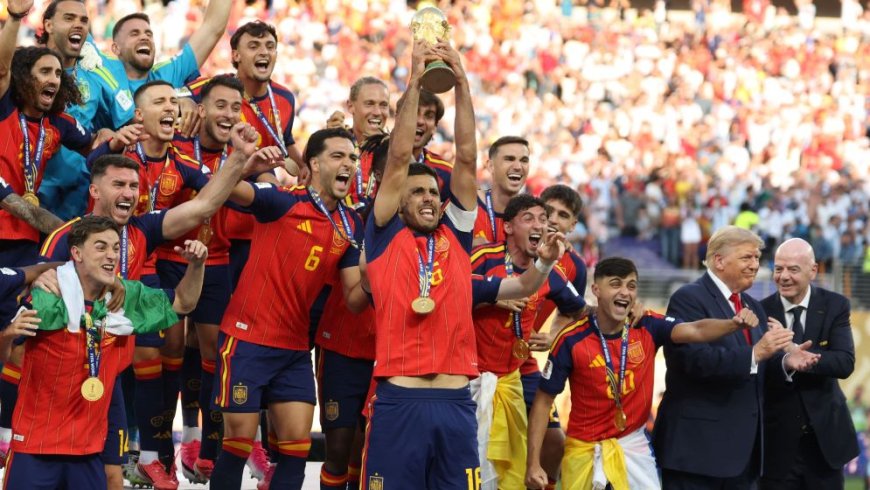
It was a World Cup illuminated by football’s biggest stars, but when the dust settled, the trophy deservedly belonged to a formidable Spain side. They may not have been the most spectacular team in the tournament, but they proved too strong for everyone, even without Lamine Yamal producing his best football.
The 19-year-old winger entered the tournament under intense scrutiny, but fitness issues initially limited his impact. He finished with just one goal, scored in Spain’s group-stage victory over Saudi Arabia.
The first 48-team World Cup was also the most prolific since 1970, producing an average of 2.96 goals per game. Spain, however, relied more on control and defensive discipline than attacking extravagance. They scored 14 goals in eight matches but still lifted the trophy after defeating Lionel Messi and Argentina 1-0 after extra time at MetLife Stadium on Sunday.
La Roja dominated the defending champions but needed a Ferran Torres goal in the 106th minute to secure their second World Cup title.
The foundation of Spain’s success was an outstanding defence that conceded just once throughout the tournament, against Belgium in the quarter-finals.
At the heart of that defensive excellence was captain Rodri, who was deservedly named Player of the Tournament ahead of Messi, Kylian Mbappe and the other attacking superstars who dominated the headlines.
There were similarities to Spain’s triumph in South Africa in 2010, when their first World Cup victory was also built on a remarkably disciplined defence.
“When you don't concede, I think it is much easier to win,” said Marc Cucurella, the full-back who recently joined Real Madrid from Chelsea. “We attack together and defend together, and that is one of the key things about this team.”
Rodri outshines Messi
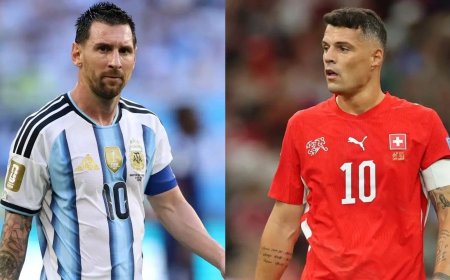
Messi and Argentina failed to register a single shot on target as their hopes of becoming the first team since 1962 to successfully defend the World Cup title ended in disappointment.
Spain had also kept France’s star-studded attack quiet in the semi-finals, including Mbappe, who nevertheless finished as the tournament’s top scorer with 10 goals. Behind him and Messi, who scored eight, were stars such as Jude Bellingham, Erling Haaland, reigning Ballon d’Or winner Ousmane Dembele and Harry Kane.
They were among the most recognisable names at the tournament, but none of their teams could match Spain’s consistency and strength.
Spain are now the first nation since their own historic double in 2008 and 2010 to simultaneously hold the World Cup and European Championship titles.
The future looks equally promising. Yamal and fellow 19-year-old Pau Cubarsi have joined an elite group of just 10 players in history to win the World Cup as teenagers.
A bright future ahead
Coach Luis de la Fuente, who took charge after Spain’s disappointing last-16 exit at the 2022 World Cup, is 65 but has delivered extraordinary results and remains under contract until Euro 2028.
Before the tournament, much of the attention had focused on high-profile coaches arriving in international football with huge reputations. Carlo Ancelotti and Thomas Tuchel failed to meet expectations with Brazil and England, respectively, while Mauricio Pochettino could only guide the United States to the last 16 and Julian Nagelsmann’s Germany also disappointed.
“These players are exceptionally talented and it is an honour to accompany them,” said De la Fuente, content to allow his players to enjoy the spotlight.
Over the past two decades, Spain have firmly erased their reputation as international football’s perennial underachievers. Since 2008, they have won two World Cups, three European Championships and a UEFA Nations League title.
They will return to action in just two months for Nations League matches against England and Croatia.
For now, however, Spain can celebrate being world champions once again while looking ahead to the tantalising possibility of defending their title in 2030 — when the holders could become the first reigning champions in World Cup history to defend the trophy on home soil.
What's Your Reaction?