






















































Spain 2.0 reinvents tiki-taka to conquer the world
Spain 2.0 reinvents tiki-taka to conquer the world.

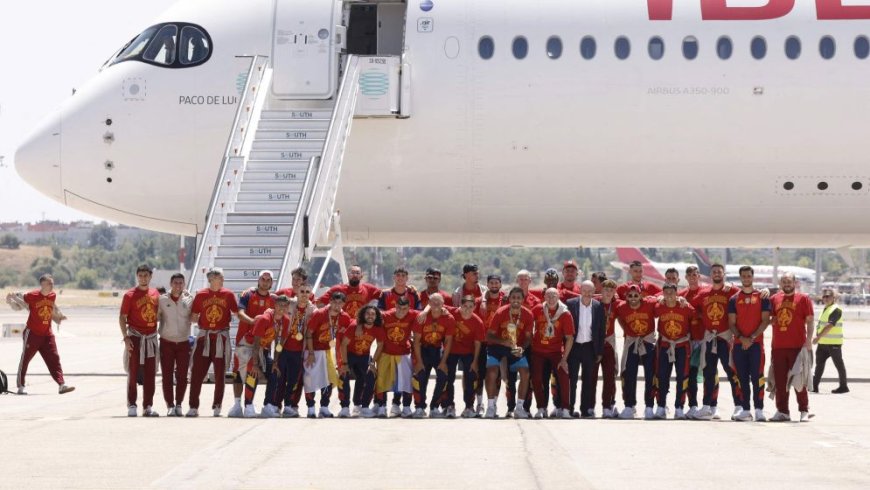
The new dawn of Spanish football has answered one of the most pressing questions surrounding the nation’s golden generation: Was 2010 merely a fluke?
The answer is becoming increasingly clear.
Since the inaugural FIFA World Cup in Uruguay in 1930, Spain have reached the final twice—and won both times.
On Sunday, Nico Williams and Ferran Torres reminded an older generation of Spanish football fans of two similar heroes from the past: Cesc Fàbregas and Andrés Iniesta.
Back in the sweltering July heat of Johannesburg in 2010, the Netherlands were dreaming of glory too. In a final that tested the desire and determination of two European football giants, Dutch forward Arjen Robben threw everything at Spain in a desperate attempt to bring the trophy home.
At the other end, Spanish goalkeeper and captain Iker Casillas was constantly called into action.
Spain's tactical foundation, built around the timeless tiki-taka philosophy and deeply rooted in the country's footballing DNA, was never simply a product of one generation. Yet before 2010, Spain were rarely considered serious World Cup contenders.
That all changed when they conquered the world.
Spain's triumph was not built around a single superstar or an overly attacking system. Instead, they established midfield dominance and proved that collective strength could become the foundation of greatness.
Then came the 2014 World Cup.
The storyline could hardly have been more dramatic, as Spain were drawn into the same group as the Netherlands. Despite taking the lead, Spain suffered a humiliating 5-1 defeat, a result that played a major role in their shock early exit.
That squad still contained several players who had lifted the World Cup four years earlier, but the criticism came quickly. Many began to dismiss Spain's 2010 triumph as a one-off achievement.
The years that followed only appeared to strengthen that narrative.
Spain were eliminated in the Round of 16 at both Euro 2016 and the 2018 World Cup. They reached the quarter-finals of Euro 2020 but failed to go further, while the 2022 World Cup in Qatar brought another disappointing campaign.
The idea that the Iniesta-Xavi-Villa-Fàbregas era was a beautiful chapter of the past—one impossible to recreate—began to take hold.
Then came Euro 2024, offering a new twist to the story.
A fresh generation of Spanish players began to revive the formula that had brought the nation glory a decade and a half earlier: midfield dominance, technical brilliance and collective strength.
The latest generation has delivered a powerful message—Spanish football is far from finished.
Led by teenage sensation Lamine Yamal, alongside La Masia graduates such as Pau Cubarsí and Pedri González, Spain's new generation has breathed fresh life into the national team. With an average age of around 27, the squad carries echoes of the 2010 champions while bringing its own fearless identity.
Players such as Yamal and Cubarsí, both just 19, have also challenged one of sport's oldest assumptions: that age and experience are indispensable ingredients for glory.
By defeating a formidable Argentina side featuring veterans such as Nicolás Otamendi and Lionel Messi, aged 38 and 39 respectively, Spain's young generation has shown that experience is not the only path to success.
If everything continues to fall into place, this group of world champions could have at least two more World Cups ahead of them.
The “Viva La Roja” chants are echoing through the streets once again.
The world is watching Spain 2.0 take shape—and this time, it looks less like a revival of the past and more like the beginning of a new era.
What's Your Reaction?