
















































Finance Minister to Present FY2026–27 National Budget in Parliament on Thursday
Finance Minister to Present FY2026–27 National Budget in Parliament on Thursday

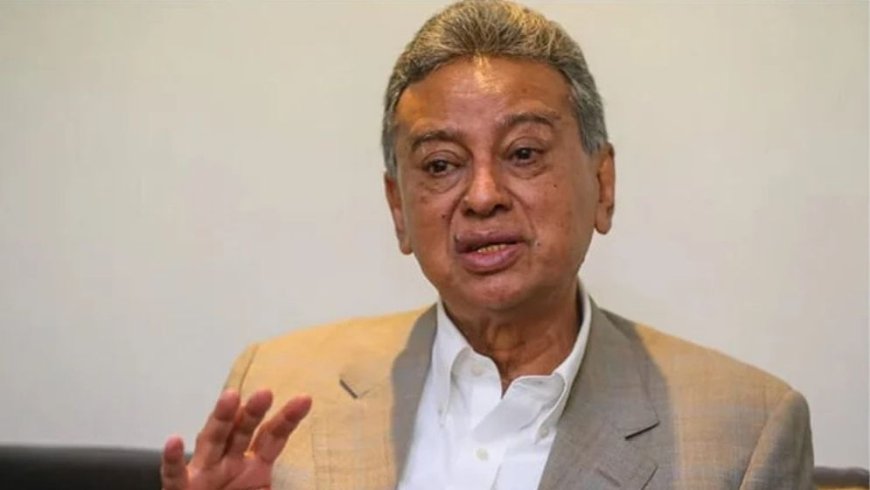
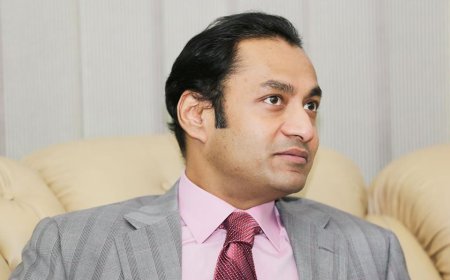
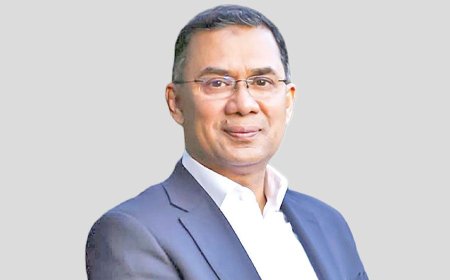
Finance Minister Amir Khosru Mahmud Chowdhury is set to present his first national budget for fiscal year 2026–27 (FY27) in the Jatiya Sangsad on Thursday, outlining the government's vision to accelerate Bangladesh’s transition toward an investment-led economy and advance its long-term goal of becoming a trillion-dollar economy through higher growth targets, regulatory reforms and expanded fiscal initiatives.
The proposed budget is expected to amount to Tk 9.38 lakh crore, making it the largest national budget in the country's history.
It will also be the first budget presented by the BNP government following its landslide victory in the parliamentary elections held on 12 February this year. The last BNP-led administration to unveil a national budget was in FY2006–07 under then Finance Minister M Saifur Rahman.
According to Finance Division officials, the budget has been formulated under the theme, “Economic Democratization and Deregulation: Bangladesh’s Journey Towards a Trillion-Dollar Economy.”
A major focus of the budget will be human resource development in line with the government's “Bangladesh First” vision. Priority sectors include education, healthcare, employment generation, social protection and entrepreneurship development, with the aim of building long-term economic resilience and fostering a modern, knowledge-based and inclusive economy.
Reflecting this shift in priorities, the budget is expected to allocate the largest shares of expenditure to education and health, moving away from an infrastructure-centric approach toward greater investment in human capital.
Among the likely highlights are substantial allocations for education and healthcare, a Tk 225 crore Entrepreneurship Development Fund, a Tk 2,000 crore SME Entrepreneurship Fund, and the possible partial implementation of a new pay scale for public servants.
The government is also considering launching an “E-Health Card” programme covering 2.5 million citizens to strengthen universal healthcare through the digitalisation of health services. Expanded funding is expected for social safety net programmes, including farmer cards and family cards, while the government aims to create overseas employment opportunities for 10 million people.
In an effort to engage young people in productive and creative economic activities and steer them away from drug abuse, militancy and extremism, the budget is likely to earmark Tk 300 crore for youth-focused initiatives.
Officials say the proposed budget reflects both the government's electoral commitments and the evolving needs of the economy. It is being positioned as a strategic shift toward human capital-driven growth, designed to support a knowledge-based economy and expand employment opportunities at home and abroad.
Record Budget Size and Fiscal Targets
The FY27 budget is expected to propose total expenditure of Tk 9.38 lakh crore, underscoring continued expansionary fiscal planning amid ongoing macroeconomic challenges.
Of the total outlay, Tk 6.95 lakh crore is projected to come from domestic revenue sources, with the remainder financed through borrowing and external assistance.
The fiscal deficit is expected to stand at Tk 2.51 lakh crore, equivalent to 3.6 percent of GDP, remaining within internationally accepted limits for developing economies.
Finance Ministry estimates place Bangladesh’s GDP at Tk 68.30 lakh crore for FY27, with a growth target of 6.5 percent and an inflation target of 7.5 percent.
Economists note that while the growth projection reflects optimism, achieving it will require stronger revenue mobilisation, effective inflation management and sustained macroeconomic stability.
Push for Deregulation and Investment
A key feature of the upcoming budget is a broad deregulation agenda aimed at improving the ease of doing business and attracting greater domestic and foreign investment.
The government is expected to introduce measures to simplify licensing procedures, accelerate approvals and modernise tax administration. A dedicated section in the budget speech will reportedly focus on improving the business environment through deregulation, reducing bureaucratic delays, eliminating overlapping documentation requirements and streamlining investment processes.
Officials said a new digital application platform and an integrated one-stop service system, branded as “Banglabiz,” may be introduced to centralise licensing, certification and approval processes, thereby reducing direct interactions between businesses and regulatory agencies.
Speaking to BSS, Dr Monzur Hossain, Member (Secretary) of the General Economics Division (GED) of the Planning Commission, said the FY27 budget is closely aligned with the government's election manifesto, with a strong focus on inflation control, investment promotion, employment generation, structural reforms and expanded social protection.
He noted that the budget prioritises inclusive development, enhanced revenue mobilisation and revitalisation of the rural economy while safeguarding macroeconomic stability.
“The priorities outlined in the election manifesto are being reflected in this budget,” he said, adding that the government has moved quickly to translate campaign commitments into policy actions.
Tax Administration Reforms
The National Board of Revenue (NBR) is expected to undergo significant automation under the new fiscal framework.
Proposed measures include full online corporate tax return filing, year-round submission facilities and direct electronic tax refunds to taxpayers’ bank accounts.
Authorities are also considering incentives for early tax filers and higher tax rates for late submissions. A dedicated mobile application for e-return filing is expected to be introduced to simplify compliance and reduce administrative delays.
In addition, the government plans to streamline tax dispute settlement through faster tribunal proceedings, appellate mechanisms and alternative dispute resolution (ADR) processes.
Financing the Deficit
The projected FY27 budget deficit of Tk 2.51 lakh crore is expected to be financed through a combination of domestic and foreign borrowing.
Official estimates indicate that Tk 1.16 lakh crore, or 46 percent, will come from external sources, while Tk 1.35 lakh crore, or 54 percent, will be raised domestically.
Domestic financing is expected to include Tk 1.20 lakh crore from the banking sector and Tk 15,000 crore from savings instruments.
Inflation and Economic Stability
Inflation remains one of the government's primary concerns ahead of the budget announcement. Recent figures show point-to-point inflation stood at 9.42 percent in May, well above the targeted level.
Policy experts suggest that achieving the FY27 inflation target of 7.5 percent will require coordinated monetary and fiscal measures, improved supply chain management and stronger oversight of essential commodity markets.
Growth, Investment and Structural Reform
The proposed budget places investment at the centre of the government's growth strategy.
Analysts argue that strengthening private sector confidence, ensuring regulatory predictability and accelerating infrastructure development will be crucial to achieving the targeted GDP growth rate.
Particular emphasis is expected on agriculture, export-oriented industries, manufacturing expansion, remittance growth and improved connectivity infrastructure.
Challenges and Outlook
Despite its ambitious goals, the effectiveness of the FY27 budget will depend largely on implementation capacity, revenue performance and the broader macroeconomic environment.
Challenges such as weak private investment, limited revenue mobilisation and global economic uncertainties continue to pose risks to fiscal projections.
Nevertheless, policymakers remain confident that ongoing structural reforms and governance improvements will help attract new investment, stimulate economic activity and support medium-term growth objectives.
As Finance Minister Amir Khosru Mahmud Chowdhury prepares to place the budget before Parliament on Thursday, attention will focus on how the government balances its development ambitions with the need for fiscal discipline, inflation control and economic stability.
What's Your Reaction?