








































































Democrat Wave Wipes Out $2.5 Trillion in US Stock Market Value
Democrat Wave Wipes Out $2.5 Trillion in US Stock Market Value


Democrats' sweeping midterm election victory triggered a sharp selloff in US technology stocks on Thursday, as investors grew concerned that the party could use its expanded influence in Congress and state governments to introduce stricter regulations that may slow the rapid expansion of AI infrastructure.
Two days after Democrats flipped seven Senate seats, secured at least 39 additional House seats and won five governorships, markets experienced widespread losses. The technology-heavy Nasdaq Composite plunged 5.56%, marking its steepest single-day decline in 19 months and wiping trillions of dollars off market valuations.
The selloff reflected growing concerns that Democratic lawmakers could intensify scrutiny of artificial intelligence, particularly the construction of data centres that have driven much of this year's stock market rally.
Thursday's losses marked the second consecutive session of declines in AI-related stocks and the fifth time since mid-October that the Nasdaq had fallen by more than 500 points. The previously booming AI investment trade has faced mounting pressure in recent weeks.
Michael O'Rourke, chief market strategist at JonesTrading in Stamford, Connecticut, said Democratic victories in several gubernatorial races had strengthened concerns about potential restrictions on data centre development.
"The slowdown of the data centre buildout is the real key theme that's going to stick," he said.
The Nasdaq has now entered correction territory, falling nearly 12% from its record closing high on October 6. A market correction is generally defined as a decline of at least 10% from a recent peak.
Several market analysts warned that further losses could follow, potentially extending to Asian markets during Friday's trading session. Japan's Nikkei and South Korea's Kospi, both of which have gained more than 20% this year, also came under pressure following Wednesday's sharp decline in data centre-related stocks.
Some analysts also questioned whether the market turmoil could affect the timing of Anthropic's highly anticipated initial public offering (IPO), expected later this year, with any postponement potentially adding to investor uncertainty.
The declines in semiconductor and AI infrastructure stocks were not entirely unexpected, analysts and portfolio managers said, given the substantial gains recorded earlier and mounting concerns over financing among neocloud companies such as Nebius and CoreWeave following the rise in US interest rates late in the summer.
The election results reflected widespread dissatisfaction with President Donald Trump's administration, particularly his decision to launch a war with Iran, which has driven up fuel prices. Democrats made significant gains in traditionally Republican strongholds, including Texas, South Carolina, Kansas and Iowa.
Melissa Brown, global head of investment decision research at SimCorp, said investors were increasingly concerned that newly elected Democratic officials could attempt to slow AI infrastructure expansion.
Although a complete halt to development appears unlikely, she warned that any slowdown could undermine investor confidence in the AI growth story, which depends heavily on the rapid construction of supporting infrastructure.
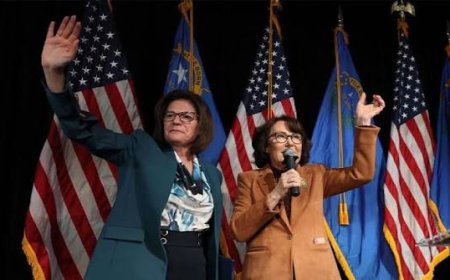
Texas governor-elect Gina Hinojosa, who defeated three-term Republican incumbent Greg Abbott, has pledged to suspend new data centre construction in one of the country's fastest-growing markets for AI infrastructure.
Democratic lawmakers in Congress have also advocated legislation to protect consumers from rising electricity costs associated with data centres and introduce independent testing requirements for artificial intelligence systems.
The election victories are expected to strengthen the position of opponents of large-scale data centre projects. Although central to the AI boom, these facilities have increasingly faced public opposition over their substantial electricity and water consumption, noise and impact on surrounding communities.
Trump focuses on White House infrastructure
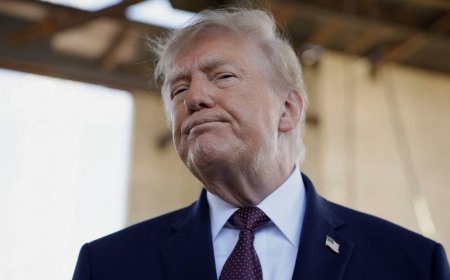
Meanwhile, President Donald Trump devoted his only public appearance on Thursday to signing a document intended to designate the White House's Oval Office as a national monument.
Since returning to office last year, Trump has extensively renovated the historic room, adding gold-coloured decorations, statues and paintings.
"We've had a lot of victories in this office," Trump told reporters, two days after Republicans suffered a major setback in the midterm elections. He made no reference to the stock market turmoil or concerns over potential AI regulations.
Acknowledging that his administration had also made mistakes, Trump described the Oval Office as a place of tremendous achievements. He said the national monument designation would protect the room from future alterations or demolition.
Trump's focus on White House renovations has continued in recent days. On Monday, his final public appearance before the election centred on improvements to the Lincoln Memorial Reflecting Pool. On Wednesday, he invited reporters to view a new White House ballroom being constructed on the site of the demolished historic East Wing.
Senate races in Mississippi and Alaska remain undecided
Meanwhile, closely contested Senate races in Alaska and Mississippi remained unresolved on Thursday, with Democrats holding narrow leads in both states.
If Democrats secure both seats, their Senate majority could expand by another two seats to 56-44.
Once the new Congress convenes in January, Democrats are expected to use their strengthened position to investigate Trump's administration, family members and political allies while seeking concessions on major legislative priorities.
A Democratic-controlled Senate could also block presidential nominees, including potential Supreme Court appointments if a vacancy emerges.
Republicans, however, will retain control of the government until the new lawmakers take office. Before then, they face a major legislative challenge: passing a funding measure to keep the federal government operating beyond December 11.
The upcoming legislation could provide Republicans with an opportunity to advance conservative priorities during the remaining weeks of the current congressional session, commonly known as the lame-duck period.
What's Your Reaction?