






















































Israel confronts a new era of declining US support following election results.
Israel confronts a new era of declining US support following election results.

Prime Minister Benjamin Netanyahu’s campaign posters remain displayed on Israeli public buses, featuring images of the Israeli leader alongside US President Donald Trump and fighter jets, celebrating their joint military action against Iran.
However, the posters offer little reflection of the growing uncertainty surrounding relations between the two allies.
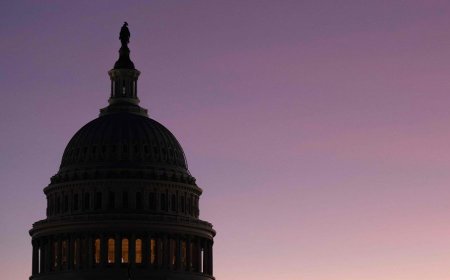
An inconclusive election for Netanyahu in Israel, followed by a major political setback for Trump in the United States, has raised questions about the future of the alliance. American voters overwhelmingly rejected Trump’s political allies, giving Democrats control of Congress. Many Democratic lawmakers are seeking a tougher US approach towards Israel over issues including Iran, the Gaza war and violence by Israeli settlers in the occupied West Bank.
The back-to-back electoral developments are being viewed by many observers as a potential turning point, signalling that Israel may no longer be able to take Washington’s political and military backing for granted.
“This is a new era. The confluence of the Gaza war and the war with Iran has really changed how mainstream Americans — not people particularly concerned with the Israeli-Palestinian conflict — see Israel,” said Yael Sternhell, a United States expert at Tel Aviv University.
US Vice President JD Vance, reflecting on the reasons behind the Republicans' poor election performance, outlined four measures to win back voters, including ending the Iran war and reconsidering Washington's relationship with Israel.
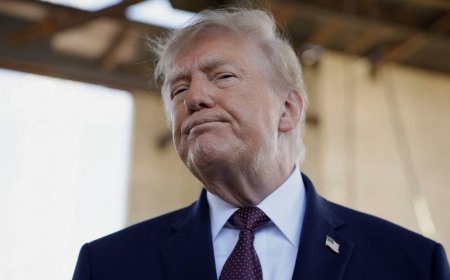
Trump appeared to share that assessment. As voting was underway on Tuesday, he said he had reached an understanding with Netanyahu to end the $3.8 billion in annual US military assistance to Israel by the end of this year, directly linking the decision to changing political attitudes in the United States.
Netanyahu, Israel's longest-serving prime minister, who has held office intermittently for nearly two decades, had actively sought Trump's endorsement while acknowledging Israel's growing international isolation.
During the final days of the election campaign, he even suggested that Israel explore cryptocurrency as a way to bypass international sanctions that he expected would become increasingly severe.
Netanyahu has yet to publicly comment on the US election results or Trump's remarks about ending military assistance.
Amit Segal, a journalist considered close to Netanyahu, described the political developments in the United States as a "catastrophe" for Israel.
Can Eisenkot repair the US-Israel relationship?
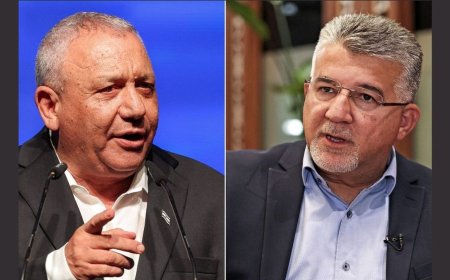
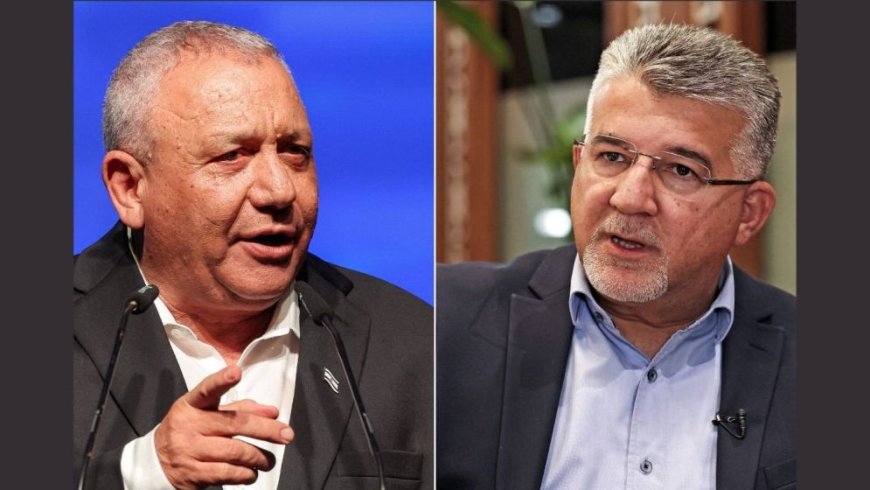
Opposition leader Gadi Eisenkot, who is attempting to assemble a coalition to remove Netanyahu from power, has presented himself as a potential figure capable of rebuilding relations with Washington.
In a statement issued in English, the former military chief said he supported liberal values and wanted to maintain a close and constructive working relationship with Trump.
Yair Golan, the leading left-wing figure within Eisenkot's political bloc, urged Israel to return to a bipartisan approach towards the United States. He accused Netanyahu of undermining that tradition by promoting what he described as a destructive Israeli narrative centred on permanent war and authoritarian rule.
During his campaign, Netanyahu repeatedly highlighted his confrontations with Democratic presidents, including Barack Obama, who remains widely admired among Democrats. A decade ago, Netanyahu openly aligned himself with Republicans in opposing Obama's diplomatic agreement with Iran.
"Netanyahu certainly rubs Democrats the wrong way and has made every effort to alienate them," Sternhell said.
However, she cautioned that simply adopting a friendlier approach would not be enough for Eisenkot to secure a more favourable response from the new Congress.
"He can't just be a nicer man to receive a softer approach from this new Congress. He's going to need new policies," she added.
According to Sternhell, Eisenkot could find public support in Israel for taking tougher action against extremist settlers accused of attacking Palestinians in the occupied West Bank with little accountability.
Nevertheless, Israeli society has moved considerably to the right, with the Gaza war initially receiving widespread public backing.
Growing criticism of Israel in Washington
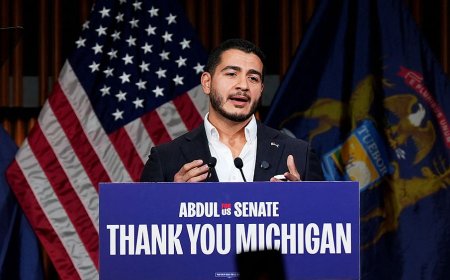
The incoming Congress is expected to include progressive Democrats such as Abdul El-Sayed, the first Muslim elected to the Senate, who has described the devastation in Gaza as genocide, a characterisation firmly rejected by Israel.
Eli Kowaz, senior policy director at the Economic Cooperation Foundation, an Israeli think tank supporting a two-state solution, said Netanyahu had placed an enormous political bet on the Republican Party and, in particular, Trump.
"These results show that bet had an expiry date," Kowaz said, adding that concerns about Israel's relationship with America were no longer limited to disagreements with Democrats.
Without American military assistance, Israel could continue relying on its substantial domestic defence industry and its military superiority over non-state armed groups such as Hamas and Hezbollah, said Ehud Eilam, a former researcher at Israel's Defence Ministry.
However, he warned that Israel might have to increasingly depend on cheaper artillery and less sophisticated bombs, potentially raising the risk of civilian casualties and further intensifying international criticism.
"Israel can adjust to a new strategic reality of losing much and even all US military aid, but it will be tough for Israel. It will require Israel to consider hard choices such as taking huge loans or raising taxes," Eilam said.
Kowaz noted that Eisenkot was attempting to present a different strategic vision, emphasising regional stability and long-term agreements rather than maintaining an indefinite state of conflict.
"He is definitely laying out a different vision for Israel's relationship with the United States," Kowaz said.
What's Your Reaction?