








































Mosque Attack Highlights Deepening Pakistan-Afghanistan Tensions
Mosque Attack Highlights Deepening Pakistan-Afghanistan Tensions

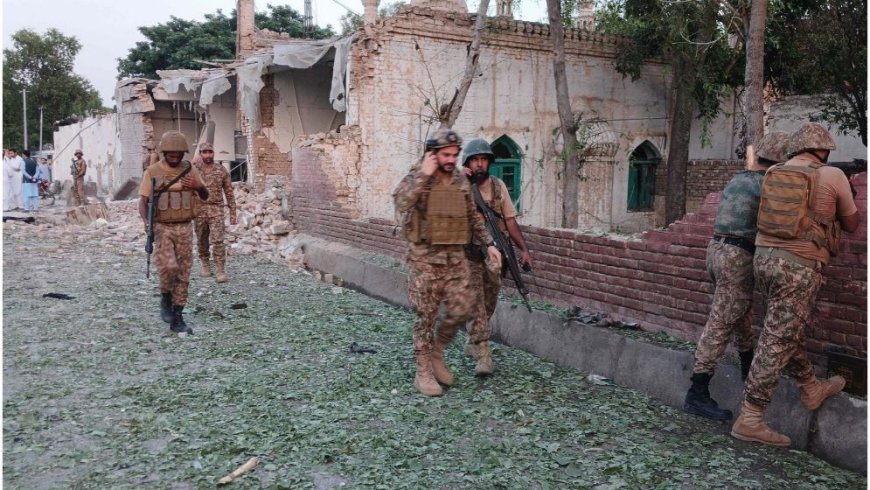
The suicide bombing and gun attack that killed dozens in northwest Pakistan on September 18, 2026, underscored the country’s fragile security situation while also highlighting the complex and evolving extremist landscape and the increasingly strained relationship between Pakistan and neighbouring Afghanistan.
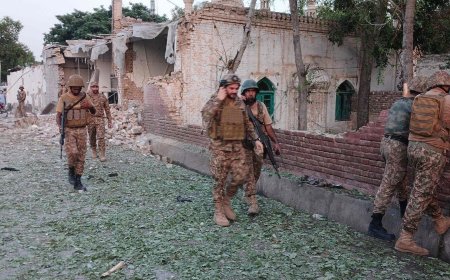
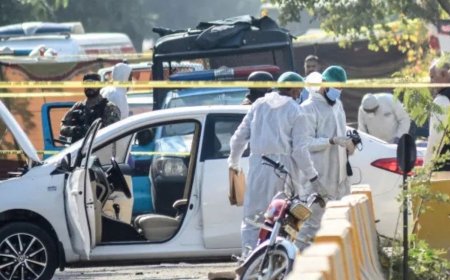
The attack took place as worshippers gathered for Friday prayers in Kohat, a city in Khyber Pakhtunkhwa province. A suicide bomber drove an explosives-laden vehicle through the wall of a police complex, targeting the mosque inside. Gunmen then engaged security forces in a standoff that lasted around 20 hours. At least 31 people, including 16 police officers, were killed, while more than 100 others were injured.
Supporters of the militant group Ittehad-ul-Mujahideen Pakistan (IMP) claimed responsibility on encrypted platforms such as Telegram. However, several groups with seemingly similar ideological affiliations rejected any involvement. Pakistan subsequently carried out airstrikes in Afghanistan, where at least one of the attackers was reportedly based.
Afghanistan and Pakistan share a 1,640-mile border
Over the past two years, fieldwork in the region and close monitoring of the operational and propaganda activities of violent extremist organisations, including IMP, have provided insight into the shifting relationships among militant groups. The Kohat attack and its aftermath reveal both cooperation and deepening divisions within the militant landscape.
Who is Ittehad-ul-Mujahideen Pakistan?
IMP is a jihadist coalition established in April 2025 by three smaller militant factions: Lashkar-e-Islam, the Hafiz Gul Bahadur Group and Inqilab-e-Islami Pakistan.
By late 2025, IMP had emerged as Pakistan’s most active jihadist organisation after Tehrik-i-Taliban Pakistan (TTP), commonly known as the Pakistani Taliban.
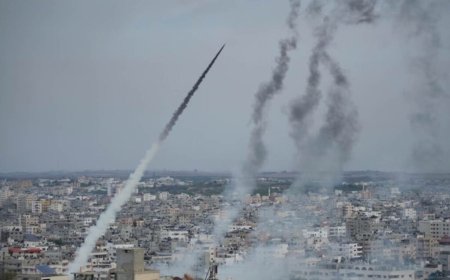
The group’s apparent objectives include weakening the Pakistani state through attacks on police and security forces and promoting Islamist rule. Its activities are concentrated mainly in northwestern Pakistan, particularly areas bordering Afghanistan. It has employed tactics including suicide bombings, vehicle-borne improvised explosive devices and rocket attacks.
Before the Kohat assault, IMP members were blamed for a May 2026 attack on a security checkpoint that killed 15 police officers and a July vehicle bombing targeting a police station in Bannu.
IMP presents itself as a united front bringing together multiple jihadist factions operating in Pakistan under a single command structure. Its recent propaganda has also promoted greater unity among militant groups, including through videos featuring religious clerics calling for cooperation.
This message broadly mirrors the position of Al-Qaida in the Indian Subcontinent (AQIS), which is linked to IMP. In recent years, AQIS has sought to position itself as a central force behind a broader jihadist coalition operating across Afghanistan and Pakistan.
However, efforts to unite Pakistan’s militant factions appear to have suffered a setback following the Kohat attack.
The decision to target a mosque, combined with the high number of civilian casualties, triggered an unusual dispute among jihadist groups. Within hours, the Pakistani Taliban and Jamaat-ul-Ahrar issued statements condemning the attack and denying involvement.
The Afghan Taliban, to whose leadership the Pakistani Taliban pledges allegiance and which Islamabad accuses of providing shelter to the group, also condemned the assault. AQIS similarly criticised the attack, urging its followers to avoid actions that could damage its ideological objectives, reputation and operations.
The fallout is particularly significant for AQIS, which had spent months portraying IMP as a model affiliate and a force capable of bringing jihadist factions together.
By mid-2026, AQIS was presenting IMP as one of its global fronts. Its flagship magazine, Nawa-e-Ghazwa-e-Hind, highlighted IMP’s activities in Pakistan in an infographic in its June-July issue. A May editorial had also called for greater coordination among jihadist groups, citing cooperation associated with IMP as an example.
Militant convergence and competition
The divisions exposed by the Kohat attack should not obscure the broader trajectory of violent extremism in Pakistan. The country is experiencing its most severe security crisis in two decades and currently ranks first on the Global Terrorism Index.
The escalation is being driven by both cooperation and competition among extremist organisations, including domestic and transnational jihadist groups, as well as separatist organisations operating in Balochistan in southwestern Pakistan.
Among jihadist groups, the Pakistani Taliban has absorbed more than 100 factions since 2020, while AQIS has brought IMP into its broader orbit. However, AQIS and the Pakistani Taliban remain separate organisations. Although there have been signs of occasional operational cooperation, repeated attempts to formally merge them since 2020 have failed because of enduring ideological differences. AQIS maintains a transnational agenda, while the Pakistani Taliban remains primarily focused on Pakistan.
A similar pattern of consolidation has emerged in Balochistan, where several major ethnonationalist groups have come together since 2018 under the Baloch Raaji Aajoi Sangar umbrella.
At the same time, divisions across the wider militant landscape have contributed to continued violence. Islamic State Khorasan Province (ISKP), the Islamic State’s regional affiliate, remains opposed to the Pakistani Taliban, AQIS and IMP, as well as the Afghan Taliban and the Pakistani government.
As a transnational organisation competing with locally established militant groups, ISKP contributes to the broader escalation of extremist violence.
Another, less visible, form of competition exists within the Pakistan Taliban-AQIS-IMP network. While the groups are nominally aligned, they compete for influence, resources and recruits, often seeking to distinguish themselves through increasingly extreme tactics. The Kohat attack appears to reflect some of those competitive dynamics.
Cross-border tensions
Cooperation and competition among militant organisations are further sustained by tensions between Pakistan and Afghanistan, creating opportunities for armed groups to exploit gaps in counterterrorism efforts.
Relations between the two countries have deteriorated sharply since the Taliban returned to power in Afghanistan in 2021. Pakistan initially sought to pressure the Afghan Taliban to act against anti-Pakistan militants through measures including border closures, trade restrictions and limited strikes against Pakistani Taliban positions. The confrontation escalated into open conflict in February 2026, when Pakistan carried out strikes against Taliban military installations in Afghanistan.
A fragile ceasefire followed, but it has come under pressure from continued cross-border attacks, Pakistani airstrikes against militant positions in Afghanistan and Afghan Taliban strikes on alleged ISKP bases in Pakistan.
For Islamabad, the Pakistani Taliban represents an Afghan-based security threat that the authorities in Kabul must address. The Afghan Taliban, however, regards the Pakistani Taliban largely as an internal Pakistani issue that Islamabad should resolve itself.
Tensions were already mounting when the Kohat attack occurred on September 18. The assault contained two elements particularly likely to aggravate relations between the two countries.
The group claiming responsibility is built around networks believed to operate from sanctuaries in Afghanistan, while Pakistani authorities identified at least one of the attackers as an Afghan national.
For Islamabad, these findings reinforced allegations that the Afghan authorities are contributing to Pakistan’s worsening security situation. The accusation carries historical significance because Pakistan’s military and intelligence establishment supported the Afghan Taliban for decades as a strategic partner. When the Taliban returned to Kabul in August 2021, Pakistani officials welcomed the development, expecting the new Afghan government to help contain the Pakistani Taliban.
Instead, the Afghan Taliban has facilitated negotiations between Islamabad and the Pakistani Taliban but has not taken decisive action against a group that fought alongside it against US-led forces for more than a decade.
The Kohat attack has therefore intensified Pakistan’s demands that Kabul dismantle militant sanctuaries on Afghan territory. The retaliatory strikes that followed, reportedly Pakistan’s first airstrikes inside Afghanistan since June, have once again set off a cycle of cross-border military action and retaliation.
What's Your Reaction?