






















































EC adopts strict measures to prevent fraud in NID corrections
EC adopts strict measures to prevent fraud in NID corrections

The Election Commission (EC) has received allegations that some individuals are exploiting the National Identity Card (NID) correction process to commit fraud involving property transactions, inheritance claims and passport-related changes.
In response, the commission has adopted strict measures against those involved, including filing cases, dismissing officials, initiating criminal proceedings and taking steps to arrest the accused.
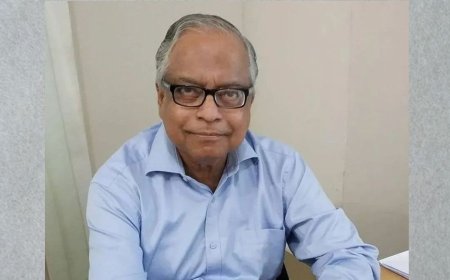
Chief Election Commissioner (CEC) AMM Nasir Uddin said the commission was taking a zero-tolerance approach towards such irregularities.
"We have filed cases against many people over these allegations. Several of our officials have been dismissed, criminal cases have been initiated against multiple individuals, and steps have been taken to arrest the accused. We are not giving anyone any concessions," he said.
According to the CEC, some individuals had changed their names in NID records to facilitate property sales, while others attempted to establish fraudulent inheritance claims by modifying their personal information. There were also instances of people trying to obtain passport changes through forged or misleading documents.
He stressed that the commission could not approve correction requests without thorough verification and scrutiny.
EC officials said applications were being approved only after examining relevant information, supporting documents and evidence to establish their authenticity.
Two Officials Suspended Over Alleged NID Fraud
The EC recently suspended Kathalia Upazila Election Officer Md Ab. Sattar in Jhalokathi after allegations of NID-related fraud against him were established.
Office Assistant Kamana Rani Sarkar of Panchagarh Sadar was also temporarily suspended after similar allegations were proven, officials said.
Serious Discrepancies Detected in Correction Applications
EC officials have identified significant inconsistencies in several NID correction applications. In some cases, the age difference between fathers and sons was as little as three years, while the gap between mothers and daughters was only two to three years.
Some applicants were also found to possess multiple birth registration certificates or educational certificates.
Officials warned that approving corrections without properly investigating such discrepancies could create serious complications and allow individuals to obtain NIDs using false identities.
The CEC also said there had been reports of foreign nationals and Rohingyas obtaining NIDs by falsely claiming to be Bangladeshi citizens.
He emphasised that such applications required detailed verification, investigation and scrutiny before any decision could be made.
EC Senior Secretary Akhtar Ahmed said many applicants were requesting changes to their dates of birth that directly contradicted their original voter registration records.
Citing an example, he said an individual born in 1997 had registered as a voter in 2015, claiming to be 18 years old. However, the same individual later applied to change the birth year to 2002.
Under the proposed correction, the applicant would have been just 13 years old at the time of voter registration, despite the minimum voting age being 18.
He questioned how such a correction could legitimately be approved.
Ahmed added that some applicants were seeking changes on humanitarian grounds, citing difficulties related to travelling abroad and other personal circumstances.
However, he cautioned that approving such requests without proper verification could create complications for the commission.
Documents Subject to Detailed Verification
EC officials said most routine NID corrections could be completed at the upazila level.
However, complicated cases involving simultaneous changes to important information, such as names, parents' names and dates of birth, were referred to higher authorities for further examination.
In such cases, officials scrutinised supporting documents, including birth registration certificates and educational certificates.
For applications seeking changes to a father's name, the commission also examines the father's NID and compares the information with the records of other family members.
An affidavit alone is not considered sufficient grounds for approving such corrections.
The CEC said that if an applicant wanted to change both their own name and their father's name, the commission could request the NIDs of their brothers and sisters to verify whether the father's name matched the family's official records.
Applicants Face Difficulties in the Correction Process
Despite the commission's efforts to prevent fraud, some applicants have complained about delays and difficulties in obtaining NID corrections.
Recently, a resident of Keshabpur in Jashore, identified by the pseudonym Haridash Karmakar, visited the EC office seeking to correct his wife's name.
He said he had submitted the application six months earlier but was informed that two birth registration certificates existed in his wife's name. He was instructed to cancel one of them before proceeding with the correction.
After cancelling one birth registration, he returned to the EC office. However, the concerned official subsequently requested attestation documents from his wife's brothers and sisters, biometric information and several other supporting papers.
He said he had yet to collect all the required documents.
More Than 13.55 Lakh Correction Applications Rejected
According to the EC's National Identity Registration Wing, a total of 6,570,842 NID correction applications have been submitted so far.
Of these, 6,442,832 applications have been processed, while 1,355,157 have been rejected.
Explaining the reasons behind the rejections, the CEC said many applications lacked essential information and supporting birth registration documents.
In some cases, applicants submitted multiple birth registration certificates, SSC certificates or graduation certificates, making it difficult for officials to determine which documents should be treated as authentic.
He said applicants whose requests had been rejected could submit fresh applications with the necessary supporting documents.
The CEC maintained that no application was rejected without proper investigation and supporting evidence.
Senior Secretary Akhtar Ahmed clarified that the total number of rejected applications did not represent the number of individual applicants.
A single person might submit correction requests four or five times. Furthermore, when an application involved changes to multiple pieces of information, some requests could be approved while others were rejected.
He added that applicants whose requests were rejected at the upazila or Director General level could appeal to the secretary level, although those appeals could also be turned down.
Some applications had reportedly been rejected as many as six or seven times.
Therefore, the total number of rejected applications should not be interpreted as the actual number of affected individuals, he said.
EC Plans Faster NID Services for Expatriates
The commission is also taking initiatives to make NID services more accessible and efficient for expatriate Bangladeshis.
Officials said applications submitted with complete and authentic documentation would receive faster processing.
The CEC said voter registration and NID services for expatriates had already been introduced at several Bangladeshi diplomatic missions abroad.
He noted that some individuals had travelled overseas without proper passports, while others had relied on brokers, creating additional complications during verification.
The commission had also received reports that a significant number of Rohingyas were working in Saudi Arabia using Bangladeshi passports, he added.
"If all the information is correct, we will certainly try to resolve expatriates' issues as quickly as possible. Expatriates can be called the lifeline of the country. The country's economy depends on their remittances. We will try to provide them with services with VIP status," the CEC said.
Akhtar Ahmed said some individuals had obtained NIDs earlier but subsequently used birth registration certificates to secure passports, resulting in discrepancies between the two sets of records.
He said such complications could be avoided if information contained in birth registration certificates remained consistent with NID records.
He further explained that some individuals deliberately changed their ages and other personal details to meet employment-related age requirements in Middle Eastern and other countries.
Later, when they encountered difficulties, some also submitted applications seeking changes to their parents' names.
Which NID Corrections Are Easier and Which Require More Scrutiny?
The EC aims to ensure that citizens provide accurate information during voter registration to minimise the need for corrections in the future.
However, certain changes, including address updates following relocation, marital status changes after marriage or divorce, and changes in religion, can be processed through the prescribed procedures.
Md. Saiful Islam, Director (Operations) of the National Identity Registration Wing, said corrections involving fundamental information, particularly names, parental identities and dates of birth, required thorough verification of supporting documents and evidence.
What's Your Reaction?