
































































The real crisis at Bangladesh Bank lies in its mandate, not in the résumé
The real crisis at Bangladesh Bank lies in its mandate, not in the résumé.


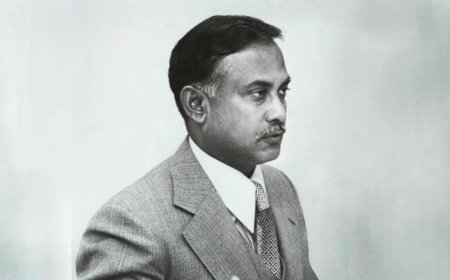
The removal of Ahsan H Mansur as governor of Bangladesh Bank was an entirely avoidable episode that has cast doubt on the new Bangladesh Nationalist Party (BNP) government’s policy judgment. The controversy has been compounded by the appointment of Md Mostaqur Rahman as his successor, prompting predictable debate over potential conflicts of interest. An active garment factory owner assuming charge of financial sector regulation is an obvious anomaly. Yet the fixation on his résumé risks obscuring the more fundamental issue.
The deeper concern is not about credentials but about a possible shift in the central bank’s mandate—from safeguarding macroeconomic stability to prioritising industrial credit expansion—and how such a transition would be designed under the new dispensation. The finance ministry’s narrative suggests that Bangladesh Bank must move away from the “rigidity” of conventional monetary orthodoxy and embrace a more business-oriented efficiency. To meet its 2026 commitments, the government is clearly pursuing fast, investment-driven growth.
There may be some merit to this argument. Growth below four percent is undeniably sluggish, and economic recovery carries both political and popular appeal. The real question, however, is how the line between monetary discipline and political ambition will be managed. Bangladesh Bank is not the Ministry of Industries. Its core responsibility is stability—controlling liquidity, anchoring inflation expectations, and protecting the taka. Appointing an industrialist to lead the institution inevitably shifts that balance.
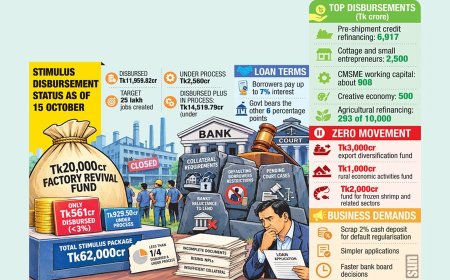
Initial policy signals indicate a tilt toward easier liquidity and regulatory flexibility for distressed corporate borrowers, justified as necessary for factory revival. But expanding credit does not automatically translate into higher productivity. Over the past decade, repeated loan rescheduling and refinancing windows inflated credit figures without addressing structural weaknesses. Corporate balance sheets swelled, yet wages stagnated and non-performing loan risks persisted.
The previous regime under Sheikh Hasina centralised not only power but also credit, effectively socialising losses. The banking system became a conduit for preferential capital allocation, with the public ultimately absorbing the fallout from connected defaults. Headline growth improved, but by 2024 real wages had declined and middle-skill job creation lagged. Growth proved uneven and fragile.
Reorienting monetary policy toward sector-specific credit objectives does not necessarily dismantle that legacy. It risks entrenching it under new leadership. Once monetary policy aligns too closely with sectoral goals, reversing course becomes politically costly, and institutional independence erodes gradually rather than abruptly. Personnel may change, but the architecture of credit allocation can remain intact.
Short-term indicators may brighten—exports could rise and growth figures edge upward. Yet suppressing borrowing costs to refinance distressed corporate debt injects liquidity without guaranteeing productivity gains. The inflationary pressures that follow are not abstract. Inflation erodes purchasing power most severely for those without assets. Corporate executives can hedge against currency depreciation; farmers and wage earners cannot.
The longer-term stakes are even higher. By the mid-2030s, Bangladesh’s demographic dividend will narrow as dependency ratios increase, making disciplined capital allocation imperative rather than optional. That reality calls for strategic investment in agriculture, middle-skill manufacturing, green infrastructure, and new growth drivers—not merely the refinancing of concentrated corporate exposures.
Bangladesh stands at a political, economic, and demographic inflection point. Designing the economic roadmap ahead will test the BNP leadership’s policy clarity and execution capacity. The starting conditions are difficult: public finances are strained by heavy debt-servicing obligations and stagnant revenue mobilisation.
The Bangladesh Bank episode must be understood within this broader context. Framing the debate as speed versus stability may yield short-term growth, but it risks deepening structural vulnerabilities—particularly around institutional integrity and who ultimately shapes the fine print of monetary policy. The unease surrounding the governor’s appointment is therefore less about biography and more about these underlying political economy fault lines. The warnings have been issued. It would be prudent for the new leadership to heed them.
What's Your Reaction?