























Tk9.38 Lakh Crore Ambitious Budget Confronts Funding Challenges
Tk9.38 Lakh Crore Ambitious Budget Confronts Funding Challenges

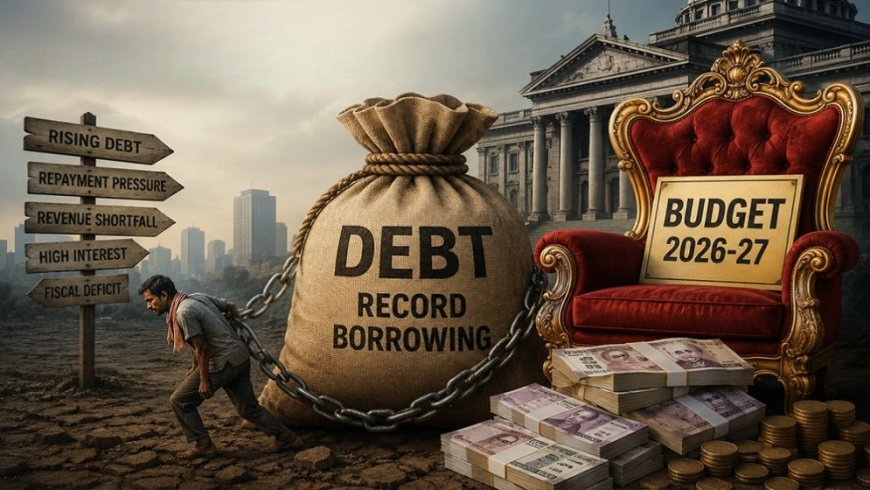
Ambitious Tk9.38 Lakh Crore Budget Nears Finalisation Amid Funding Pressures
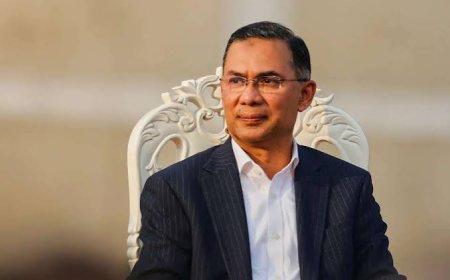
The first national budget of Prime Minister Tarique Rahman's BNP-led coalition government is in its final stages, with the proposed Tk9.38 lakh crore budget for fiscal year 2026–27 expected to be presented in Parliament on 11 June unless significant changes are made.
The government is preparing the budget against a backdrop of mounting fiscal pressure, marked by severe funding constraints, rising borrowing requirements and a revenue shortfall exceeding Tk1 lakh crore. Weak economic activity and sluggish business performance have further limited revenue growth, increasing dependence on debt financing.
Despite these challenges, the administration is proceeding with an expansive spending plan, prompting concerns among economists and policy analysts about its practicality. They argue that the government's fiscal capacity remains constrained and that implementing such a large budget may prove difficult. Additional borrowing, they warn, could also increase the tax burden as authorities seek new sources of revenue.
The proposed budget is nearly 19 percent larger than the current fiscal year's Tk7.90 lakh crore outlay, which has itself struggled to meet implementation targets. The government aims to raise Tk6.95 lakh crore in revenue, while the projected budget deficit is expected to reach a record Tk2.43 lakh crore, necessitating substantial domestic and foreign borrowing.
Consistent with the BNP government's election commitments and its "Bangladesh First" vision, the budget prioritises social protection, education and food security.
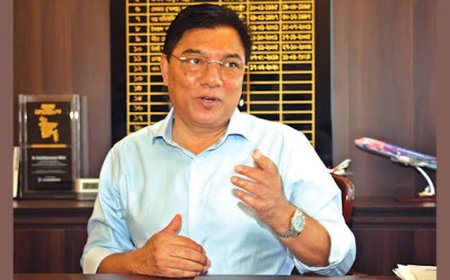
The details emerged from a review of the Finance Division's final budget summary. Finance Minister Amir Khasru Mahmud Chowdhury has held several consultations with Prime Minister Tarique Rahman, and the proposal has reportedly been finalised in line with the premier's directives.
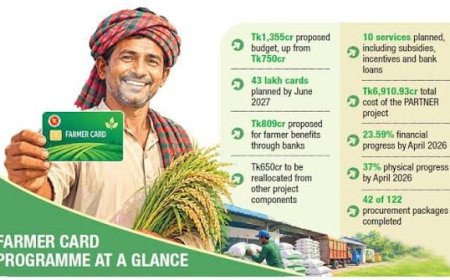
The draft budget outlines 13 priority areas, including inflation control, food security, economic recovery, higher economic growth, implementation of election pledges, expansion of social safety programmes, introduction of Family Card and Farmer Card initiatives, and broad-based employment generation.
Finance Division and National Board of Revenue officials say the prime minister views the budget as a landmark economic policy document. He is said to have remained engaged in its preparation throughout the Eid holidays. The budget will also mark the first for Finance Minister Amir Khasru Mahmud Chowdhury, whose budget speech is currently being finalised.
Under the proposal, the government has set a GDP growth target of 6.5 percent for FY2026–27, compared with the 5.5 percent target adopted by the previous interim administration for the current fiscal year. However, the World Bank projects Bangladesh's growth this year to remain below 5 percent.
Revenue and Expenditure Framework
The government plans to collect Tk6.95 lakh crore in total revenue, including Tk6.04 lakh crore through the National Board of Revenue, Tk2,500 crore from non-NBR sources and Tk66,000 crore in non-tax revenue. The remaining Tk2.43 lakh crore will be financed through borrowing.
Annual Development Programme
A Tk3 trillion Annual Development Programme (ADP) has been approved for FY2026–27. Of this amount, Tk1.90 trillion will be financed from domestic resources and Tk1.10 trillion from foreign loans and assistance.
Priority sectors include transport and communications, education, healthcare, power and energy, housing, agriculture and rural development, social protection and climate resilience.
Deficit Financing Challenge
Financing the projected Tk2.43 trillion deficit is expected to be one of the government's biggest challenges, particularly after revenue collection fell more than Tk1 trillion short of target during the first 10 months of the current fiscal year.
To bridge the gap, the government plans to borrow Tk1.12 trillion from the banking sector and Tk150 billion from non-bank sources, while securing Tk1.16 trillion in foreign financing. Meanwhile, repayments on foreign debt are projected to rise to Tk460 billion next fiscal year.
Key Budget Objectives
The budget is designed to support the government's ambition of transforming Bangladesh into a $1 trillion economy by 2034. Its major goals include sustaining economic growth, containing inflation, preserving macroeconomic stability, expanding social protection through Family Card and Farmer Card programmes, improving healthcare services, restoring discipline in the financial sector, strengthening food security through agricultural support, and promoting the creative economy, including film, music, sports and rural culture.
Expansion of Social Protection
Spending on social protection is proposed to rise to nearly Tk1.38 trillion, up from about Tk1.26 trillion in the current fiscal year.
Major programmes include Family Card and Farmer Card initiatives, old-age allowances, widow and disability benefits, stipends for freedom fighters, and maternal and child welfare schemes. Additional allocations have been earmarked for employment generation, skills development, women's empowerment and poverty reduction.
Largest Allocations
Education and healthcare emerge as the biggest beneficiaries in the proposed budget.
The Secondary and Higher Education Division is set to receive the highest allocation, at approximately Tk573.02 billion. The Health Services Division follows with a proposed allocation of Tk493.89 billion—almost double its current level—underscoring the government's emphasis on human development and social welfare.
What's Your Reaction?