


















































Govt plans to expand strategic fuel reserves to cover 90 days
According to the National Energy Policy 1996, the country was required to maintain strategic petroleum reserves sufficient to meet 60 days of demand.

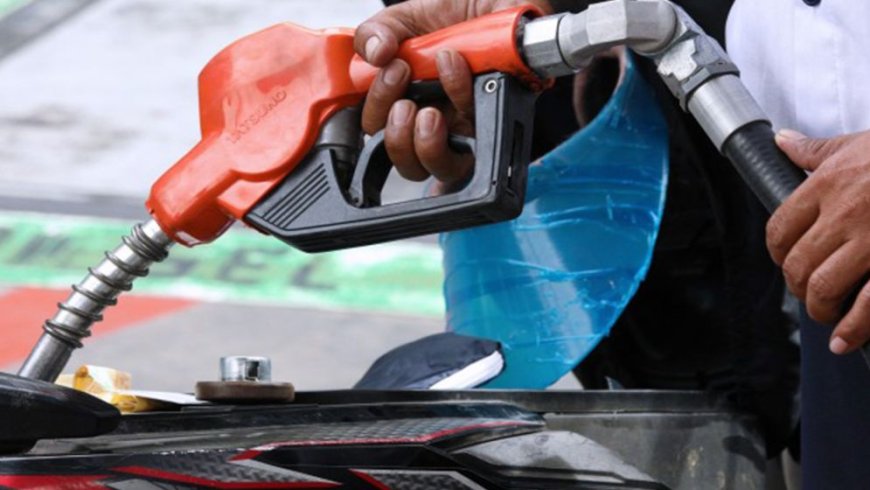
The government has launched a comprehensive initiative to expand Bangladesh’s strategic fuel storage capacity to 90 days, aiming to strengthen energy security and shield the economy from global geopolitical tensions and fluctuations in international markets.
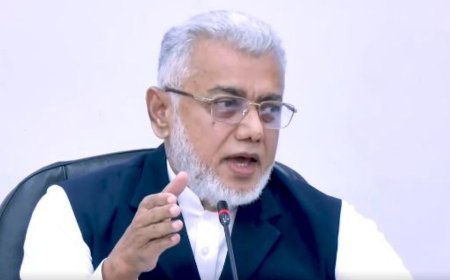
Bangladesh Petroleum Corporation (BPC) Chairman Md Rezanur Rahman told BSS that the initiative is intended to ensure uninterrupted industrial production and sustain economic growth even in the event of disruptions in the global energy market.
Under the plan, the country’s strategic fuel storage capacity will rise from the current level of more than 60 days to 71 days by December this year and eventually to 90 days by 2027, he said.
To achieve the target, the Energy Division and BPC are implementing a range of measures, including expanding existing storage facilities, constructing new depots, renovating unused tanks and leasing surplus storage facilities owned by government and private organisations.
According to BPC, the country currently has fuel reserves sufficient for more than 60 days, while efforts are underway to raise the capacity to 71 days by December and 90 days by 2027.
The National Energy Policy-1996 required Bangladesh to maintain strategic petroleum reserves equivalent to 60 days of demand. However, Energy Division Secretary Mohammad Saiful Islam said the government now plans to gradually raise the reserve capacity to 90 days in view of current realities.
“There is no fuel shortage in the country at present,” he said.
Annual demand and existing capacity
Official projections show that Bangladesh’s total petroleum product demand in the 2026 calendar year is expected to reach 84,26,400 tonnes. Annual demand for diesel is estimated at 44.73 lakh tonnes, while furnace oil demand is projected at 735,000 tonnes, jet fuel at 663,000 tonnes, octane at 439,900 tonnes and petrol at 488,500 tonnes.
Six BPC-owned companies, including Padma Oil, Meghna Petroleum and Jamuna Oil, currently have a combined storage capacity of 15,44,066 tonnes, according to the Energy Division. Renovation and maintenance work is underway at facilities with a total capacity of 67,632 tonnes.
BPC currently has storage capacity equivalent to 57 days of diesel demand, 46 days of octane demand, 29 days of petrol demand and 78 days of furnace oil demand. The corporation is now working to raise the country’s overall strategic fuel storage capacity to 90 days.
Government-owned storage facilities to be utilised
Government agencies, including power plants, Bangladesh Railway and Bangladesh Road Transport Corporation (BRTC), have storage facilities capable of holding 142,298 tonnes of diesel and 178,400 tonnes of furnace oil for operational purposes.
The government plans to lease surplus storage capacity from these institutions while also refurbishing 82,200 tonnes of storage facilities at inactive power plants.
Energy Division Joint Secretary Monir Hossain Chowdhury told BSS that BPC’s current strategic diesel reserve is equivalent to 57 days of demand.
“If the power sector and Bangladesh Railway purchase and store fuel equivalent to three months’ demand through their own arrangements, the country’s overall fuel reserve could increase by another 12 to 13 days without the need for any new project,” he said.
He noted, however, that the organisations prefer to purchase fuel in bulk with deferred payment facilities, creating a challenge for BPC, which imports petroleum products through cash payments in the international market.
The Energy Division is considering financing arrangements to facilitate bulk fuel procurement, Chowdhury said.
Projects underway to expand storage capacity
BPC said the Parbatipur depot in Dinajpur, developed under the India-Bangladesh Friendship Pipeline project, was commissioned in June. The facility has increased fuel storage capacity in the northern region by 28,437 tonnes and raised BPC’s total storage capacity to 15,72,503 tonnes.
The corporation also plans to construct four additional depots at Parbatipur by 2027.
Six more depots will be constructed using BPC’s own financing and management on unused land at its existing automated depot in Cumilla.
Meanwhile, two new 11,000-tonne tanks have been constructed at Meghna Petroleum’s Godnail depot in Narayanganj, while two additional tanks with a combined capacity of 13,000 tonnes have been built at the Aliganj depot in Fatullah. Construction of a 1,450-tonne HOBC tank at Godnail is also underway.
BPC is also implementing projects to build additional depots and storage tanks on vacant land owned by Padma Oil, Meghna Petroleum and Jamuna Oil. These projects include two 9,500-tonne tanks at Padma Oil, three 10,000-tonne tanks at Meghna Petroleum and new storage facilities with a combined capacity of 58,500 tonnes at Jamuna Oil.
In addition, three jet fuel tanks with a combined capacity of 1,037 tonnes at Padma Oil’s depot in Sylhet are being converted for diesel storage. Construction of five tanks with a total capacity of 2,165 tonnes is also underway at the Bhairab Bazar depot.
BPC is further considering leasing 30,000 tonnes of storage capacity from private company Omera, which owns tank facilities with a total capacity of 40,000 tonnes.
BPC Chairman Rezanur Rahman said the commissioning of the Parbatipur depot in June had significantly increased the corporation’s storage capacity.
Energy experts have welcomed the government’s initiative, saying that reactivating idle storage tanks, converting underutilised kerosene tanks into diesel storage facilities and using surplus tanks owned by the power sector and Bangladesh Railway would be more cost-effective and practical than acquiring new land and undertaking large-scale, long-term infrastructure projects.
What's Your Reaction?