









































Trump says U.S. Navy could escort oil tankers and claims Iran was preparing to strike first
Trump says U.S. Navy could escort oil tankers and claims Iran was preparing to strike first

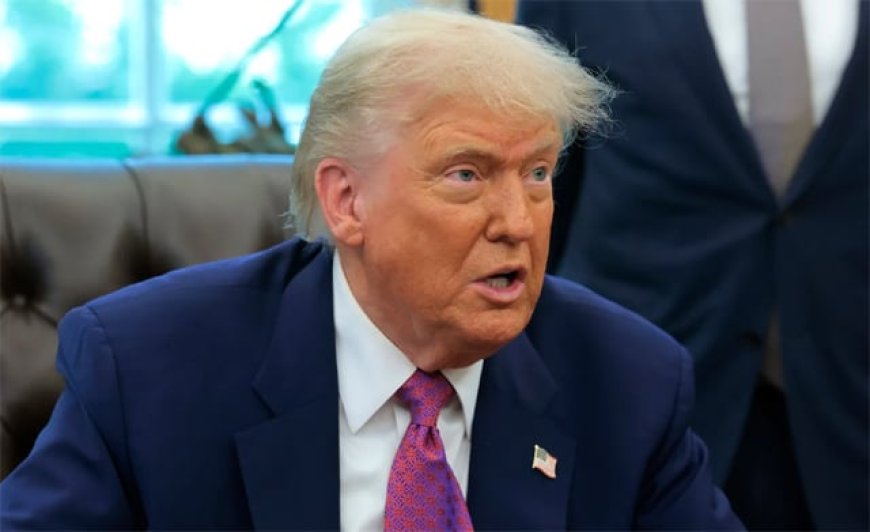
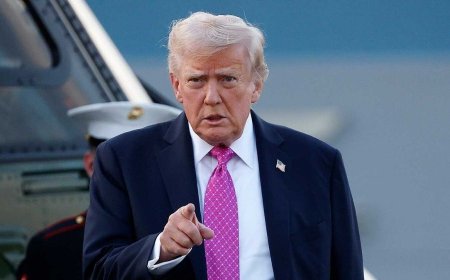
President Donald Trump said Tuesday that the US Navy stands ready to escort oil tankers through a key Gulf shipping corridor, defending his decision to go to war with Iran by claiming Tehran was preparing to launch an attack first.
Trump has offered varying explanations for the joint US-Israeli strikes on Iran, and the president — who once campaigned on ending America’s Middle Eastern conflicts — has yet to outline a clear strategy for how the crisis will conclude.
The US-Israeli attacks and Iran’s forceful retaliation have further destabilized the Middle East and unsettled global markets. Shipping traffic has diverted away from the Strait of Hormuz, one of the world’s most critical maritime routes, intensifying economic uncertainty.
With midterm elections approaching and his economic revival narrative facing pressure, Trump sought to reassure markets by announcing potential naval protection.
“If necessary, the United States Navy will begin escorting tankers through the Strait of Hormuz, as soon as possible,” Trump wrote on his Truth Social platform.
He also directed Washington to provide insurance coverage for commercial vessels. Following the announcement, US stocks pared earlier losses, though oil prices continued climbing.
‘Knocked out’
Amid growing scrutiny over his rationale for what marks America’s most significant military involvement in the Middle East in decades, Trump rejected suggestions that Israel had pushed him into action.
His remarks appeared at odds with Secretary of State Marco Rubio, who had said Monday that Washington acted after learning Israel intended to strike.
“I think they were going to attack first. And I didn’t want that to happen,” Trump said while hosting German Chancellor Friedrich Merz in the Oval Office.
“So, if anything, I may have forced Israel’s hand.”
Speaking publicly for the first time since launching the operation Saturday, Trump claimed the joint strikes had largely dismantled Iran’s military capabilities.
“Just about everything’s been knocked out,” he said, asserting that Iran’s navy, air force and radar systems were effectively disabled.
However, Trump did not present a concrete vision for Iran’s political future, stating that “most of the people we had in mind are dead.”
He added that the “worst case” scenario would be a successor to supreme leader Ali Khamenei, who was killed in Saturday’s strikes, proving equally hardline.
‘Weeks from a weapon’
Trump’s position on regime change remains ambiguous, and he did not include overthrowing Iran’s leadership among the four primary objectives he outlined earlier.
One key goal, he said, was halting Iran’s nuclear ambitions. Senior US officials reinforced that argument Tuesday, claiming Tehran had been stalling negotiations and was close to developing a nuclear weapon.
“They basically could have been days or weeks away from a weapon,” a senior administration official said.
Trump declared it was now “too late” for renewed negotiations, and officials confirmed that envoy Steve Witkoff and Trump’s son-in-law Jared Kushner had not engaged in any back-channel discussions with Iran since the strikes began.
Chancellor Merz expressed support for the US-Israeli operation but voiced hope that it would conclude swiftly, noting that the conflict was harming global economies.
While praising Merz, Trump criticized some European allies. He dismissed British Prime Minister Keir Starmer, remarking, “This is not Winston Churchill that we’re dealing with,” after Starmer initially declined to allow US forces to use British bases for the strikes before later permitting access.
Trump also threatened trade consequences for Spain, condemning its left-wing government for refusing to allow US forces to operate from Spanish bases.
What's Your Reaction?