




































































War fallout triggers urgent push to secure alternative energy sources
War fallout triggers urgent push to secure alternative energy sources


The ongoing conflict in the Middle East has placed Bangladesh’s energy security under serious strain. The Strait of Hormuz — one of the world’s most critical energy transit routes — has effectively become inoperable due to the war. Qatar has suspended its liquefied natural gas (LNG) exports following attacks, while Saudi Aramco shut down the country’s largest refinery in Ras Tanura as a precaution after drone strikes.
Bangladesh relies entirely on crude oil imports from Saudi Arabia and the United Arab Emirates, and sources most of its LNG from Middle Eastern suppliers. To avert a possible energy crisis if the war drags on, the government’s Energy Division has begun seeking alternative sources. State Minister for Power, Energy and Mineral Resources Iqbal Hasan Mahmud is regularly meeting with officials to address the situation.
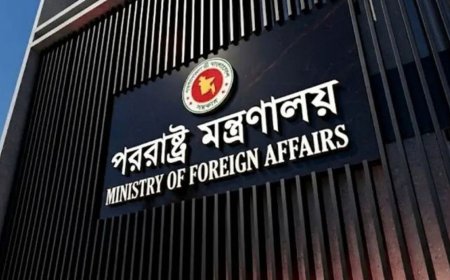
Authorities are exploring LNG import options from Australia, Malaysia, Angola and the United States. At the same time, the Ministry of Foreign Affairs is working to arrange LPG imports from several African nations. Petrobangla Chairman Md Erfanul Haque said Bangladesh currently has six LNG cargoes in the pipeline — four have already crossed the Strait of Hormuz, while two face uncertainty. Long-term suppliers have been asked to provide LNG from alternative sources, and formal requests have been sent. If necessary, Bangladesh is prepared to turn to the spot market.
The country’s only LNG storage facilities are two floating storage and regasification units (FSRUs) in Maheshkhali, each capable of accommodating just one vessel at a time. LNG shipments are therefore scheduled at fixed intervals throughout the year. Officials are closely monitoring deliveries expected on the 15th and 18th of this month. If the four cargoes that have already crossed the Strait arrive as planned, there should be no supply disruption until March 15. However, if hostilities persist, LNG will likely have to be procured from the spot market.
Bangladesh Petroleum Corporation (BPC) Chairman Md Rezanur Rahman said steps have already been taken to source fuel from alternative suppliers, including plans to import refined oil instead of crude. Efforts are also underway to secure LPG imports from African countries through diplomatic channels.
Energy expert Professor Dr Mohammad Tamim noted that Bangladesh primarily imports crude oil from Saudi Arabia and Kuwait, much of which transits the Strait of Hormuz. Around 80 percent of Qatar’s gas exports also pass through the route. Over the next two to three months, some 24–25 LNG cargoes were scheduled to arrive from Qatar, but those shipments have now come to a halt. He stressed that the government must urgently secure alternative energy supplies.
Bangladesh also imports diesel from refinery-based suppliers such as India and Singapore. However, about half of India’s crude oil originates from Arab countries, meaning refinery capacity alone does not guarantee supply security. Disruptions in crude flows are affecting both India and Singapore. Under a new agreement, one cargo is expected from the United States. As contingency measures, LNG may also be sourced from Indonesia and Brunei, in addition to Australia and the United States. However, longer shipping distances will raise import and transport costs, adding financial pressure.
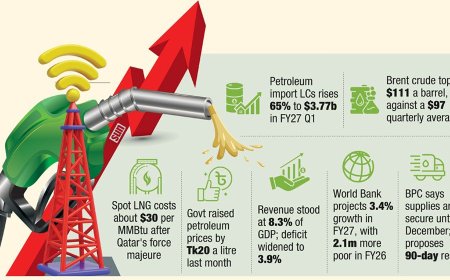
Energy and sustainable development expert Dr Ijaz Hossain warned that Bangladesh may have to intensify its search for alternative fuel within a week. If Iran keeps the Strait of Hormuz closed and covert attacks continue, the global energy market will face severe disruption. In that scenario, Bangladesh will have little choice but to diversify its supply sources — though doing so will immediately drive up costs. LNG from Qatar has been imported under relatively affordable long-term contracts, but that supply line is now disrupted. Spot market purchases remain an option, though cargo origins are often uncertain and prices volatile. If LNG prices climb to $15 per unit, Bangladesh will face substantial financial strain. Since the country largely imports refined fuel, it will need to depend on nations with fully operational refineries to maintain supply.
What's Your Reaction?