


































































The labour market has been severely disrupted by the Middle East war
The labour market has been severely disrupted by the Middle East war.

Up to 67% of Bangladesh’s migrant workers are employed in Saudi Arabia, meaning more than half of the country’s overseas labour market depends on a single destination. Qatar is the second-largest destination, followed by Kuwait in fourth place, the United Arab Emirates in sixth, and Jordan in seventh.
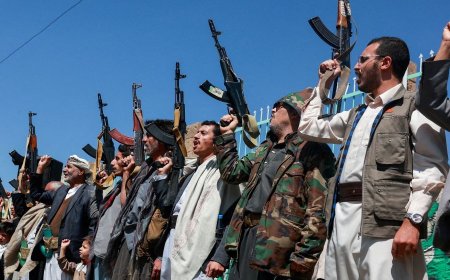
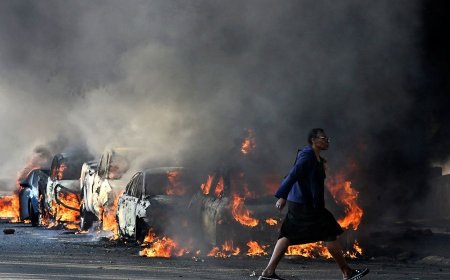
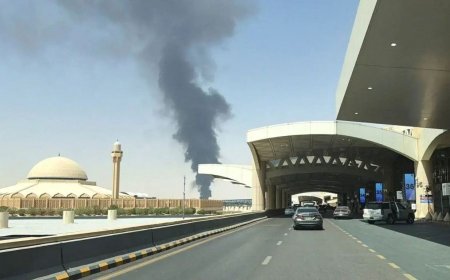
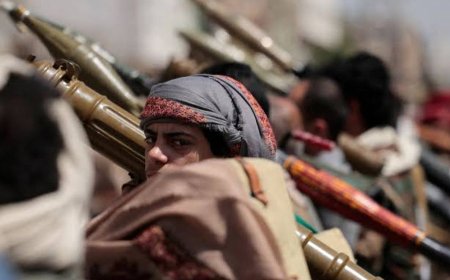
Earlier this month, the conflict involving Iran, Israel, and the United States sparked widespread drone attacks across the Middle East, severely disrupting labour migration. Over the past month, the deployment of workers to Middle Eastern countries—or even to destinations that rely on the region as a transit hub—has almost come to a standstill.
Migration experts warn that if the conflict persists, the consequences for Bangladesh’s labour market could be devastating. For now, the sector remains in limbo, awaiting an end to the Middle East war. At the same time, efforts to explore alternative markets are also stalled as stakeholders look for a resolution to the Russia–Ukraine war.
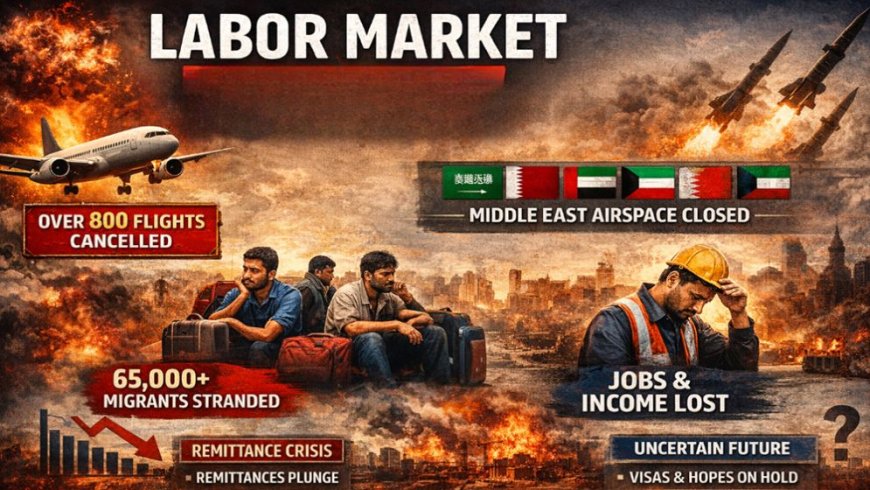
According to reports, as of March 28, a total of 797 flights to various Middle Eastern destinations have been cancelled at Shahjalal International Airport. The highest number of cancellations occurred on March 1 (40 flights) and March 2 (46 flights), with daily cancellations averaging between 20 and 30 throughout the month.
Amid the conflict, several countries—including Iran, Iraq, Kuwait, the United Arab Emirates, Bahrain, Qatar, and Jordan—have temporarily closed their airspace. Although limited operations continue through airports in Oman and Jeddah, travel costs have surged beyond the reach of most migrant workers, effectively cutting off air connectivity between Dhaka and the Middle East.
Data from the Bureau of Manpower, Employment and Training (BMET) shows that nearly 800 cancelled flights have left at least 65,000 migrant workers unable to travel. Just a month before the disruptions, 65,613 workers had departed for overseas jobs. Since the conflict began, BMET clearances for Middle Eastern destinations have dropped to about one-third of previous levels.
Between March 1 and March 28, only 36,673 workers received clearance for 73 countries. Of them, 19,829 were bound for Saudi Arabia, 3,921 for Qatar, 1,353 for Kuwait, 891 for Jordan, 884 for the UAE, and 591 for Iraq, with only a small number cleared for other destinations. However, due to the ongoing flight disruptions, none of these workers have been able to leave the country. Alongside new migrants, many returnees are also stranded in Bangladesh, facing uncertainty and financial hardship, including visa-related complications.
Ahad Islam from Mirsarai in Chattogram said he became stranded after returning from Kuwait on a short 10-day leave. “My visa was about to expire. My employer has assured some flexibility from the Kuwaiti government, but uncertainty still remains. I don’t know if I’ll be able to return,” he said.
Fakhrul Islam, former joint secretary general of the Bangladesh Association of International Recruiting Agencies (BAIRA), said the labour market in the Middle East is deteriorating rapidly. Many prospective workers are now hesitant to travel due to the conflict, while returnees are struggling with expiring visas. “The situation is so negative that our confidence has dropped to the lowest level,” he said, adding that recruitment agencies are unable to respond to demand from overseas employers due to uncertainty.
Another recruiter, Mobarak Ullah Shimul, described the situation as highly unpredictable, noting that new visas are not being issued. He emphasized that Bangladesh’s heavy reliance on Saudi Arabia has made the crisis more severe and suggested that stronger diversification into alternative markets could have mitigated the impact. Potential destinations such as Europe, Japan, and Malaysia remain underutilized.
Even before the Middle East crisis, the Russia–Ukraine war had already affected opportunities in the Russian labour market. Industry insiders say Russia could still emerge as a promising destination for Bangladeshi workers, but concerns over involvement in the conflict and instances of human trafficking by unscrupulous recruiters have damaged prospects.
They believe that once the war subsides, legitimate recruitment channels could help open up Russia as a viable alternative market. For now, Bangladesh’s labour sector is effectively waiting for stability to return—both in the Middle East and in Eastern Europe.
What's Your Reaction?