







































Amir Khosru Mahmud Chowdhury stresses the need for an inclusive economy to ensure broader public participation
Amir Khosru Mahmud Chowdhury stresses the need for an inclusive economy to ensure broader public participation.

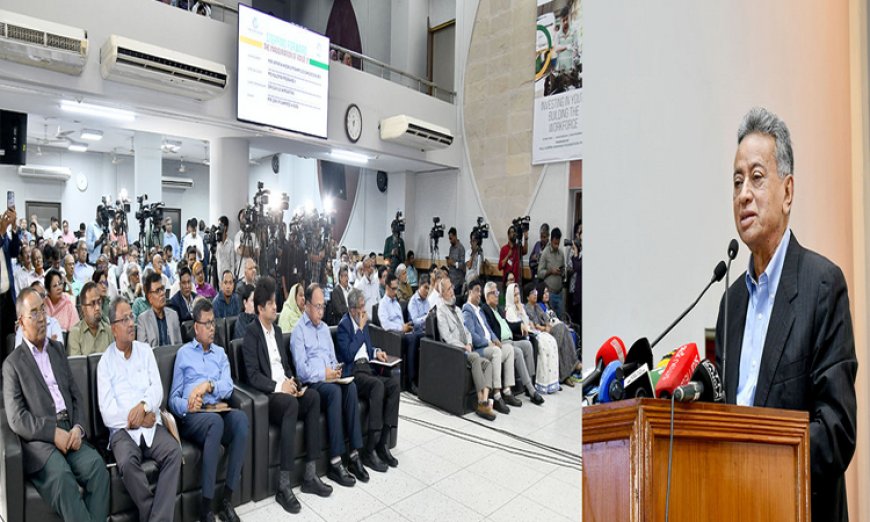
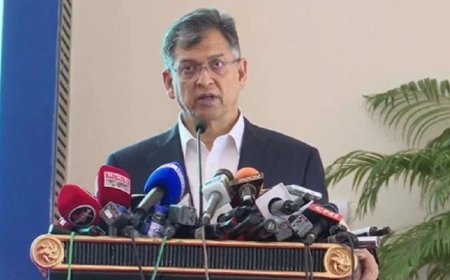
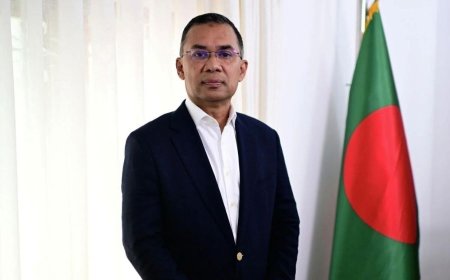
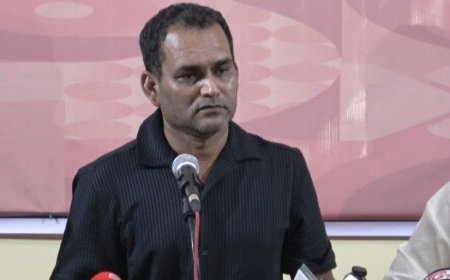
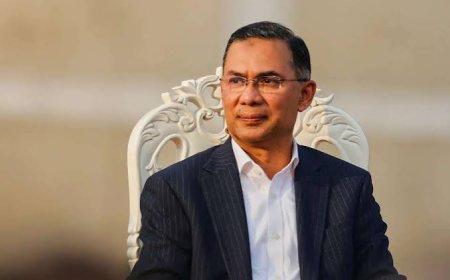
Amir Khosru Mahmud Chowdhury today said Bangladesh’s economy must become more participatory and inclusive so that every citizen can engage in economic activities and share the benefits of development, stressing that cooperation from all stakeholders is vital to taking the “Bangladesh story” to the global stage.
“Political democracy alone is not enough. We also want democratisation of the economy,” he said, adding that every citizen has the right to participate in the country’s economic process and benefit from it.
The finance minister made the remarks while addressing the inauguration ceremony of the “Stepping Forward” RAISE-2 project at the PKSF auditorium in the capital.
Financial Institutions Division Secretary Nazma Mobarek attended the event as special guest, while Dr Gayle Martin, acting division director of the World Bank for Bangladesh and Bhutan, joined as guest of honour. The অনুষ্ঠানে সভাপতিত্ব করেন PKSF Chairman Zakir Ahmed Khan.
PKSF Managing Director Md Fazlul Kader delivered the welcome speech, while beneficiaries and partner organisations of the RAISE project shared their experiences.
The minister praised PKSF’s contribution to grassroots development, employment generation and poverty reduction, saying the government has introduced strict benchmarks for approving projects to ensure transparency, accountability and effective use of public funds.
“We are now evaluating projects based on return on investment, employment generation and environmental considerations. If a project does not meet these standards, we will not undertake it,” he said.
He said taxpayers’ money must be spent carefully and people should be informed about the rationale, expected outcomes and public benefits of every project.
Praising PKSF’s performance, Khosru said the organisation has demonstrated efficiency through strong loan recovery rates and successful implementation of development programmes.
Referring to the government’s broader economic philosophy, he said the administration is prioritising social programmes and public welfare over mega projects.
He noted that many ordinary citizens had long remained excluded from economic participation due to “oligarchic and patronage-based economic practices,” while poverty continued to rise.
Khosru said the government has introduced several people-oriented initiatives, including Family Cards, Farmers Cards and expanded healthcare programmes, to strengthen purchasing power, social protection and local economies.
Explaining the Family Card initiative, he said women who manage households often receive little recognition despite bearing major family responsibilities. Under the programme, financial support will directly reach women, enhancing their empowerment within families and society while also stimulating local economies through increased consumption and savings.
The minister said the government is moving towards universal healthcare, noting that out-of-pocket health expenditure in Bangladesh remains extremely high.
“We want to strengthen preventive and primary healthcare services, and this will be reflected in the upcoming budget through increased allocations to health, education and social sectors,” he added.
Highlighting the importance of utilising the country’s demographic dividend, he said the remaining window of opportunity must be fully harnessed through skill development, employment and entrepreneurship programmes.
He also underscored the importance of the creative economy, saying traditional artisans, cottage industries and cultural workers should be integrated into mainstream economic activities.
According to the minister, the government plans to provide artisans with financial support, design assistance, branding, marketing and access to international markets through digital platforms.
Referring to the “One Village, One Product” concept, he said villages specialising in products such as Shital Pati may receive loans, skills training, branding support and online marketing opportunities to increase income and export potential.
Drawing examples from Thailand, he said coordinated government support for local producers can transform rural economies and create globally competitive products.
Khosru also stressed the economic significance of culture, theatre, music and sports, saying these sectors should be recognised as part of the country’s creative industries and contributors to GDP.
“GDP is not only about manufacturing. Creative industries, sports economy and cultural activities also generate employment and economic value,” he said.
The minister said the government is working under significant domestic and global pressures, including geopolitical tensions and economic challenges, but remains committed to its long-term vision.
“With cooperation from all, we want to present the story of Bangladesh before the world,” he said.
Calling for collective efforts beyond political divisions, he said development and democracy require participation from all sections of society so that everyone can contribute and benefit equally.
PKSF has launched the second phase of the RAISE skills development project with the aim of providing training and financial support to an additional 200,000 youths and small entrepreneurs.
Under the project, jointly financed by the World Bank and PKSF, around 205,000 young people have already received training and loan support to strengthen the capacity of informal sector entrepreneurs and create sustainable employment opportunities across the country.
Speakers at the event said a total of 423,100 people are expected to directly benefit from the project by 2030.
In the second phase, priority will be given to youths from climate-vulnerable regions, including chars, haors, hilly areas and coastal zones. Special emphasis will also be placed on the inclusion of Dalit communities, ethnic minorities and youths with disabilities.
To increase women’s participation in the workforce, an initiative has also been undertaken to train 1,600 women as home-based childcare entrepreneurs.
During the programme, graduate apprentices and entrepreneurs involved in the project shared their success stories.
Representatives of partner organisations said the project is helping connect youths with suitable employment opportunities through market-oriented technical training, life-skills development and entrepreneurship support, while also contributing to the growth of small enterprises and sustainable economic development.
The Recovery and Advancement of Informal Sector Employment (RAISE) project is being implemented through joint financing by the World Bank and PKSF.
PKSF believes the initiative will make a significant contribution to inclusive economic growth by transforming the country’s large youth population into skilled human resources.
What's Your Reaction?