



























RMG waste recycling: Bangladesh stands to lose $8 billion in annual opportunities
Policy gaps and limited recycling capacity threaten competitiveness

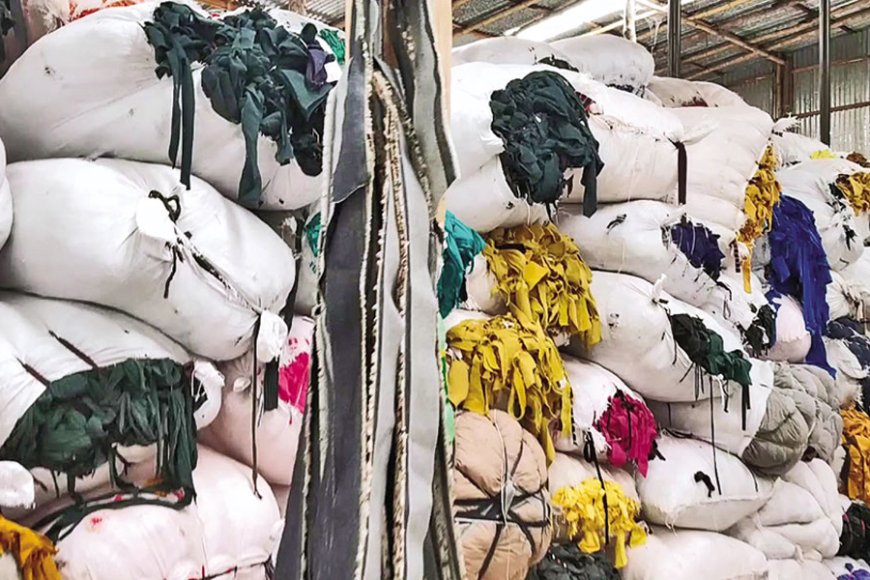
Bangladesh’s textile and apparel sector risks missing out on a multi-billion-dollar opportunity as inadequate policy support and limited technological capacity continue to slow the shift towards a circular economy. Industry insiders estimate that recycling RMG waste could generate an annual economic opportunity worth nearly $8 billion.
They warned that without urgent reforms, Bangladesh’s position as the world’s second-largest apparel exporter may come under growing pressure as key export destinations adopt stricter environmental and traceability standards.
According to industry stakeholders, new legislative measures in Western markets, particularly in the European Union, will make supply-chain traceability and environmentally sustainable production mandatory.
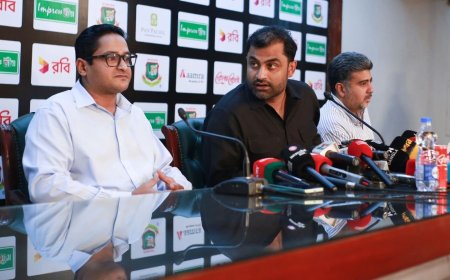
The concerns were raised on the sidelines of a seminar titled “Accelerating Circular Transition in Bangladesh’s Textile Industry: Insights from SWITCH2CE Pilots,” jointly organised by the Ministry of Commerce and the Bangladesh Garment Manufacturers and Exporters Association (BGMEA) at a city hotel on Wednesday.
Speaking to The Financial Express, Sheikh H M Mustafiz, managing director of Cute Dress Industry Ltd and a BGMEA director, said global regulatory changes are reshaping the apparel industry by placing greater emphasis on circularity and sustainability compliance.
He noted that initiatives such as the EU Green Deal and the Digital Product Passport (DPP) will require increased transparency, stronger product traceability and greater circularity across supply chains.
As a result, manufacturers will need to adopt circular production practices, increase the use of recycled materials, reduce dependence on virgin resources and lower carbon emissions across the sector.
He said Bangladesh now generates nearly 600,000 tonnes of textile waste annually, a figure that has risen sharply in recent years.
Although a significant portion of this waste is reused or processed within the informal sector, it has yet to be integrated into a formal framework.
Formalising the sector would bring two major benefits, he said: reducing health and safety risks such as fire hazards caused by poor oversight, and creating a more organised and secure industrial ecosystem.
Discarded fibres and textile waste also hold strong potential as reusable raw materials. While 100 per cent cotton waste can be recycled mechanically, Bangladesh still lacks adequate chemical recycling capacity.
At present, recycling activities are largely limited to cotton-based waste, leaving major gaps in the processing of blended fabrics and man-made fibres (MMF). With proper technology and investment, however, these materials could be converted into higher-value products.
Mustafiz warned that by 2030, growing global demand for resources and tightening raw material supplies would force the industry to reduce dependence on cotton and other natural fibres in favour of recyclable alternatives.
Efforts to establish a circular economy began in 2022-23, with gradual moves towards formalisation, but the lack of comprehensive policies and legal frameworks continues to impede progress.
Although some policy guidelines have been introduced, Bangladesh still lacks a clear national policy and implementation framework for textile waste utilisation, he added.
Pilot projects are currently underway to assess waste collection, sorting and recycling systems, but only a small share of textile waste is presently recycled through formal channels.
Echoing similar concerns, BGMEA Vice President Vidiya Ammrit Khan said recycling the entire volume of RMG waste could create a circular economy worth almost $8 billion.
She said Bangladesh currently has the capacity to recycle up to 30 per cent of cotton-based RMG cutting waste, generating value worth several million dollars.
However, a large portion of this waste is exported to India and Pakistan before being reimported in the form of recycled yarn.
She also noted that around 17 factories are now participating in pilot recycling projects valued at several hundred million dollars.
Addressing the seminar, European Union Ambassador to Bangladesh Michael Miller said Bangladesh is approaching a crucial stage with its graduation from least developed country (LDC) status and must build a more balanced and equal commercial relationship with its largest trading partner.
“We are carefully assessing the request to negotiate a free trade agreement with Bangladesh,” he said, adding that irrespective of the graduation timeline, Bangladesh must strengthen its competitiveness, circularity and eco-efficiency.
He urged Bangladesh to use the remaining pre-graduation period to improve the investment climate, eliminate trade irritants—including discriminatory practices—and ensure predictable access to EU markets.
Highlighting the importance of the circular economy, Miller said it is central to the EU’s growth strategy aimed at decoupling economic growth from resource consumption and achieving carbon neutrality by 2050.
Referring to European Commission President Ursula von der Leyen, he said the EU is moving away from the traditional “take-make-waste” model towards reuse, sustainability and resource efficiency.
He added that circular practices such as recycling, material substitution and efficient resource use can reduce costs while encouraging innovation.
Turning to the textile and garment sector, Miller said it remains a key priority because of its scale and waste intensity. While the EU generates more than 5 million tonnes of textile waste annually, Bangladesh produces around 600,000 tonnes.
“These realities, along with concerns over social conditions and fast fashion, have driven the EU to act,” he said.
He noted that the EU’s 2022 strategy for sustainable and circular textiles introduced measures such as eco-design requirements, extended producer responsibility, digital product passports and stricter anti-greenwashing rules, alongside broader regulations aimed at embedding circularity into corporate accountability.
“These policies matter for Bangladesh, as Europe is your largest export market dominated by RMG products,” he said, noting that the sector contributes around 11 per cent to Bangladesh’s GDP and employs nearly four million workers.
Miller said the EU is supporting Bangladesh’s transition through initiatives such as the SWITCH to Circular Economy (SWITCH2CE) project, where brands like H&M and Bestseller are leading pilot projects on recycling and waste traceability, alongside policy support from United Nations Industrial Development Organization and Chatham House.
He also mentioned that the European Investment Bank has signed a €60 million loan agreement with BRAC Bank to support circular investments for SMEs.
Commerce Minister Khandaker Abdul Muktadir and Mahmud Hasan Khan also addressed the seminar, which was chaired by Commerce Ministry Secretary (routine charge) Md Abdur Rahim Khan.
What's Your Reaction?