


















































A lavish budget financed through record borrowing
The government is preparing an ambitious Tk9.30 trillion (Tk930,000 crore) budget for the 2026–27 fiscal year.

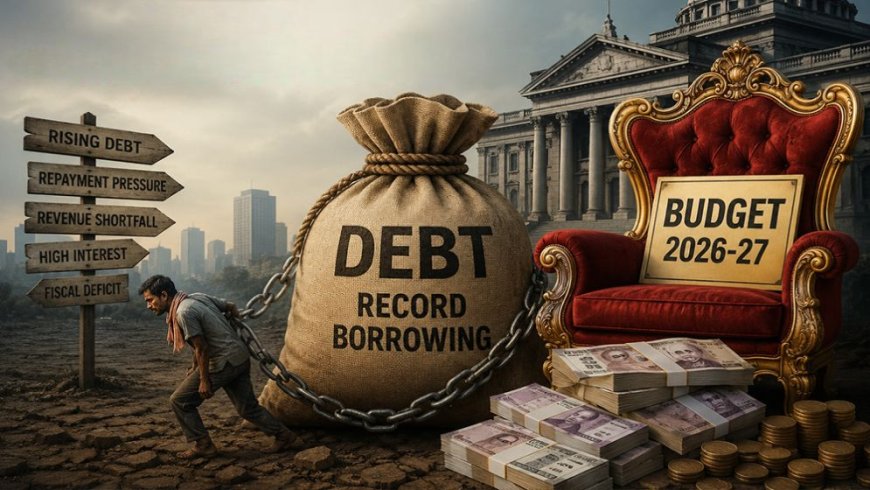
The economy is currently under severe strain. Revenue collection has fallen far short of expectations, while the government continues to rely heavily on bank borrowing amid a growing funding crisis. Foreign debt is also mounting. Despite these challenges, the government is preparing an ambitious Tk9.30 trillion (Tk930,000 crore) budget for the 2026–27 fiscal year, with a revenue target set at Tk6.95 trillion (Tk695,000 crore).
A significant portion of the remaining expenditure will be financed through domestic and foreign borrowing. The government plans to secure Tk110,000 crore in foreign loans and Tk119,000 crore from domestic sources. In anticipation of continued revenue shortfalls, preparations are also underway to seek an additional Tk44,000 crore in budget support loans.
According to sources at the Economic Relations Division (ERD), the foreign borrowing target for the upcoming fiscal year is the highest in Bangladesh’s history.
Compared with the original Annual Development Programme (ADP) allocation of the previous fiscal year, the foreign borrowing target has risen by Tk24,000 crore. Compared with the revised ADP, the increase is nearly Tk38,000 crore, marking a roughly 52 percent jump in external borrowing. Although the foreign loan target for the current fiscal year was Tk86,000 crore, only Tk47,000 crore had been disbursed during the first nine months.
At the same time, the burden of repaying existing debt is increasing rapidly. ERD data shows Bangladesh will need to repay nearly $25.99 billion in foreign loans between fiscal years 2025–26 and 2029–30, including $18.38 billion in principal and nearly $7.6 billion in interest. Repayments are expected to peak in FY2029–30 at around $5.5 billion.
Economists say the grace periods for several large-scale projects are ending, meaning full principal repayments will soon begin. Installments for major projects such as the Rooppur Nuclear Power Plant will have to be paid over the coming years. However, many of these projects have faced implementation delays and are yet to generate their expected economic returns, adding further pressure on the economy.
ERD officials said Bangladesh repaid a record $4.09 billion in foreign loans in the recently concluded fiscal year — the highest annual repayment in the country’s history and $740 million more than the previous year. Repayments stood at $3.35 billion in FY2023–24 and $2.67 billion in FY2022–23. Rising global interest rates have sharply increased debt servicing costs, and officials expect repayments to exceed $4.5 billion in the current fiscal year.
Meanwhile, a widening revenue shortfall has further complicated the situation. According to data from the National Board of Revenue, the revenue deficit reached Tk97,990 crore during the first eight months of the fiscal year. Against a target of Tk385,852 crore, actual collections stood at only Tk287,862 crore. Faced with this reality, the government is becoming increasingly dependent on foreign borrowing.
Although several initiatives have been taken to reduce public expenditure, spending pressures remain elevated. The government continues to rely on loans to finance salaries and allowances for public employees, subsidies, social safety programmes, and development spending. Data from Bangladesh Bank shows that during the first nine months of the current fiscal year, the government borrowed nearly Tk109,000 crore from the banking system, already surpassing the annual target. Around Tk56,000 crore was borrowed during the January–March quarter alone.
Analysts warn that excessive government borrowing from banks is crowding out private sector credit, creating risks for investment and employment while potentially slowing GDP growth.
ERD data further shows that Bangladesh’s total external debt has now exceeded Tk23 trillion. At the same time, the government has sought an additional $3 billion in loan support from development partners. Uncertainty has also emerged over the release of the next installment of the $4.75 billion loan package from the International Monetary Fund. During talks with the finance minister in Washington, the IMF reportedly did not provide a clear assurance regarding the next tranche because of slow progress on reforms and unmet conditions.
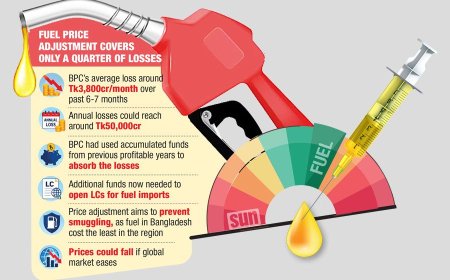
Against this backdrop, the government recently adjusted fuel prices. Although authorities had repeatedly stated that fuel prices would not be increased, mounting subsidies became unavoidable as imported fuel was being sold below international market prices. The IMF had also been pressing for subsidy reductions. Consequently, fuel prices were raised to ease fiscal pressure, though economists fear the move could further accelerate inflation.
In the current fiscal year, around Tk122,000 crore was allocated solely for interest payments. In the next budget, that figure is expected to rise to Tk127,500 crore. Rising global prices are also increasing fuel subsidy costs. Combined with the expansion of social safety programmes, implementation of election pledges, and pressure from a new pay structure, the overall size of the budget continues to grow. As a result, concerns are mounting that the budget deficit could reach around 5 percent of GDP.
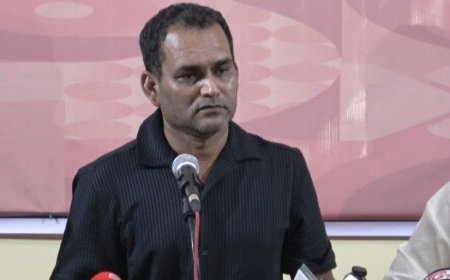
Mustafizur Rahman said, “The most important issue now is ensuring that Bangladesh does not fall into a debt trap. The government should place greater emphasis on resource mobilization and revenue generation.”
Meanwhile, Zahid Hussain said, “The situation cannot be managed through borrowing alone. A clear assessment is needed of where pressures are building in the macroeconomy, including imports, exports, remittances, subsidies, and revenue conditions. Coordinated reforms and effective support from development partners are also essential.”
Economists have warned that implementing such a large budget amid rising foreign debt, expanding bank borrowing, revenue shortfalls, and mounting interest payment obligations will become increasingly difficult. They caution that fulfilling election pledges, expanding social protection programmes, introducing a new pay structure, and increasing subsidies could expose the economy to greater risks. Without structural reforms, this lavish budget could eventually trigger a major financial crisis in the future.
What's Your Reaction?