

































Trump highlights business gains as China raises concerns over Iran and Taiwan
Trump highlights business gains as China raises concerns over Iran and Taiwan.
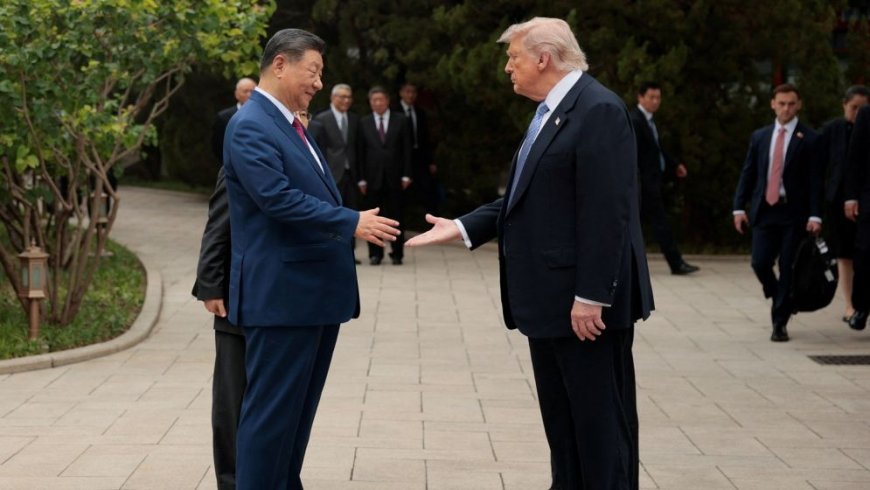
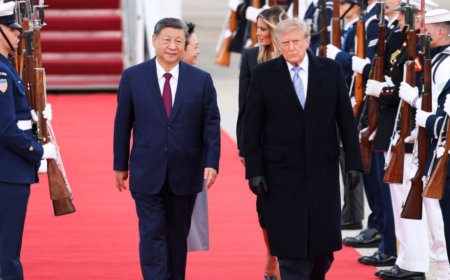
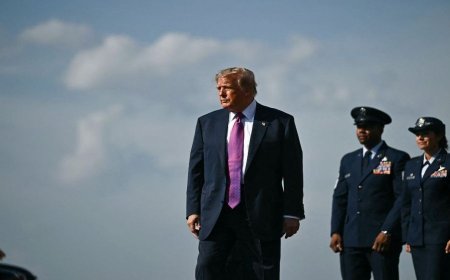
U.S. President Donald Trump entered his final round of talks with Xi Jinping on Friday touting economic gains that offered little excitement for markets, while Beijing voiced concerns over Taiwan and said the war with Iran should never have begun.
Trump is making the first visit by a U.S. president to China since 2017, seeking concrete outcomes to boost his weakened approval ratings ahead of key midterm elections.
“We’ve made some fantastic trade deals, great for both countries,” Trump said while seated beside Xi in an ornate red armchair at Beijing’s Zhongnanhai leadership compound.
Earlier, the two leaders walked together through the gardens, with Trump admiring the roses and Xi offering to send him flower seeds, before attending a lunch featuring lobster balls, Kung Pao scallops and shrimp dumplings.
But ahead of their final meeting, China’s foreign ministry issued a pointed statement expressing frustration over the Iran conflict.
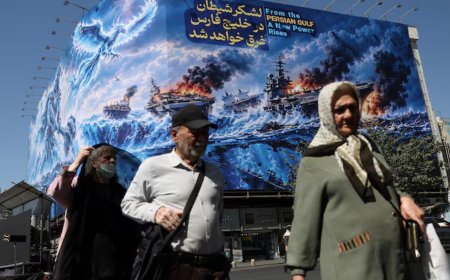
“This conflict, which should never have happened, has no reason to continue,” the ministry said, adding that Beijing supported efforts for peace as the war had disrupted energy supplies and hurt the global economy.
At Zhongnanhai, Trump said the two leaders had discussed Iran and shared similar views, though Xi made no public comment. Trump had hoped China would pressure Tehran into reaching a deal with Washington to end the conflict, which has driven up prices and created political risks for him domestically.
Analysts, however, doubt Xi would strongly pressure Iran or reduce support for Tehran’s military, given Iran’s strategic importance to Beijing as a counterbalance to the United States. A brief White House summary of Thursday’s talks highlighted both leaders’ interest in reopening the Strait of Hormuz and Xi’s apparent openness to purchasing more American oil to reduce China’s dependence on Middle Eastern supplies.
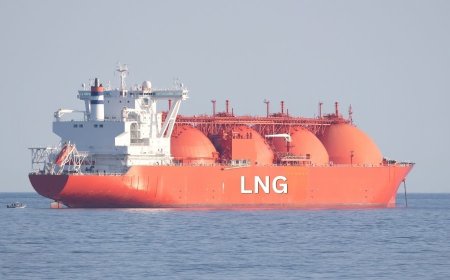
Around one-fifth of global oil and liquefied natural gas shipments normally pass through the Strait of Hormuz.
Boeing shares fall amid modest deal expectations
U.S. officials said agreements had been reached to increase sales of agricultural goods, beef and energy products to China, while both sides also planned to identify $30 billion worth of non-sensitive goods for trade.
However, few details were released, and there was no indication of progress on allowing sales of Nvidia’s advanced H200 AI chips to China, despite Nvidia CEO Jensen Huang joining the delegation at the last minute.
Trump told Fox News that China had agreed to buy 200 Boeing jets — the country’s first order of U.S.-made commercial aircraft in nearly a decade — but the number fell well short of market expectations of roughly 500 aircraft. Boeing shares dropped more than 4 percent following the announcement.
“For the market, the summit can be strategically reassuring while underwhelming in substance,” said Chim Lee, senior China analyst at the Economist Intelligence Unit.
The summit’s main achievement may ultimately be preserving the fragile trade truce reached during the leaders’ previous meeting in October, when Trump suspended steep tariffs on Chinese imports and Xi eased restrictions on exports of critical rare earth materials.
U.S. Trade Representative Jamieson Greer said on Friday it remained undecided whether the truce would be extended beyond its expiry later this year.
Sharp warning over Taiwan
Xi’s warning to Trump that mishandling Taiwan could lead to conflict marked one of the strongest moments of the summit, despite the otherwise cordial atmosphere.
Taiwan, the self-governed island claimed by Beijing, remains one of the most sensitive issues in U.S.-China relations. China has not ruled out using force to take control of the island, while U.S. law requires Washington to help Taiwan defend itself.
“U.S. policy on the issue of Taiwan is unchanged as of today,” Secretary of State Marco Rubio told NBC News, adding that China “always raises it” and the United States continues to restate its position. Taiwan Foreign Minister Lin Chia-lung thanked Washington for repeatedly expressing support.
At Thursday’s state banquet, Xi said the China-U.S. relationship was the world’s most important bilateral relationship, adding: “We must make it work and never mess it up.”
Jimmy Lai case raised
Rubio also said Trump raised the case of jailed Hong Kong media tycoon Jimmy Lai during discussions with Xi. Lai, one of Hong Kong’s most prominent critics of Beijing, was sentenced in February to 20 years in prison in the city’s biggest national security case.
“The president always raises that case and a couple others, and obviously we’ll hope to get a positive response from that,” Rubio told NBC News.
“We’d be open to any arrangement that would work for them, as long as he’s given his freedom,” Rubio said of Lai, who denies all charges against him.
China’s foreign ministry has repeatedly said Hong Kong affairs are an internal matter for Beijing.
What's Your Reaction?