




































PM: Energy Roadmap Crucial to Achieving $1 Trillion Economy by 2034
PM: Energy Roadmap Crucial to Achieving $1 Trillion Economy by 2034

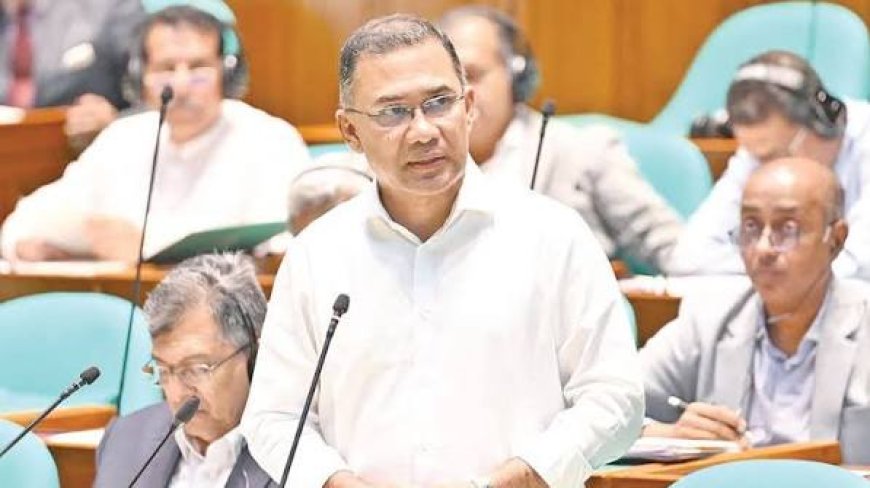
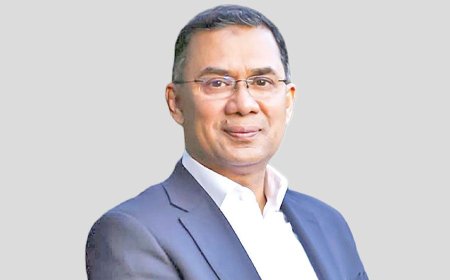
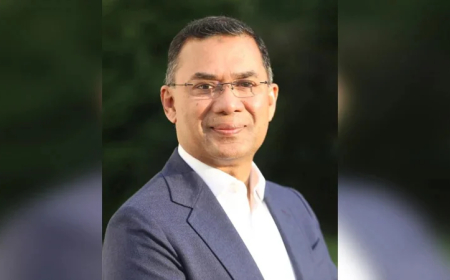
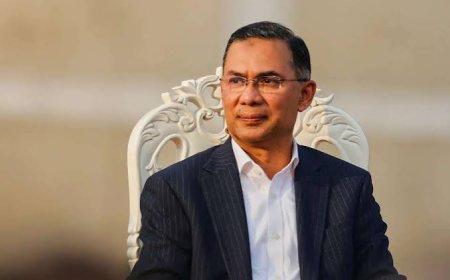
Prime Minister Tarique Rahman told parliament on Wednesday that the government is finalising a 10-year master plan for the power and energy sector as part of its broader effort to build a $1 trillion economy by 2034.
Replying to a supplementary question from Cumilla-10 MP Md Mobasher Alam Bhuiyan, Tarique said the energy roadmap would be presented to parliament by the energy minister once completed. He stressed that a reliable and sustainable energy supply would be essential to achieving the trillion-dollar economic target.
The prime minister said the goal extends beyond GDP growth, encompassing macroeconomic stability, investment, employment, exports, human resource development, fiscal discipline and balanced regional development.
The government has adopted a three-phase “3R” strategy—Recovery and Stabilisation, Restoration, and Reconstruction for Acceleration. The first year will focus on reversing economic decline, followed by three years of rebuilding capacity in revenue collection, private investment, banking, exports, employment, agriculture, energy and infrastructure. The final five years will target structural transformation, innovation-driven growth and stronger institutions.
The government aims to raise foreign direct investment to 2.7% of GDP and total investment to 40% by FY31. It also plans to increase the revenue-to-GDP ratio from 8% to 11% and the tax-to-GDP ratio from 6.8% to 9.6%.
Tarique said deregulation and business-friendly reforms were also progressing, including the BanglaBiz digital platform for business approvals and an FDI heat map covering 19 priority sectors.
Rooftop solar incentives
The government will purchase electricity generated by rooftop solar systems installed over the next six months at Tk10.15 per unit for three years, Tarique said. With estimated generation costs of Tk6–7 per unit, the scheme could provide investors with returns of up to 45%.
A dedicated fund is being established to support small businesses installing rooftop solar systems, while tax concessions are being provided on solar panels, inverters and batteries. The Internal Resources Division exempted these items from customs, regulatory and supplementary duties, as well as advance tax, on 8 June.
Rooftop solar systems have already been installed at deputy commissioner and divisional commissioner offices nationwide under the National Rooftop Solar Programme. The government is also developing minimum quality standards for imported lithium batteries.
Gas exploration and LNG
Tarique attributed the ongoing energy crisis largely to years of insufficient domestic gas exploration and growing dependence on imports.
Of 150 planned wells, drilling and workover activities have been completed on 30, adding around 140 million cubic feet per day (mmcfd) to the national grid. Another 85 mmcfd is expected from seven wells currently under development.
The government also plans to conduct 4,500 line-kilometres of 2D seismic surveys and 4,200 square kilometres of 3D surveys, while two new rigs are being procured for Bangladesh Petroleum Exploration and Production Company Ltd (BAPEX).
Bids have been invited under the newly approved Offshore Model Production Sharing Contract 2026, while the onshore version is awaiting approval.
Regarding LNG, negotiations are under way to build a floating terminal at Kutubjom, off Maheshkhali, with regasified gas supply expected to begin by December 2028. LNG imports are projected to increase by 600 mmcfd within two years.
Feasibility studies are also under way for one or two additional floating terminals near Payra or Mongla, or along the southwestern coast. At the same time, the government plans to expand renewable generation from solar, wind, hydro and waste-to-energy sources.
Power crisis: ‘No scope to hide the truth’
State Minister for Power, Energy and Mineral Resources Anindyas Islam Amit told parliament that Bangladesh recently experienced its worst power deficit in 55 years, with the shortfall reaching 3,700 megawatts (MW) on 9 August.
He attributed the crisis to nearly two decades of “faulty policies” under the previous Awami League government, combined with volatility in global energy markets.
Responding to Chapainawabganj-3 MP Nurul Islam Bulbul, Amit said there was “no scope to hide the truth behind mere rhetoric” and apologised for the difficulties faced by consumers. He promised a significant improvement within 15 days.
Bangladesh has around 12,000 MW of gas-fired power generation capacity requiring 1,900 mmcfd of gas, while domestic production and imported LNG together currently provide between 2,300 and 2,700 mmcfd. This has forced the government to balance gas supplies among industries, power plants and households.
Under its 1,600 MW agreement with Adani Power, Bangladesh is currently receiving around 900 MW during the day and 1,100 MW at night.
Amit said one of the country's two Floating Storage Regasification Units (FSRUs) broke down on 21 July, severely disrupting fuel supplies. The unit was fully restored by 15 August, bringing the system to about 88% normal capacity, with full recovery expected by early September.
He said the crisis could have been avoided if the interim government had not cancelled a contract for a third FSRU. Work is now under way to fast-track approval for a replacement facility targeted for 2028.
Addressing claims that Heavy Fuel Oil plants could produce 5,000–6,000 MW, Amit said such peaking plants can safely operate at only 70–80% capacity. This puts their realistic output at around 4,000 MW, of which 3,200 MW is already being generated.
He urged MPs to ensure enforcement of the rule requiring shops and shopping malls to close by 8pm. He also pointed to past shortcomings, including power plants built without guaranteed fuel supplies, the absence of a gas pipeline for Khulna-3, inadequate transmission upgrades and excessive dependence on fuel imports from the Middle East.
The government is now diversifying energy import sources and accelerating renewable-energy projects ahead of next year's summer and irrigation seasons.
What's Your Reaction?