








































An expansionary budget with a record-high deficit
An expansionary budget with a record-high deficit.

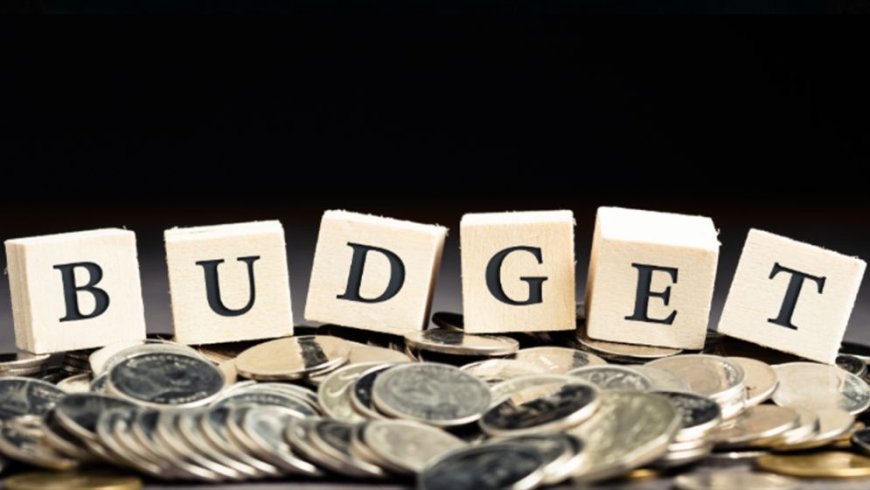
Amid mounting global uncertainty and a fragile domestic economy, the newly elected BNP government is preparing to unveil the national budget for the 2026–27 fiscal year. The proposed budget is expected to range between Tk 9.20 trillion and Tk 9.30 trillion.
The budget is being formulated against a backdrop of persistent inflation, rising commodity prices, instability in the energy sector, ongoing banking and financial reforms, a widening revenue shortfall, and sluggish implementation of development projects.
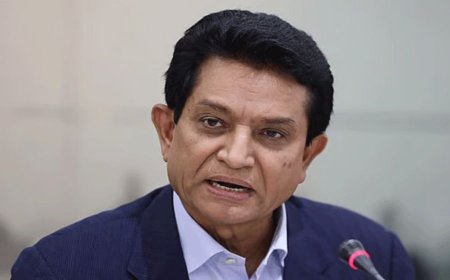
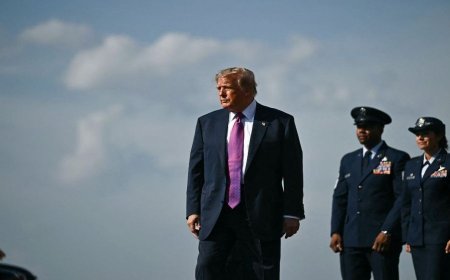
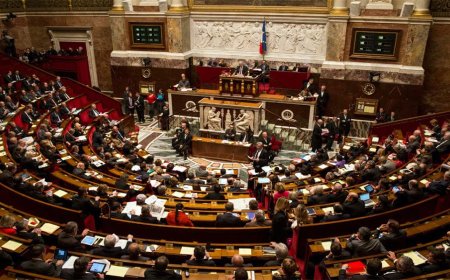
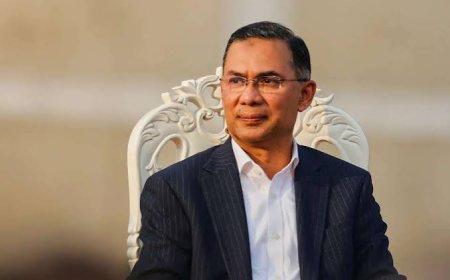
In this difficult economic climate, newly appointed Finance Minister Amir Khasru Mahmud Chowdhury is set to present a high-expenditure budget with a record deficit. Prime Minister Tareq Rahman is also expected to make his parliamentary debut as head of government during the budget session. According to the current schedule, the finance minister will place his maiden budget proposal in Parliament on June 11.
Sources at the Finance Division said the government is under pressure to implement a number of public welfare initiatives pledged during the election campaign, including the Family Card, Farmer Card, and canal excavation programmes. The Family Card programme alone is estimated to cost Tk 1.3 trillion over five years.
At the same time, implementation of the Ninth National Pay Scale for public servants is likely to require around Tk 1.06 trillion in a single fiscal year. The government is also considering reducing import duties on essential commodities to ease pressure on consumers, a move that could increase subsidy expenditures under food assistance schemes. Energy subsidies are likewise expected to rise due to the continuation of capacity payments introduced during the previous administration. Consequently, overall government expenditure is projected to increase sharply.
Total revenue collection is estimated at Tk 6.95 trillion, while the budget deficit could stand at Tk 2.35 trillion. To finance the gap, the government may seek Tk 1 trillion in foreign borrowing and Tk 1.35 trillion from domestic sources.
The Annual Development Programme (ADP) for the upcoming fiscal year is expected to reach around Tk 3.08 trillion.
In an effort to manage mounting fiscal pressure and comply with IMF conditions, the government has already raised fuel prices within two months of taking office and is considering an increase in electricity tariffs. These measures have further driven up living costs, particularly for low-income households already struggling with inflation.
To sustain revenue growth, the government is weighing several difficult policy options, including higher surcharges on wealthy individuals, adjustments to tax-free income thresholds, and new taxes on transport widely used by lower- and middle-income groups, such as motorcycles and battery-powered rickshaws.
However, to ease public hardship, import duties on food items may be lowered in an attempt to reduce prices of essential goods. The government is also planning to expand the tax base by bringing more informal sectors under taxation.
Economists say the budget will carry major political and economic significance for the BNP government, which has returned to power after nearly two decades. Public expectations are particularly high as this will be the party’s first budget since assuming office.
Former World Bank Dhaka chief economist Dr. Zahid Hossain said people have elected a government through voting after a long period, resulting in much higher public expectations. He noted that the first budget would draw attention from all sections of society.
Meanwhile, Bangladesh repaid a record $4.09 billion in foreign loans during the 2024–25 fiscal year—$740 million more than the previous year. Rising global interest rates have significantly increased debt servicing costs, and analysts warn that repayment pressure is likely to intensify further in the coming years.
Revenue collection has also fallen short of targets, with the government facing a Tk 980 billion shortfall during the first nine months of the current fiscal year. Economists caution that excessive reliance on domestic borrowing could crowd out private-sector credit and undermine investment.
According to Bangladesh Bank, the government borrowed around Tk 1.09 trillion from the banking system during the first nine months of the current fiscal year. Analysts believe borrowing requirements could rise even further in 2026–27.
For the first time, the size of the Annual Development Programme is expected to surpass Tk 3 trillion, reaching Tk 3.089 trillion—almost Tk 1 trillion higher than the current ADP. The proposed programme may include 1,121 projects and is expected to receive approval at a meeting of the National Economic Council before being incorporated into the national budget.
What's Your Reaction?