












































Middle East conflict raises economic concerns in Bangladesh
Middle East conflict raises economic concerns in Bangladesh.

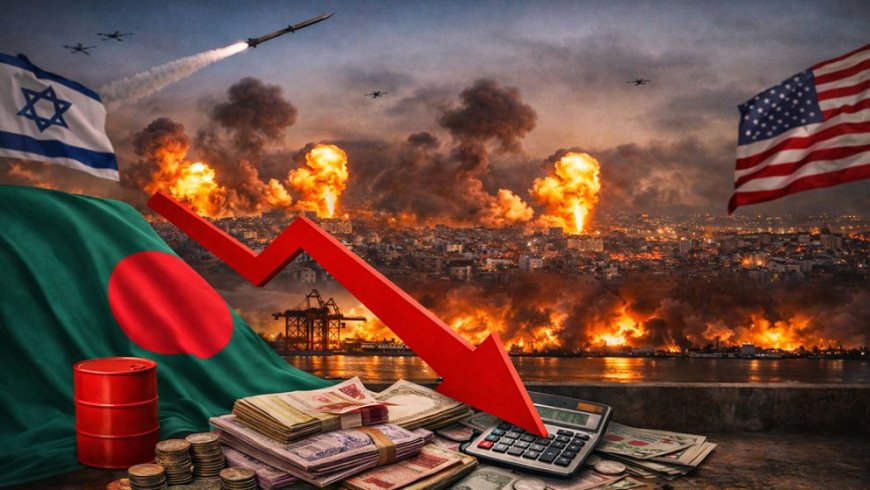
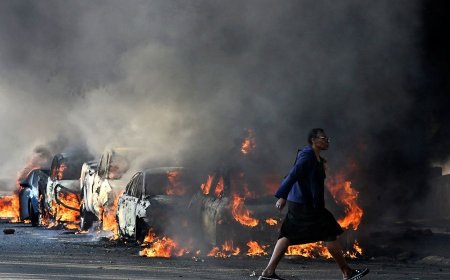
Escalating military tensions in the Middle East involving Iran, Israel, and the United States have begun to send shockwaves through Bangladesh’s economy, pushing up energy costs and leaving thousands of tons of export goods stranded.
As the conflict threatens the vital Strait of Hormuz, economists and business leaders warn that Bangladesh could face a multi-dimensional crisis, including fuel supply disruptions, soaring shipping costs, and a potential surge in domestic inflation.
Bangladesh Garment Manufacturers and Exporters Association (BGMEA) President Mahmud Hasan Khan said entrepreneurs are deeply concerned about the implications of the conflict for both exports and imports.
“We are discussing the situation with the government and foreign buyers regarding export shipments while closely monitoring developments,” he said.
Bangladesh Knitwear Manufacturers and Exporters Association (BKMEA) President Muhammad Hatem echoed similar concerns, noting that exports are closely tied to imports and that both require a stable environment for smooth business operations.
He warned that any disruption to export-import activities or uncertainty in energy supply would severely affect business.
Global oil prices surged on Wednesday (March 4), reaching their highest levels since early 2025. Brent crude climbed to $82.53 per barrel, while West Texas Intermediate (WTI) rose to $75.37.
For Bangladesh, which sources nearly 90 percent of its fuel from the Middle East, the stakes are significant. The Strait of Hormuz serves as a gateway for about one-fifth of the world’s oil and substantial LNG shipments. Any prolonged disruption there could directly affect Bangladesh’s power generation, transport costs, and foreign exchange reserves.
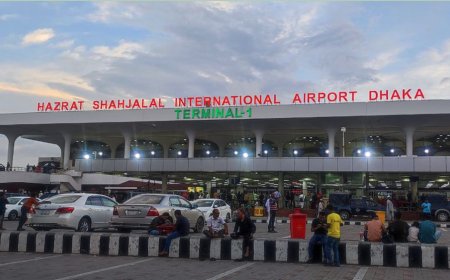
The conflict has also created logistical challenges at Hazrat Shahjalal International Airport and Chittagong Port. Major airlines from Qatar, Kuwait, Oman, and the UAE have suspended cargo operations from Dhaka, leaving more than 1,200 tons of export goods—mostly ready-made garments—stranded at the airport.
Meanwhile, shipping lines, including the Mediterranean Shipping Company (MSC), have stopped accepting new container bookings for Middle East destinations. More than 1,000 containers carrying frozen fish, processed food, and plastic products are now stuck at different ports.
The effects are already being felt in the local market as well. Importers say the cost of transporting palm oil from Malaysia and Indonesia has increased by $8 to $10 per ton due to rising “war risk” premiums.
“The duration of the war remains uncertain, but its impact is immediate,” said Dr Mustafizur Rahman, Distinguished Fellow at the Centre for Policy Dialogue (CPD).
“While the initial disruption is logistical, the longer-term concern is energy security. We must prepare an emergency roadmap for alternative sourcing,” he added.
The conflict has also exposed several structural vulnerabilities in Bangladesh’s trade system. Shipping routes are being diverted via the Cape of Good Hope, adding nearly 5,000 kilometers to journeys and significantly increasing freight costs and delivery times.
The textile sector is already facing delays in cotton imports from Western markets, while the plastic industry is struggling with blocked petrochemical shipments.
Beyond trade, the safety of millions of Bangladeshi expatriate workers in the Gulf remains another concern, as any instability in the region could affect remittance inflows.
Business leaders and economists, including Dr Selim Raihan of SANEM, have urged the government to begin immediate tripartite consultations with researchers and traders to assess the risks and prepare contingency plans.
Although the government says the country has several weeks’ worth of fuel and grain reserves, experts argue that strategic stockpiling and diversification of supply sources are no longer optional. If tensions in the Persian Gulf persist, Bangladesh could face a period of austerity and heightened economic volatility.
What's Your Reaction?