
























































Government aims to turn jute sector into a $7 billion industry: Muktadir
Government aims to turn jute sector into a $7 billion industry: Muktadir

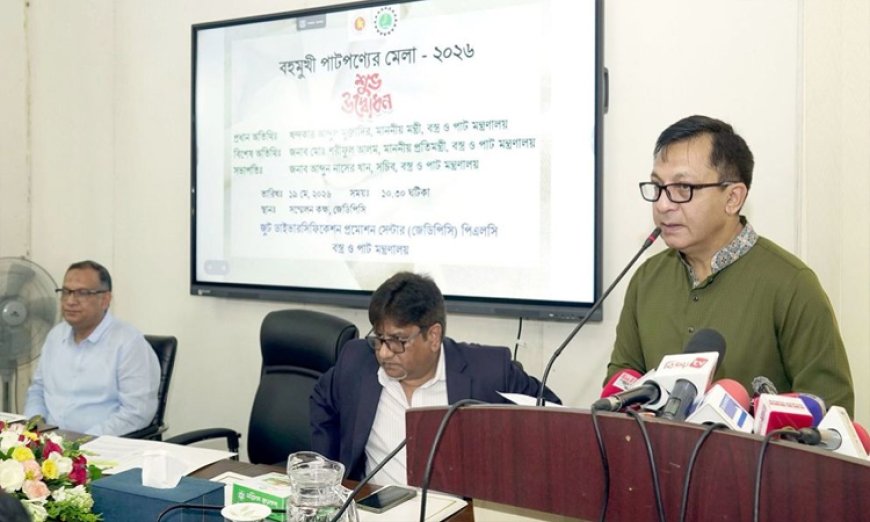
Commerce, Industries, Textiles and Jute Minister Khandakar Abdul Muktadir today said the government has set an ambitious goal to transform Bangladesh’s traditional jute sector into a US$5 billion to $7 billion export-oriented industry.
Muktadir expressed optimism that the target could be achieved through modernization, research, product diversification and stronger private sector participation.
“The country’s golden fibre sector has the potential to reclaim a strong position in the global market through planned reforms and technological advancement,” he said.
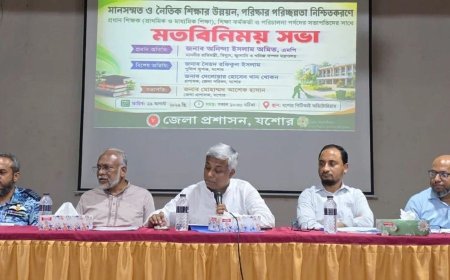
The minister made the remarks as the chief guest at the inauguration of the “Diversified Jute Products Fair-2026” at the Jute Diversification Promotion Center (JDPC) in the capital.
He said Bangladesh currently earns around $1 billion annually from exports of jute and jute goods, but the sector has the potential to expand several times over through proper planning, modern technology, intensive research, quality seed production and the wider promotion of diversified jute products.
Highlighting the sector’s historical importance, Muktadir noted that jute and jute goods accounted for nearly 90 percent of the country’s export earnings in the 1972–73 fiscal year.
Although Bangladesh’s total exports have now reached around $50–55 billion, he said the contribution of the jute sector has remained largely stagnant.
To change the situation, the minister said the government has already adopted a time-bound action plan aimed at increasing productivity and diversifying markets.
As part of the initiative, he said, the government plans to achieve self-sufficiency in quality jute seed production in order to reduce reliance on imports, as Bangladesh currently imports nearly 6,000 tonnes of jute seed annually.
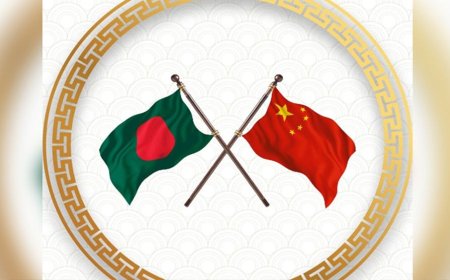
Muktadir also announced plans for joint ventures with leading Chinese universities to enhance jute productivity, develop improved seed varieties and create internationally competitive product designs.
He said state-owned jute mills are gradually being brought under private management systems to ensure modernization, greater efficiency, higher production and commercially viable operations.
Emphasizing innovation, the minister said the government would increase investment in research and technology to help Bangladesh gain greater access to high-value global markets through diversified jute products.
He added that a comprehensive roadmap is being prepared in coordination with the JDPC and private sector stakeholders to restore the sector’s competitiveness.
Muktadir also said Prime Minister Tarique Rahman is personally committed to reviving the lost glory of the jute industry and will regularly monitor the progress of reform initiatives in the sector.
Speaking as special guest, State Minister for Textiles and Jute Md. Shariful Alam stressed the need for collective socio-economic transformation in the industry to improve farmers’ livelihoods and create new employment opportunities in both rural and urban areas.
Textiles and Jute Secretary Abdun Naser Khan presided over the event.
After inaugurating the fair, the ministers visited various stalls and exchanged views with entrepreneurs on market expansion opportunities and existing challenges facing the sector.
The five-day “Diversified Jute Products Fair-2026” will remain open to visitors daily from 10am to 9pm until May 23.
What's Your Reaction?