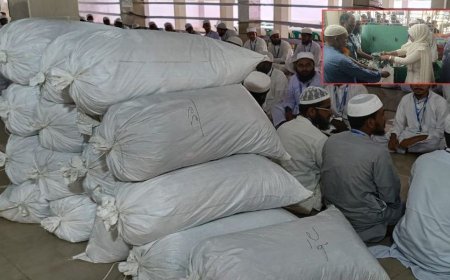









































































Tk 45.81 lakh collected in fines for violations of the Jute Packaging Act
Tk 45.81 lakh collected in fines for violations of the Jute Packaging Act


The Department of Jute has collected Tk 45,81,970 in fines through enforcement drives carried out nationwide during the first nine months of the current fiscal year for violations of the jute packaging law.
A total of 655 mobile courts were conducted across the country during this period.
Officials said ensuring the use of jute bags for packaging 19 products—including paddy, rice, maize, sugar and fertilizer—would help generate employment opportunities.
Responding to a query, Department of Jute Director Uttom Kumar Mondol said the fines were realised through drives conducted between July 2025 and March 2026. He added that several individuals were also sentenced to imprisonment for various offences during this time.
Mobile courts operated in districts across the country, and a target has been set to conduct 1,100 such drives in the 2026–27 fiscal year.
Under the Mandatory Jute Packaging Act, 2021, the use of jute sacks has been made compulsory for packaging 19 types of goods, including paddy, rice, wheat, maize, fertilizer and sugar.
The government has also extended the requirement at different times to products such as ginger, garlic, onion, lentil, chili, turmeric, coriander, flour, atta, powdered milk, poultry feed and fish feed, bringing the total to 19 items.
The law was enacted to protect the environment, promote the use of jute, safeguard the interests of farmers and mill owners, and reduce reliance on environmentally harmful plastic bags.
Enforcement drives are jointly conducted through mobile courts by executive magistrates, Upazila Nirbahi Officers (UNOs), Assistant Commissioners (Land), and officials of the Department of Jute.
These operations primarily aim to ensure compliance with the law by monitoring whether jute sacks are being used for the designated products. Violators face fines, imprisonment, or both.
The Department of Jute is also responsible for issuing and renewing licences for jute-related businesses. Currently, around 11,000 licences of various categories have been issued nationwide.
These include licences for exporters of jute goods, raw jute exporters, manufacturers, internal and export brokers, pakka and kacha balers, press owners, aratdars, and dealers of jute and jute goods.
Regular drives are also carried out to prevent hoarding. Aratdars are not allowed to stock more than 500 maunds of raw jute or hold it for more than one month.
Violators are penalised and required to provide undertakings to release the stock in the market within three to seven days.
Director General of the Department of Jute Syed Md Nurul Basir said full implementation of the law would boost employment and strengthen the rural economy, while also supporting environmental protection and sustainable development.
He noted that after meeting domestic demand, a portion of locally produced jute is exported, with raw jute mainly shipped to India and Pakistan.
He also pointed out that delays in payments by millers often affect farmers, stressing the need to ensure cash transactions and timely procurement during the harvest season to stabilise prices.
He added that continued support—such as providing seeds and fertiliser in designated areas—is essential to keep farmers engaged in jute cultivation.
What's Your Reaction?