






































Could Iran and its proxy groups again use hostages as leverage in a standoff with the United States?
Could Iran and its proxy groups again use hostages as leverage in a standoff with the United States?

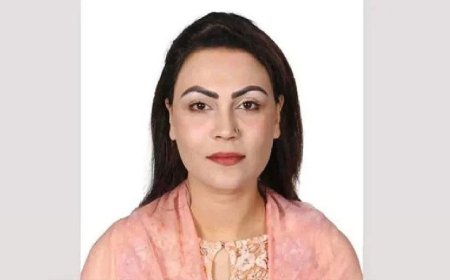
Shelly Kittleson, the award-winning American freelancer abducted in Iraq in late March and freed on April 7, is among the fortunate few.
In a first-person account published in The Atlantic on April 23, Kittleson detailed the week-long ordeal she endured at the hands of fighters from the Iran-backed militia Kataib Hezbollah.
A veteran conflict reporter with more than a decade of experience covering Iraq, she had been in the country for just a week when she was seized outside her Baghdad hotel on March 31. CCTV footage showed two men forcing her into a car. She was restrained with zip ties, blindfolded, hooded, and brutally beaten until she lost consciousness.
Later, she was compelled to deliver a scripted “confession,” claiming to be a US agent.
Yet, unlike many past victims, she was released alive—and quickly—raising two key questions: why was she taken, and why was she freed so soon?
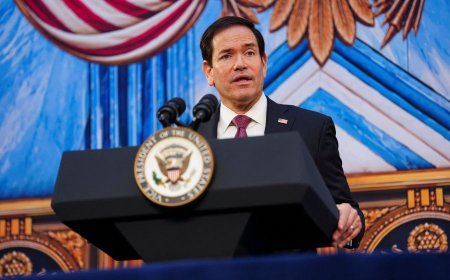
Her case drew immediate attention at the highest levels of the US government. Her release was announced by Secretary of State Marco Rubio, who thanked Iraqi authorities and said it demonstrated the Donald Trump administration’s unwavering commitment to protecting American citizens worldwide.
However, history suggests that Iranian-linked hostage-taking—whether carried out by proxies like Kataib Hezbollah or directly by Tehran, often under dubious espionage claims—rarely occurs without economic or diplomatic intent.
As tensions between Washington and Tehran persist, Kittleson’s case raises concerns that more Westerners could be targeted, serving as leverage in an asymmetric conflict aimed at extracting concessions.
Her abduction and swift release may have been a signal—a demonstration that Iran could be preparing to escalate its tactics in the standoff.
Following her release, a Kataib Hezbollah security official, Abu Mujahid Al-Assaf, issued a stark warning, suggesting such leniency might not be repeated, citing what he described as a broader war involving “Zionist-American” forces.
While Kittleson survived, many before her did not.
Among them was Margaret Hassan, the Irish-born aid worker and head of CARE International Iraq, who was abducted in November 2004 and never found. Married to Iraqi national Tahseen Ali Hassan and a resident of Iraq for over three decades, she was later murdered.
In a hostage video, Hassan pleaded with the British public to urge then–prime minister Tony Blair to withdraw troops from Iraq, saying she feared suffering the same fate as Kenneth Bigley, who had recently been executed alongside two American colleagues.
Their cases are part of a broader pattern. By 2006, more than 200 foreigners and thousands of Iraqis had been kidnapped by militant groups, nationalist factions, or criminal networks.
Similar incidents have occurred elsewhere, including in Lebanon. In April 1987, British journalist John McCarthy was abducted in Beirut by the Islamic Jihad Organization, a Shiite militant group that preceded Hezbollah and was backed by Iran.
What's Your Reaction?