






































Khosru says government forms committee to streamline development projects and ensure greater accountability
Khosru says government forms committee to streamline development projects and ensure greater accountability

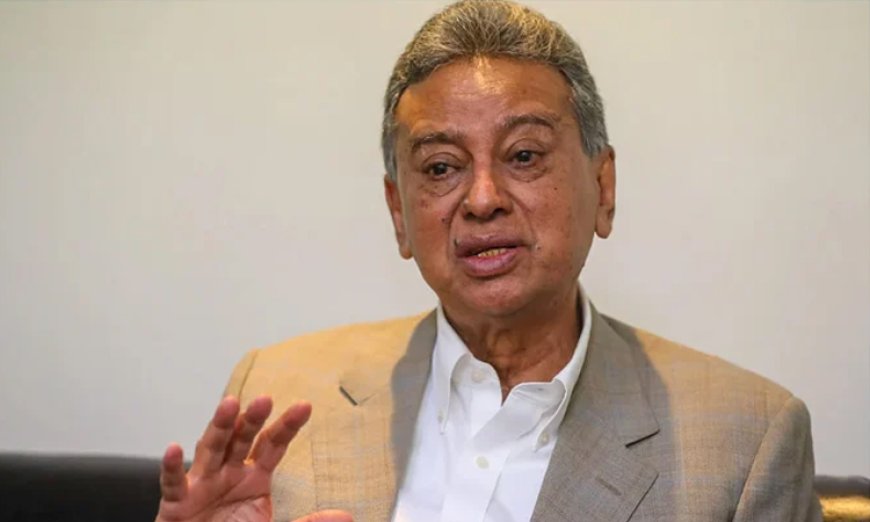
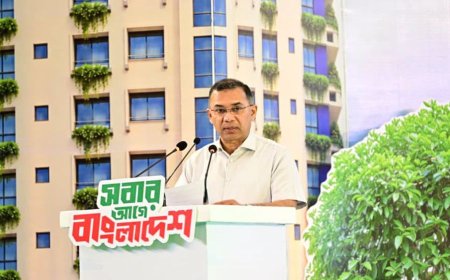
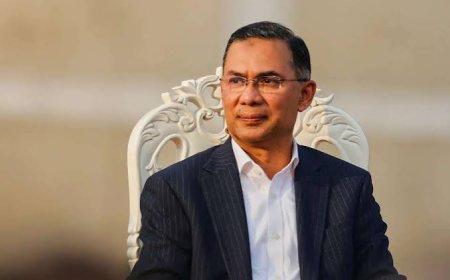
Finance and Planning Minister Amir Khosru Mahmud Chowdhury said a special committee has been formed under the directive of Prime Minister Tarique Rahman to carry out a comprehensive review of ongoing development projects, with the aim of eliminating wasteful spending and ensuring alignment with national priorities.
He said the committee, convened by the Prime Minister’s Adviser on Finance and Planning Dr Rashed Al Mahmud Titumir, will examine long-delayed projects and those that have seen repeated cost escalations. “This process of cleaning the balance sheet is essential to honour the commitments made to the people,” he added.
The minister made the remarks while speaking to journalists after the first meeting of the Executive Committee of the National Economic Council (ECNEC) of the newly formed BNP government, chaired by the Prime Minister. The meeting for the 2025–26 fiscal year was held at the Cabinet Division conference room at the Bangladesh Secretariat.
He said the committee will determine which projects should be scrapped, which may be extended, and which new initiatives should be taken up in the future. The move, he noted, is intended to remove ineffective projects and make room for those that deliver tangible public benefits.
Regarding the ECNEC meeting, the minister said 19 projects were placed for consideration, of which seven were reviewed. Some of those were approved, while others were sent back for further scrutiny.
“We must be extremely cautious, as every taka spent belongs to the people,” he said, noting that many past projects had raised questions about their necessity and rationale. The committee’s primary objective, he added, is to quickly clear the backlog of questionable projects and redirect resources toward initiatives that reflect the government’s manifesto and address urgent public needs.
Speaking to reporters, Dr Rashed Al Mahmud Titumir said many projects in the past were undertaken on political grounds rather than economic viability, often without a clear return on investment. The newly formed committee will assess whether such projects are justified and should continue.
He stressed that the government aims to move away from a culture of political patronage and ensure that public funds are used strictly for public welfare. He also pointed to a lack of accountability in past project spending, where costs were frequently inflated through various means.
The adviser further noted a growing imbalance between rising operating expenses and comparatively stagnant allocations under the Annual Development Programme (ADP), which represents capital expenditure crucial for economic growth.
“If the quality and implementation rate of the ADP do not improve, the country’s growth rate will continue to decline,” he warned, adding that growth has already faced downward pressure due to weak capital spending.
Addressing concerns about political bias, he said projects had previously been used to serve partisan interests. The current government, he added, is working to translate its electoral commitments into a national agenda, ensuring that all development projects align with the public mandate and national interest.
What's Your Reaction?