



























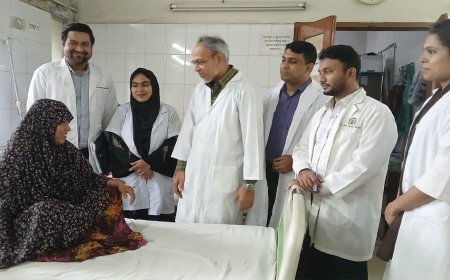





































Awareness among women about health-related issues has risen
Awareness among women about health-related issues has risen.

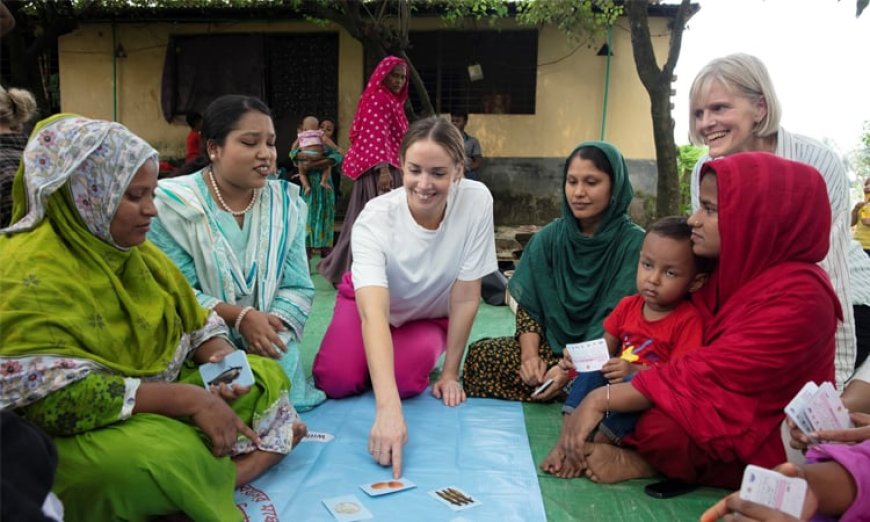
Sexual and reproductive health and rights (SRHR) are closely linked with human rights, health promotion, and social justice. The concept covers a wide range of issues, including access to contraception, prevention of sexually transmitted infections, and ensuring the right to sexual education.
Thanks to the government’s welfare initiatives, awareness of reproductive health among Bangladeshi women has been steadily rising. The country has made notable progress in women’s and children’s health, though several areas still require further attention.
Officials report that women in both rural and urban areas are now more regularly visiting health facilities, adopting family planning methods, and practicing proper menstrual hygiene.
Experts attribute this positive change to expanded healthcare services, social media awareness campaigns, and increased female education. Whereas discussions on reproductive health were once taboo, today both young people and homemakers are openly engaging on these issues.
According to the Directorate General of Family Planning, contraceptive use has grown significantly among rural women. The use of sanitary napkins—particularly among adolescents and young women—has also risen. However, poverty, superstition, and limited healthcare access still prevent many women from receiving essential reproductive health services.
Reproductive health specialist Dr. Nazneen Ahmed noted that women across the country are becoming more aware of their rights, contributing to achievements across multiple sectors, including health and reproduction. She added that government initiatives have succeeded largely because citizens themselves have become more aware, especially women adapting to modern practices.
Bangladesh has also made major strides in population control despite being a densely populated country. The national total fertility rate (TFR) has fallen to 2.00 today, compared to over 5 five decades ago—bringing broad improvements in reproductive health. Lower birth rates have allowed women greater opportunities for education and income generation.
Public health experts explain that TFR represents the number of children a woman aged 15–49 is expected to have. Bangladesh has steadily reduced this figure since independence. World Bank data shows TFR was 6.9 in 1971, 6.2 in 1981, and has continued to decline. The latest Bangladesh Demographic and Health Survey reports a TFR of 2.3.
Population control became a national priority in the first five-year plan (1973–1978), followed by the country’s first population policy in 1976. Since then, every five-year plan has emphasized population issues. Dr. Nazneen Akhter, a maternal and child health expert, noted that continuous updates to the population policy and investments in health, population, and nutrition have boosted awareness and improved reproductive health.
Field workers of the Directorate General of Family Planning have played a crucial role, along with strong support from the media. NGOs also contributed significantly to widespread campaigns promoting small families. At independence, only 8% of eligible couples used birth control; now the figure is 62%.
Dhaka University professor Mohammad Moinul Islam observes that women's education and empowerment have driven smaller family norms as people pursue economic advancement. Experts also highlight the direct benefits for women’s health.
Professor Rowshan Ara Begum explains that with fewer births, women now have more opportunities for work and education, and face fewer health risks from repeated pregnancies and child-rearing. However, TFR remains higher in the Sylhet, Chattogram, and Mymensingh divisions.
With an estimated national population of around 17 crore, controlling TFR is essential to prevent future pressure on resources. Although Bangladesh reduced TFR significantly over the decades, progress has stalled in the last ten years.
Professor Rowshan Ara Begum points out that high rates of child marriage and higher fertility among young women are major challenges. Professor Mohammad Moinul Islam recommends targeted family planning programs for lagging regions and addressing unmet needs for contraceptive supplies.
What's Your Reaction?