
































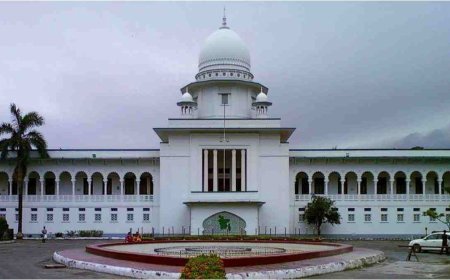

Chief Adviser says the referendum on the July Charter and the national election will be held on the same day
Chief Adviser says the referendum on the July Charter and the national election will be held on the same day.

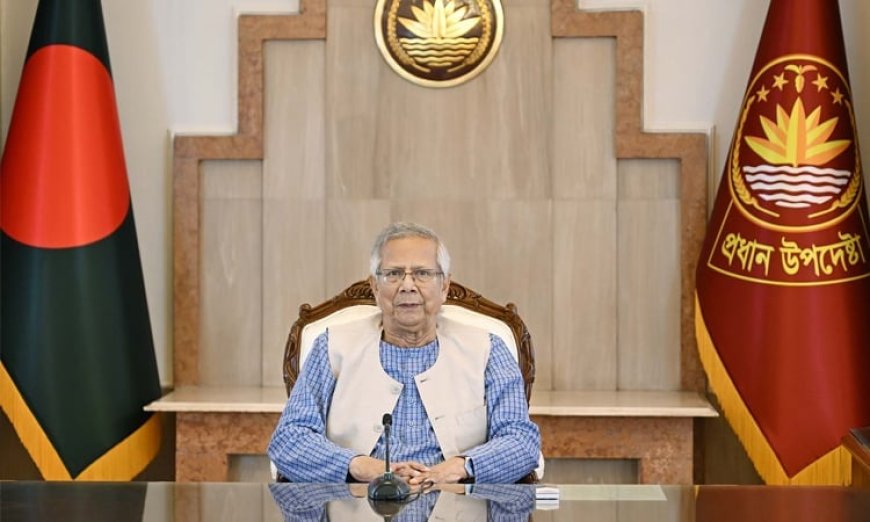
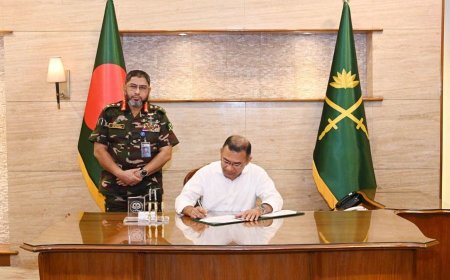
Chief Adviser Professor Muhammad Yunus today announced that the referendum on the July National Charter 2025 and the national election will be held on the same day in the first half of February.
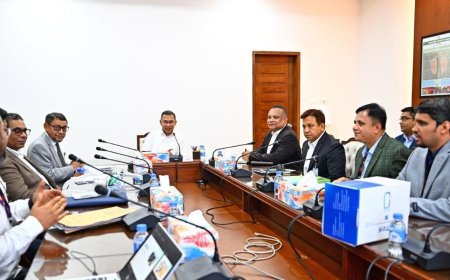
“In view of all considerations, we have decided to hold both the referendum and the national polls on the same day — in the first half of February,” he said in a televised address this afternoon following a meeting of the Council of Advisers.
He said the Council of Advisers has approved the July National Charter (Constitutional Reform) Implementation Order, 2025 — a milestone in delivering the reform commitments agreed to by major political parties under the July Charter.
His speech was broadcast live on Bangladesh Television, BTV News and Bangladesh Betar.
Professor Yunus said holding the referendum alongside the parliamentary polls would not hinder the reform process; rather, it would make the elections more festive and cost-effective.
He said necessary laws for the referendum will be enacted in due course.
The Chief Adviser said the government has incorporated several important provisions into the implementation order, including holding a referendum on the Charter’s constitutional reform proposals and forming a Constitutional Reform Council.
“In keeping with the July Charter, we have finalised the referendum ballot question,” he said.
The question will be: “Do you agree to the July National Charter (Constitutional Reform) Implementation Order, 2025, and the constitutional reform proposals contained in the July National Charter?”
He said the ballot will cover four key reform areas:
A. During election periods, the caretaker government, the Election Commission and other constitutional bodies will be formed as stipulated in the July Charter.
B. The next parliament will be bicameral, with a 100-member Upper House formed proportionally according to votes received by political parties. Any constitutional amendment will require approval from the Upper House.
C. The winning party in the next election must implement the 30 reform proposals agreed upon by political parties — including increasing women’s representation, electing deputy speakers and committee chairs from the opposition, limiting the prime minister’s tenure, expanding the president’s powers, strengthening judicial independence, and empowering local government.
D. All other reforms in the July Charter will be implemented as pledged by the political parties.
On referendum day, citizens will cast a single ‘Yes’ or ‘No’ vote on these four issues. If a majority votes ‘Yes’, a Constitutional Reform Council will be formed with members elected to the next parliament.
“These representatives will also serve as members of the National Parliament, and the Council will amend the constitution within 180 working days of its first session,” he said.
After these amendments, an Upper House will be formed within 30 working days, proportionate to the votes received in the national polls. Its term will run until the final working day of the Lower House.
The Council of Advisers also endorsed measures to incorporate the July National Charter into the constitution, in line with the reform commitments, he added.
Professor Yunus expressed gratitude to all political parties and the National Consensus Commission for their extensive efforts to build agreement.
“In a very cordial environment, political parties debated the reform proposals at length. Despite differences, they worked to narrow them. This is unprecedented not only in Bangladesh’s politics but globally,” he said.
At the start of his speech, Professor Yunus said the interim government formed after last year’s July Uprising has reached a decisive juncture.
“Our government was tasked with three responsibilities: conducting trials of the killings, initiating reforms for an accountable and effective democratic system, and handing over power to an elected government through fair elections,” he said.
He said significant progress has been made in prosecuting atrocities committed by the former fascist government during the July Uprising. The International Crimes Tribunal is set to deliver its first verdict soon, and several other cases are nearing conclusion. Trials of crimes such as enforced disappearances have also begun for the first time.
On reform measures, he said the government has made major advances in judicial independence, financial transparency, digitalisation and anti-corruption through ordinances and legal amendments.
“These initiatives will strengthen long-term good governance,” he said.
Regarding the national election, he confirmed: “The polls will be held in the first half of February. We are preparing to conduct them in a festive, inclusive and fair manner. We are striving to fulfil the responsibilities entrusted to us.”
What's Your Reaction?