


































Maiden session of the 13th Parliament likely to be held in mid-March
Maiden session of the 13th Parliament likely to be held in mid-March

The 13th Parliament is likely to hold its maiden session in the second week of March, according to sources at the Parliament Secretariat.
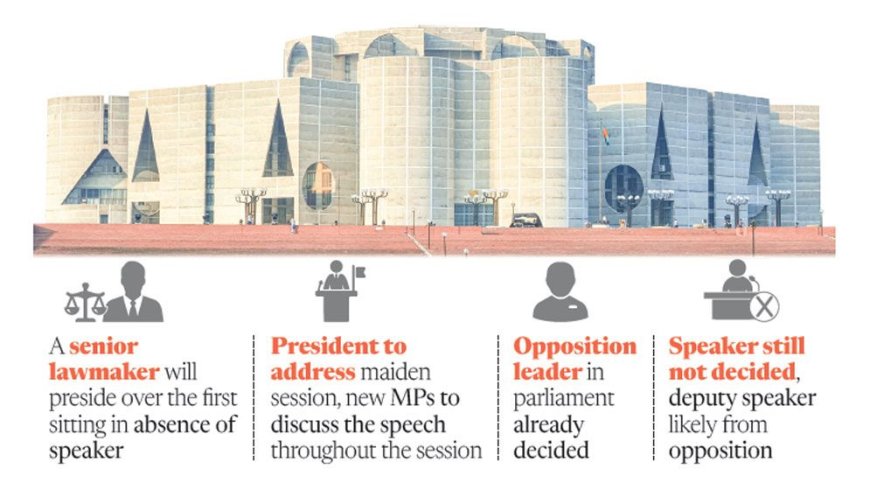
President Mohammed Shahabuddin will convene the session under Article 72(1) of the Constitution. However, with former Speaker Shirin Sharmin Chaudhury having resigned following the fall of the Awami League government and currently at large, and Deputy Speaker Shamsul Haque Tuku in jail, a senior lawmaker will preside over the first sitting.
It remains unclear who will chair the opening session. Although the Rules of Procedure do not clearly specify the process, past precedent shows that a senior member may be entrusted with conducting proceedings for the election of the Speaker.
Under Article 72(2) of the Constitution, the first session of a new parliament must be summoned within 30 days of the gazette notification of the general election results. The gazette for the 13th parliamentary elections was published on 14 February, and newly elected MPs took oath on 17 February, meaning the first session must be held by 16 March.
As Eid-ul-Fitr is expected on 18 or 19 March, the session is likely to be convened earlier to allow members to participate in discussions on the President’s address before the holiday. The President is constitutionally required to address the first session of the year and the first session following a general election.
Although the President formally summons parliament, the move is made on the written advice of the Prime Minister, with the date and time fixed by presidential order.
To discuss arrangements for the maiden session, officials from the Parliament Secretariat met at the Prime Minister’s Office and initially decided to begin the session on 26 February. However, Home Minister Salahuddin Ahmed later indicated that it may instead begin in the second week of March.
At the first sitting, the Speaker and Deputy Speaker will be elected and sworn in by the President. The newly elected Speaker will then preside over proceedings. With a clear majority in the House, the Bangladesh Nationalist Party (BNP) nominee is expected to become Speaker.
Following their election, presidium nominations and condolence motions will be placed, and the day’s proceedings will conclude with the President’s address. The Business Advisory Committee will also be formed during the first sitting, with the Speaker as chair, to determine the duration and agenda of the session.
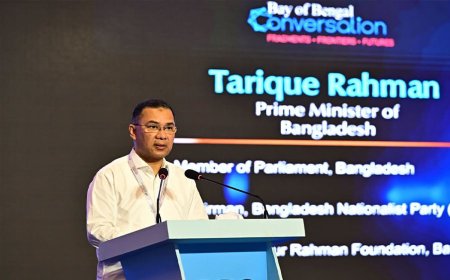
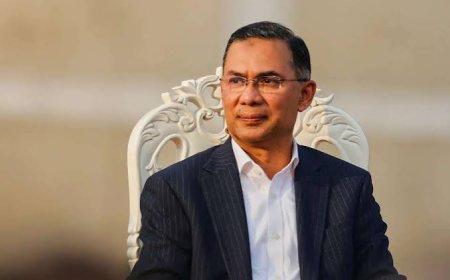
The ruling party’s parliamentary party has elected Prime Minister Tarique Rahman as Leader of the House. However, the posts of Speaker, Deputy Leader and Chief Whip have yet to be finalised. Meanwhile, the opposition alliance has already nominated its Leader of the Opposition, Deputy Leader and Chief Whip.
According to the July Charter and the ruling party’s election pledge, the Deputy Speaker is expected to come from the opposition this time.
A key task for the treasury bench during the opening sitting will be to place before the House those ordinances the government seeks to convert into law. The interim administration issued or amended 130 ordinances during its 18-month tenure.
Standing committees on various ministries are also likely to be formed during the first session, which will additionally adopt an obituary motion.
The 13th National Parliament was constituted following the general elections held on 12 February, in which the BNP-led alliance secured 212 seats and the Bangladesh Jamaat-e-Islami-led alliance won 77 seats. Voting took place in 299 of the 300 constituencies, and results for 297 have been declared. Islami Andolan Bangladesh won one seat, while seven independents — all BNP rebel candidates — were elected.
This will be the first parliamentary session since the July Mass Uprising that led to the fall of the Awami League government headed by Sheikh Hasina on 5 August 2024.
The 12th Parliament, formed after the controversial 2024 elections, was dissolved by President Mohammed Shahabuddin on 6 August 2024, roughly six months after it had been constituted on 30 January 2024. The BNP, Bangladesh Jamaat-e-Islami and several other parties had boycotted that election.
The 11th Parliament (2018) and 10th Parliament (2014) were also widely criticised as non-competitive. Against that backdrop, the 13th Parliament is expected to emerge as a vibrant and effective House after years of political turbulence.
The 12 February election is being viewed as one of the most consequential in the country’s history, marking a return to democratic governance.
What's Your Reaction?