
























New metro rail projects could cost more than Tk1.84 lakh crore
Per-kilometre cost of metro rail rises to Tk3,618 crore.

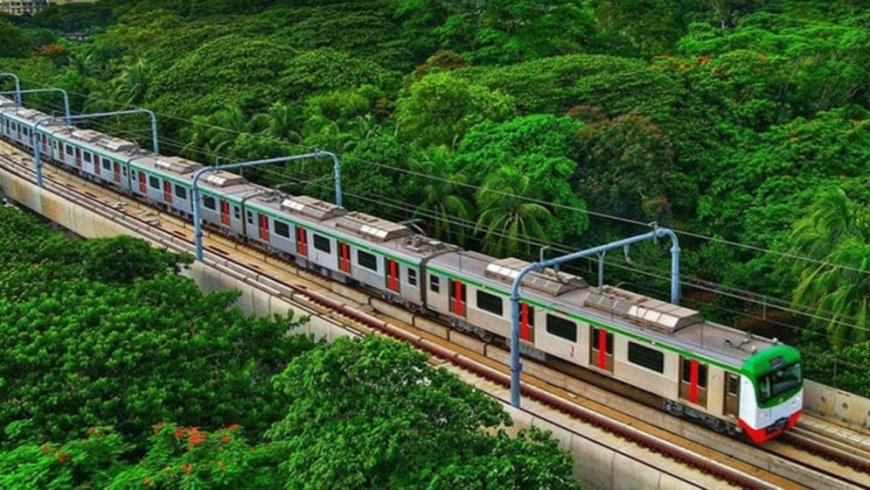
The cost of building two new metro rail routes in the capital is set to be more than double the per-kilometre expense of the Uttara–Motijheel line. While the Uttara–Motijheel metro cost Tk1,574 crore per kilometre, the two proposed routes are projected to require Tk3,618 crore per kilometre. Their combined estimated cost has risen to Tk1.845 trillion (Tk184,500 crore), casting doubt over their implementation.
The interim government refrained from approving the high-cost projects, leaving the decision to the newly elected government led by the Bangladesh Nationalist Party (BNP).
One proposed route, MRT Line-1, will operate from Kamalapur to the airport and from Narda to Purbachal, spanning more than 31 kilometres. The second, MRT Line-5 (North), will run from Hemayetpur in Savar through Mirpur and Gulshan to Bhatara, covering around 20 kilometres. Both lines will feature elevated and underground sections.
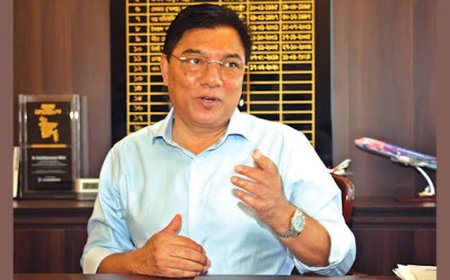
Experts attribute the steep rise in construction costs to limited competition in the bidding process, which currently involves only Japanese contractors. They argue that broader competition could help bring down expenses. Managing Director of Dhaka Mass Transit Company Limited (DMTCL) Faruk Ahmed also pointed to procurement conditions set by the Japanese lender Japan International Cooperation Agency (JICA), saying these technical requirements restrict competition in contractor selection and significantly inflate costs. Japan is financing the metro projects through JICA loans, which include provisions that tend to favour Japanese firms in contract awards.
The Uttara–Motijheel line is being extended to Kamalapur, increasing its total length to 21.26 kilometres. Work on the Motijheel–Kamalapur segment is ongoing, with the overall cost of the route standing at Tk33,472 crore.
MRT Line-1 received approval in December 2019 with an estimated cost of Tk52,561 crore. However, after evaluating bids for eight of its 12 packages, DMTCL now estimates the cost could climb to Tk96,500 crore.
Similarly, MRT Line-5 (North), approved in October 2019 at an estimated Tk41,238 crore, is now projected to cost Tk88,000 crore based on bids submitted for five packages.
Initially, the government set the per-kilometre cost of the two new lines at Tk1,839 crore, with a total approved budget of Tk93,799 crore. Based on current bids, however, the total cost may surge to Tk184,500 crore.
According to a comparative study by DMTCL, metro construction costs in India—excluding land acquisition and salaries—range between Tk150 crore and Tk450 crore per kilometre. Although India also undertakes projects with foreign loans, it does not accept procurement conditions that limit competitive bidding. In an emailed response, JICA acknowledged awareness of the rising costs but said that under its procurement guidelines, no details can be disclosed between bid opening and contract signing, preventing comment on specific evaluations at this stage.
In fiscal year 2024–25, ticket sales from the Uttara–Motijheel metro generated approximately Tk400 crore (unaudited). However, annual loan repayments ranging from Tk465 crore to Tk740 crore will be required until 2030–31.
DMTCL sources said that for an underground section between Kachukhet and Bhatara, the lowest bid—Tk15,527 crore—submitted by a joint venture of Japan’s Taisei and South Korea’s Samsung, was 391 percent higher than the official estimate of Tk3,968 crore. This represents an additional Tk11,559 crore beyond projections.
Under JICA’s rules, contracts would be awarded to the lowest bidders—Shimizu Corporation and the Taisei-Samsung joint venture—if no irregularities are found. However, DMTCL has decided not to accept the Taisei-Samsung bid and is reconsidering the appointment of Shimizu as well.
Officials suspect possible collusion behind the unusually high bids in two packages, noting that final offers were submitted only by consortia led by Shimizu Corporation and Taisei-Samsung, with each emerging as the lowest bidder in separate packages.
The interim government had urged lenders and contractors to revise costs downward but showed little inclination to proceed when no response was received. The deadline for MRT Line-1 is next December, while MRT Line-5 (North) is scheduled to run until 2028, though contractors have yet to be appointed. In late January, DMTCL wrote to the Road Transport Ministry and the Planning Commission detailing the sharp cost increases and proposing revisions, including removal of restrictive JICA-imposed technical conditions to ensure open competition.
Professor Shamsul Haque of the Civil Engineering Department at Bangladesh University of Engineering and Technology (BUET) said reports suggest a lack of genuine competition in contractor selection, which is driving up costs. He cautioned that undertaking mega projects at such high expenses could risk pushing Bangladesh toward financial strain and stressed that the new government should prioritise competitive bidding and renegotiation of loan conditions.
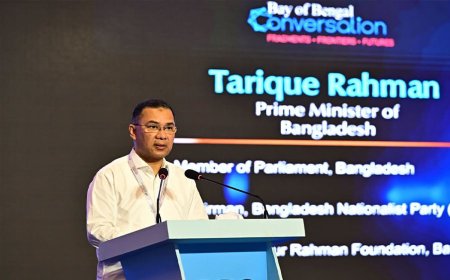
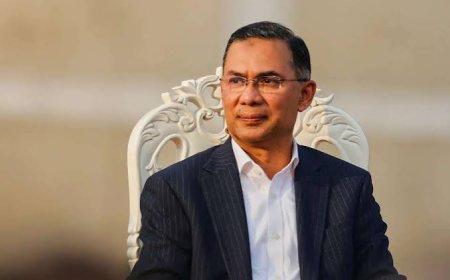
Ahead of the national election, on January 20, BNP Chairman Tarique Rahman pledged that if his party came to power, it would introduce monorail services in Dhaka alongside metro rail, linking areas such as Mohammadpur and Banani to the network. After taking oath as Prime Minister on February 17, it remains to be seen what course of action the new government will take regarding the costly metro projects.
What's Your Reaction?